Brass: Birmingham
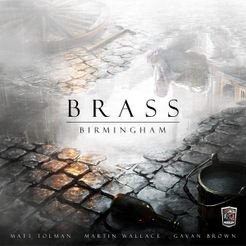
Build industries and connect canals and railways to compete across two eras of economic development.
Brass: Birmingham supports 2–4 players; community best: 3–4 players; playing time: 60–120 minutes. A WANGO browser trial has not been confirmed.
Background & introduction
Brass: Birmingham is an economic strategy game built around industries and transport networks. Players are industrialists in England’s West Midlands between 1770 and 1870, building cotton mills, coal mines, iron works, manufacturers, potteries and breweries. Demand for coal, iron and beer makes each player’s plans interact with everyone else’s industries.
A game spans the Canal Era and the Rail Era. On most turns you take two actions, choosing among building industries, extending transport links, developing, selling, taking a loan and scouting. Location and industry cards shape your building opportunities, while money, resources and connections determine which investments you can put to work.
Industries and transport links score at the end of each era, and the player with the most points wins. The position you establish during the Canal Era must support your expansion in the Rail Era: when to borrow, when to sell and which locations to connect all affect the value of an investment.
Core rules & scoring
Normally take 2 actions per turn; each player takes only 1 in the first round of the Canal Era. Discard 1 card per action, or 3 in total to Scout. You may repeat actions; passing also requires a discard. Refill to 8 cards after your turn while the deck lasts. At round end, order the next round from least to most money spent, preserving relative order on ties, then collect income. Do not collect income in the final round of the game.
To Build, play a suitable Location or Industry card and pay the industry’s money, coal and iron costs. A Location card permits building in its named location; an Industry card normally permits its industry within your own network. Take your lowest unbuilt level of that industry and use a legal industry space. Your network includes locations containing your industries and the endpoints of your links.
To Network, discard any 1 card. In the Canal Era, build at most 1 canal for £3. In the Rail Era, build 1 railway for £5 and 1 coal, or 2 in one action for £15, 1 coal per railway and 1 beer in total. Extend your own network; if you have no industries or links on the board, you may start on any undeveloped line. Place railways individually and check coal access for each; beer for the double railway must come from a brewery.
Develop removes 1–2 of the lowest-level industry tiles from your player mat, using 1 iron per tile; potteries bearing the no-development icon cannot be removed this way. A Loan gives £30 and lowers income by 3 income levels, never below −10; the principal is never repaid. If you hold no Wild cards, Scout by discarding 3 cards in total to take 1 Wild Location and 1 Wild Industry card.
A single Sell action can sell several of your unflipped cotton mills, manufacturers or potteries. Each must connect to a matching merchant and consume its required beer, then flip and increase income by the indicated number of spaces. Coal mines, iron works and breweries instead flip and increase income when their last resource is consumed. These increases are income spaces, not income levels.
Coal must come from the closest connected unflipped coal mine, counting links belonging to any player. Only when no connected mine is available may you buy from the coal market through a merchant location. Iron needs no connection, but available iron works on the board must be used before the market. Your own brewery needs no connection; another player’s does. Merchant beer is only for selling to that merchant, never for railways.
An era ends after the round in which the deck is exhausted and every player has used all their cards. Score each link for the total link icons in its two endpoint locations, then remove it. Each player then scores the victory points printed at the bottom left of their flipped industries; unflipped industries score nothing.
After Canal Era scoring, remove all level 1 industries from the board and retain level 2 and higher. Restore merchant beer beside nonblank merchants, shuffle the players’ discards for this game and deal 8 cards each for the Rail Era. After Rail Era scoring, the highest total wins. Break ties by income level, then remaining cash; a further tie is shared.
Rules & gameplay questions
What stays on the board after Canal Era scoring?
Score and remove the canals, then score flipped industries using the victory points at their bottom left. Remove every level 1 industry from the board. Level 2 and higher stay whether flipped or not; retained flipped industries can score again in the Rail Era.
Can I take coal, iron and beer from any source?
No. Coal must be connected and comes from the closest available mine. Iron needs no connection, but you cannot buy from the market while iron remains available on the board. Your own brewery needs no connection; another player’s must connect. Merchant beer is only for selling to its merchant.
Does spending less guarantee four consecutive actions?
Next round’s order runs from least to most money actually spent this round, with ties retaining relative order. Acting last in one round and first in the next can normally give you two consecutive turns of two actions each. Taking a Loan or Developing does not itself guarantee that order.
Does a single railway require beer?
No. One railway costs £5 and 1 coal. Building two in one action costs £15, 1 coal for each railway and 1 brewery beer in total. Each railway must have access to its coal after placement. Merchant beer cannot pay for the double railway.
Does a Loan reduce income by three spaces or three levels?
Three income levels, not three spaces. Place the income marker on the highest space within its new level. A Loan gives £30, cannot lower income below −10 and never requires repayment of principal.
Rules & introduction sources
- Edition
- Brass: Birmingham, Roxley base game for 2–4 players; based on the 2018-11-20 rulebook linked from the official product page. Excludes Brass: Lancashire and variants.
- Introduction source
- BoardGameGeek
WANGO editorial
| Parameter | Recorded value |
|---|---|
| BGG overall rank (snapshot) | #1 |
| Complexity Weight | 3.86 / 5 |
| Best player count (community) | 3–4 |
| Player range | 2–4 |
| Playing time (minutes) | 60–120 |
| Core mechanisms | Action Points · Chaining · End Game Bonuses · Hand Management · Income · Loans · Market · Multi-Use Cards · Network and Route Building · Ownership · Tags · Tech Trees / Tech Tracks · Tile Placement · Turn Order: Stat-Based · Variable Set-up |
| Chinese publication | Unconfirmed |
| WANGO browser play | No confirmed WANGO trial |
| Year published | 2018 |
| Suggested age | 14+ |
BGG statistics are stored snapshots, not live rankings. Source checked:2026-09-26
Player questions
What is the best player count for Brass: Birmingham, and can I play online?
Brass: Birmingham supports 2–4 players; community best: 3–4 players; playing time: 60–120 minutes. A WANGO browser trial has not been confirmed.
How complex is Brass: Birmingham, and which mechanisms does it use?
Weight: 3.86 / 5. Mechanisms: Action Points · Chaining · End Game Bonuses · Hand Management · Income · Loans · Market · Multi-Use Cards · Network and Route Building · Ownership · Tags · Tech Trees / Tech Tracks · Tile Placement · Turn Order: Stat-Based · Variable Set-up. Chinese publication: Unconfirmed.
Where can I learn Brass: Birmingham?
Available resources: Rule guide https://wangogame.com/wiki/games/brass-birmingham