How to play KARDS: Kredits, frontline and card rules
Read the original cards, then deploy, advance and attack.
Read the original cards, then deploy, advance and attack.
Original cards and WANGO rules: seeded mulligan and first turn, 4 basic and 12 ability and resolution exercises. Cross-turn counters use a disclosed teaching script, not predicted replies. Card snapshot: 2026-10-14.
How do you win?
Win by reducing enemy HQ defense to 0 or less. These lessons start enemy HQ at 3 remaining defense; that is not its starting defense.
Learn by playing
Deploy & pay
- Select TYPE 97 SHINHOTO in hand, then your support line. Preview its 3K deployment.
- Blitz permits an operation this turn. Select the tank and move it to the frontline for 1K.
- A tank can attack after moving. Select it, then enemy HQ; pay another 1K.
This original card costs 3K to deploy and 1K per operation: 5K for deployment, movement and attack. Blitz does not waive costs.
Official rulesClear & advance
- An enemy holds the frontline. Select tank A and attack that enemy first.
- The frontline is clear. Select tank B, which has not attacked, then the frontline.
- Select tank B in the frontline, then enemy HQ.
Ground units in support can attack the enemy frontline. A clears it so B can enter; B retains an attack.
Official rulesGuard & artillery
- Guard protects adjacent HQ in the same line. Try the tank against HQ to check the restriction, then select artillery and attack HQ.
The tank cannot directly attack guarded HQ; artillery bypasses Guard. Here the gun has 3 attack and 1K operation cost, without hidden effects.
Official rulesInfantry & tanks
- First select the infantry and move it to the frontline.
- The infantry cannot attack after moving this turn. Check HQ to see why, then select the tank and advance.
- The tank can attack after moving. Select the tank, then HQ.
Infantry normally moves or attacks; a tank may do each once and pays for each. Blitz enables operating on deployment, not tank-style operations for infantry.
Official rulesRead cards: 5 unit classes, Orders and counters
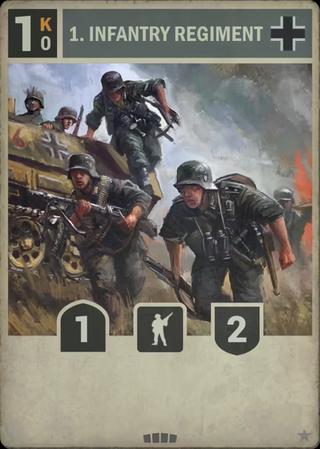
Infantry
Normally moves or attacks once; needs the frontline to attack enemy support.
Tank
Normally may move once and attack once, paying for each.
Artillery
Can attack at range from support and bypass Guard; still check the card’s target restrictions.
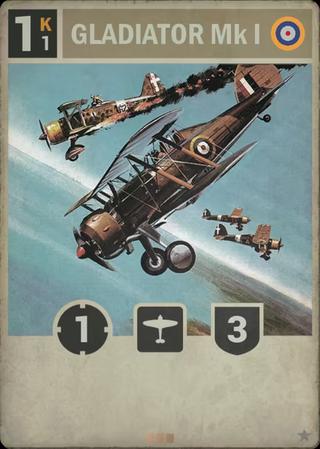
Fighter
Can attack at range from support; protects other targets in its line from bombers.
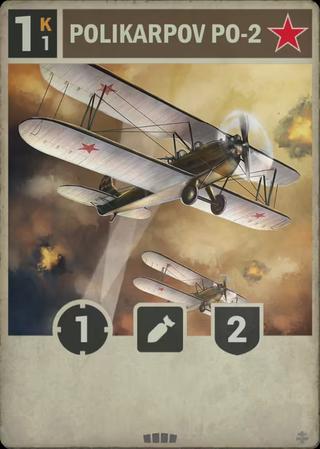
Bomber
Attacks at range and bypasses Guard; check for fighters in the target line.
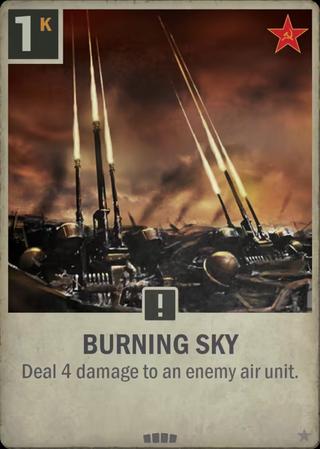
Order
Pay its cost and select legal targets; discard after resolving instead of occupying a unit slot.
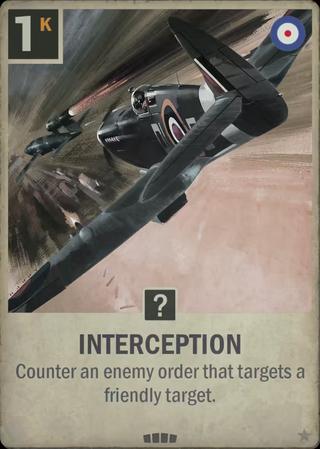
Countermeasure
Pay to activate while it stays in hand; triggers automatically on the next enemy turn if its condition is met.
Battlefield and resources
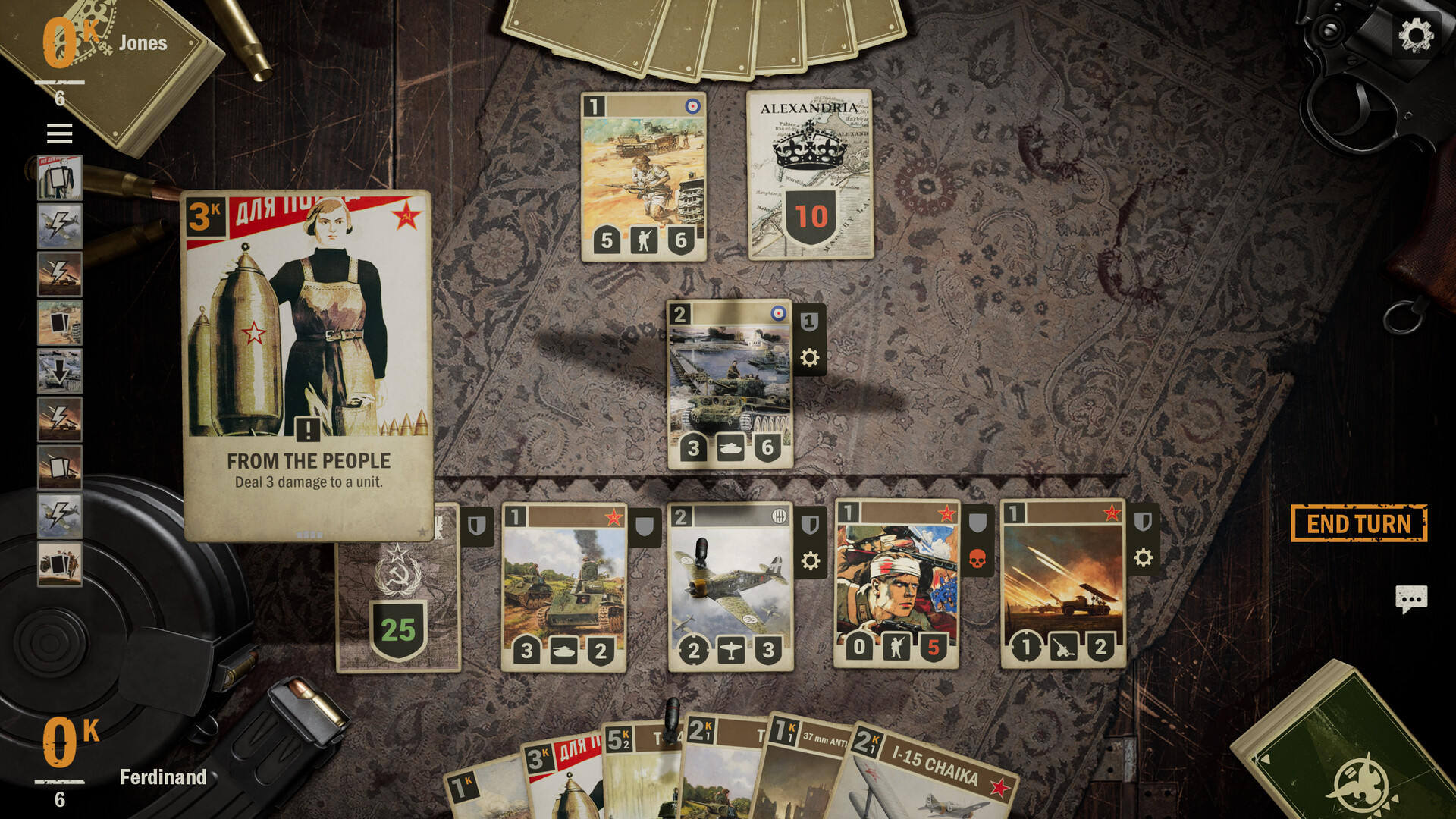
Each support line has HQ and up to 4 units; one side at a time controls the frontline, with up to 5 units. Hand identities are hidden; deployment, movement and attacks share the Kredit budget.
Compare two legal choices
Should you spend 3K deploying when an existing attack wins?
- Attack HQ with the existing tank
- Deploy another tank first
The frontline tank can pay 1K to destroy HQ at 3 defense. Deploying is legal but spends 3K without immediately winning. Check a certain finish; other positions still require checking Guard, counters and card effects.
Rule source; strategy is editorial analysisShould the same tank remove an enemy or hit HQ?
- Attack the enemy infantry
- Attack enemy HQ
Attacking the 1/2 infantry removes it and deals 1 retaliation damage to the tank. Attacking HQ deals 3 damage but leaves the infantry. HQ starts at 9 here; neither wins immediately. Compare removal with HQ pressure, without predicting the reply.
Rule source; strategy is editorial analysisWith 1K left, hit HQ with artillery or clear Guard with a tank?
- Artillery attacks HQ through Guard
- Tank removes Guard first
Artillery ignores the Guard restriction and can destroy HQ immediately. The tank may legally remove Guard, but spends the last Kredit, leaving none for artillery. No additional counters or triggers are present here.
Rule source; strategy is editorial analysisBoth have 3 attack: why can only the tank finish this turn?
- Move the tank, then attack HQ
- Move infantry into the frontline
The tank pays 1K to move and 1K to attack. The infantry moves for 0K but uses its operation and cannot then attack. Compare current costs and operation rules, not attack values alone.
Rule source; strategy is editorial analysisClear the air protection with an Order or a fighter trade?
- BURNING SKY, then bomber attacks HQ
- Trade fighters, then bomber attacks HQ
Both plans cost 2K and deal 1 to HQ. The Order spends a card but retains your 2/2 fighter; trading keeps the Order but removes both fighters. Future value depends on the reply, not HQ damage alone.
Rule source; strategy is editorial analysisPin and reinforce HQ, or damage the enemy with a fighter?
- NAVAL POWER: pin enemy, HQ gains 3
- Fighter attacks: damage enemy, keep Order
Both cost 1K. NAVAL POWER raises HQ from 9 to 12 and pins the enemy. A fighter attack leaves the 1/2 infantry at 1 defense and suffers 1 retaliation. Keeping the Order is not automatically safer; compare visible threats, HQ and card roles.
Rule source; strategy is editorial analysisOpening: mulligan and first turn
Start with 4 cards as first player or 5 as second. Select original cards to replace, preview and confirm; rejected cards return to the deck. The disclosed opponent keeps its hand and passes the required first turn. Then check your draw and resources. A fixed seed makes the WANGO exercise repeatable without exposing deck order or enemy cards.
Advanced: combat, air, Orders and counters
Combat & retaliation
Select the tank, then enemy Guard. Preview damage to both sides before confirming.
The 3/3 tank attacks 2/2 Guard: the enemy takes 3 and is removed; the tank takes 2 retaliation and retains 1 defense. A kill does not mean a free trade.
SourceAir units & targets
Try bomber against HQ to check the restriction, then use your fighter against the enemy fighter.
Both fighters have traded. Select the bomber and attack HQ.
The 3/2 Hurricane and 2/2 I-16 destroy each other. The bomber can then hit that line’s HQ for 1. Bombers bypass Guard but cannot ignore fighters in the target line.
SourceOrders & targets
Select BURNING SKY and target enemy air. Try HQ first to check invalid targets.
Pay 1K to deal 4 damage to enemy air. The Order and destroyed unit enter their respective discards. The Order occupies no unit slot and cannot target HQ or ground here.
SourceCounters & triggers
Select INTERCEPTION, then Activate counter. It remains in hand.
End turn. The disclosed teaching script plays BURNING SKY against your fighter.
Pay 1K to activate. Next enemy turn, the Order targeting your unit meets INTERCEPTION’s condition. The counter is consumed and prevents damage, leaving your fighter at 1/3. The disclosed script is for teaching, not a prediction.
SourceDeploy & wait
Deploy HIMEJI REGIMENT into support.
Try moving the new unit to see the restriction, then pass both turns.
Now select that unit and enter the frontline.
Without Blitz, a newly deployed unit cannot operate this turn. The disclosed opponent passes; on your next turn HIMEJI REGIMENT may move. Draws and Kredit refresh also occur.
SourceFury & two payments
Attack HQ with the Fury unit and preview the first cost.
Attack HQ with it again and pay a second operation cost.
HUMBER Mk II has 1 attack, 1K operation cost and Fury. Two attacks cost 2K and deal 2 to HQ; Fury is neither free nor unlimited.
SourceArmor & actual losses
Attack the 2/7 Heavy Armor 1 tank with your 3/2 fighter and compare actual damage.
Heavy Armor 1 reduces the incoming 3 damage to 2, leaving CHURCHILL at 5 defense. Its 2 retaliation destroys the fighter. Compare both losses.
SourceAmbush & first strike
Attack the 3/4 Ambush infantry with a 3/3 tank and see who deals damage first.
Ambush deals 3 damage first, destroying the tank before it deals its planned damage. The infantry remains 3/4. This is the first-defense Ambush resolution.
SourceSmokescreen & Orders
Try the tank against concealed artillery, then target it with FROM THE PEOPLE.
Smokescreen blocks unit attacks; Orders still resolve under their target restrictions. FROM THE PEOPLE pays 3K to deal 3 damage, removing this artillery.
SourcePinning & turn handoff
Pin the frontline enemy with NAVAL POWER and gain 3 HQ defense.
Pass to the enemy turn.
Temporarily control the scripted enemy: select the pinned unit, then your HQ to see the refusal. End its turn afterwards.
The pinned unit cannot attack. In this WANGO model pinning clears at the owning side’s turn end. It remains on board and the refused attack does not damage HQ. Opponent actions are a disclosed teaching script.
SourceRepair & stat changes
Select IMPERIAL ORDER and target your damaged 3/1 tank; preview repair and the buff.
Fully repair to the original 3 defense, then gain +1/+1 to become 4/4, for 1K. Check the printed effect and maximum defense.
SourceSacrifice, draw & destruction
Select DEADLY DUTY and target friendly MITO REGIMENT; compare board loss, draw and destruction.
DEADLY DUTY pays 1K, destroys your MITO REGIMENT and draws 2 cards. MITO’s destruction effect deals 2 to enemy HQ. You gain cards but pay both Kredits and a unit.
SourceNations and allies: WANGO snapshot
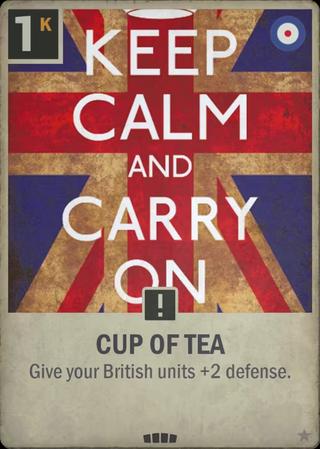
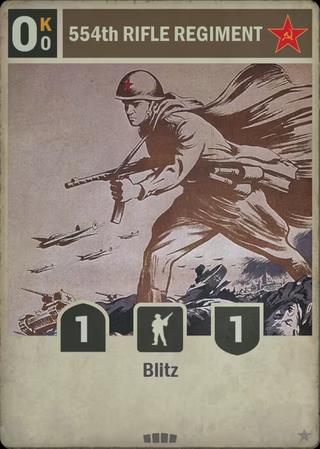
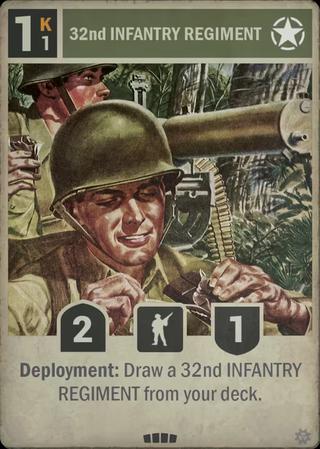
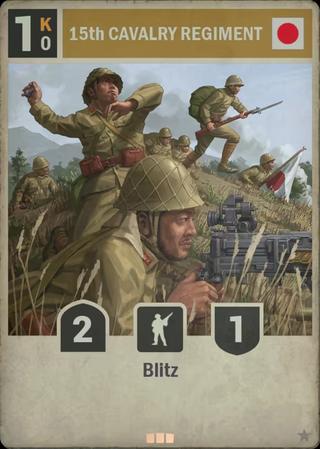
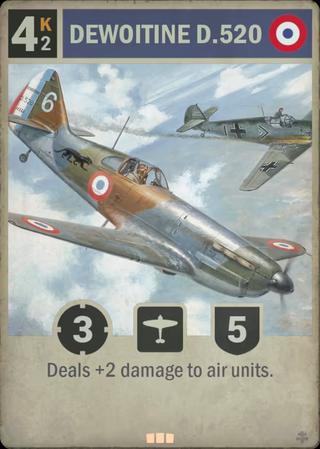
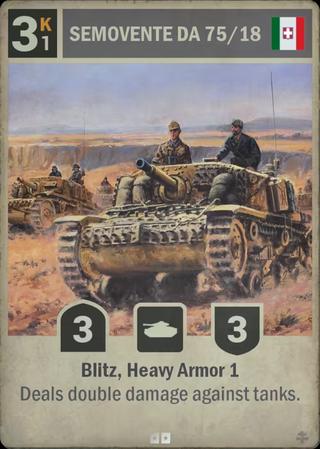
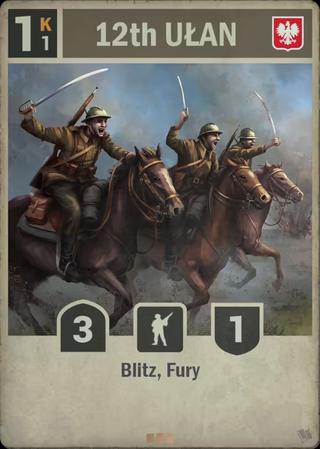
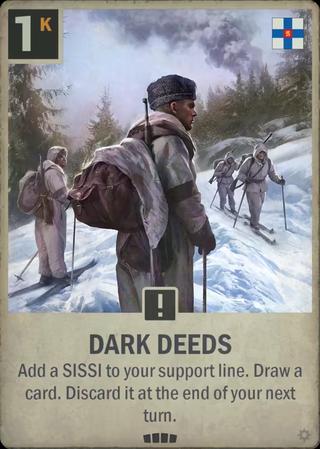
The WANGO model recognizes 5 main nations and 5 additional allies. A main nation can also be an ally. Images are examples, not proof of full effect coverage.
Japan-only ground teaching deck
39 drawable cards plus HQ: 31 units, 8 Orders and 12 unique cards. Validated against the WANGO snapshot; not an official reward deck, share code or current ranked recommendation. Practice ground pressure, tank budgets, repair and draw.
39 drawable cards plus HQ; 31 units, 8 Orders and 12 unique cards. Validated by the current WANGO builder; not an official starter or a current ranked recommendation.
Plan: establish early units and advance tanks. Repair keeps key units; draw Orders exchange a lower-value friendly unit for future cards. Tanks and artillery serve different roles, and operations still require a separate budget.
Mulligan for usable early plays rather than rarity. If units are present but cannot operate, revisit the budget; if cards run out, revisit draw and trade choices.
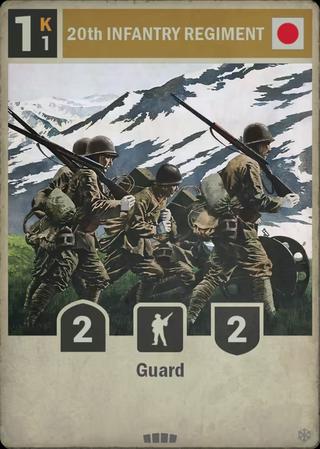 20th INFANTRY REGIMENT × 4
1K · Unit · 2/2
Guard: protect an adjacent key unit or HQ.
- 15th CAVALRY REGIMENT × 3
1K · Unit · 2/1
Early infantry: contest the board and choose between moving and attacking.
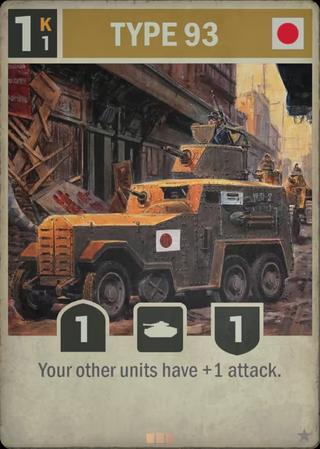 TYPE 93 × 3
1K · Unit · 1/1
Your other units have +1 attack.
Attack support: account for its bonus to other friendly units.
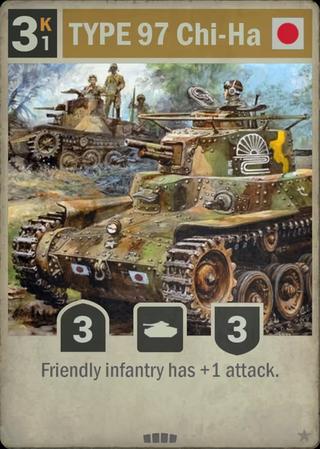 TYPE 97 Chi-Ha × 4
3K · Unit · 3/3
Friendly infantry has +1 attack.
Infantry synergy: supplies an attack bonus to friendly infantry.
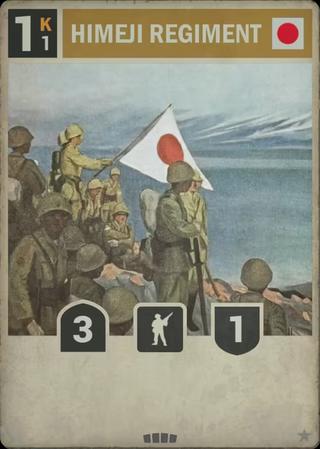 HIMEJI REGIMENT × 4
1K · Unit · 3/1
Early deployment: establish a unit while reserving operation costs.
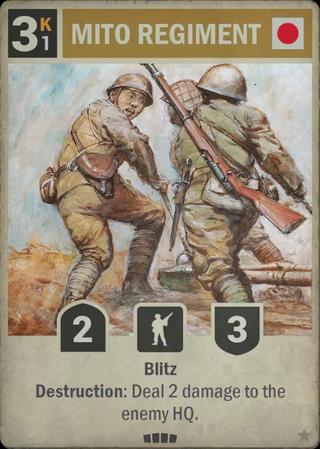 MITO REGIMENT × 4
3K · Unit · 2/3
Destruction: Deal 2 damage to the enemy HQ.
Destruction damage: can affect HQ even after being removed.
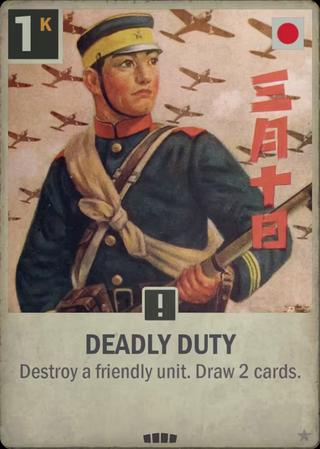 DEADLY DUTY × 4
1K · Order
Destroy a friendly unit. Draw 2 cards.
Draw: sacrifice a friendly unit for 2 cards and weigh the board loss.
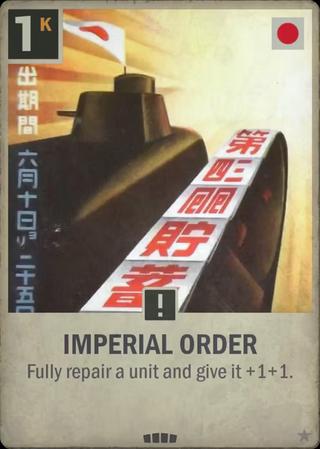 IMPERIAL ORDER × 4
1K · Order
Fully repair a unit and give it +1+1.
Repair and buff: preserve a damaged key unit; this is not a draw Order.
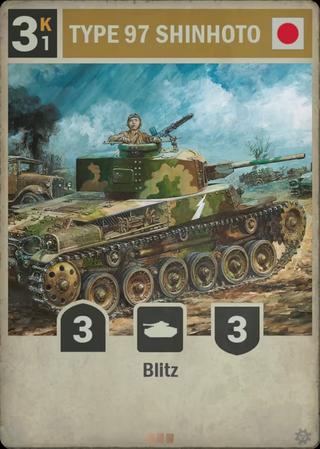
- TYPE 97 SHINHOTO × 3
3K · Unit · 3/3
Blitz tank: can operate on deployment; a full deploy-move-attack plan needs 5K.
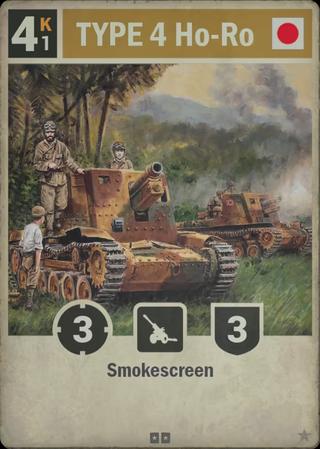
- TYPE 4 Ho-Ro × 2
4K · Unit · 3/3
Ranged artillery: attacks from support; account for Smokescreen and vulnerability.
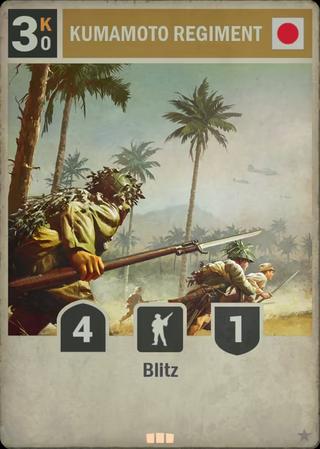 KUMAMOTO REGIMENT × 3
3K · Unit · 4/1
Midgame infantry: trade using its stats while budgeting operations.
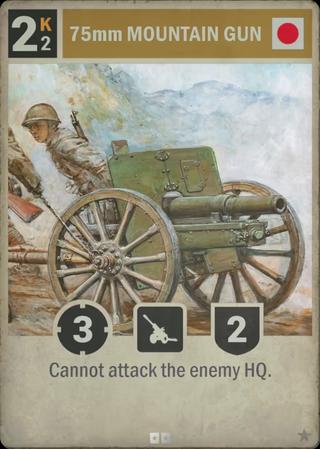 75mm MOUNTAIN GUN × 1
2K · Unit · 3/2
Cannot attack the enemy HQ.
Restricted artillery: answer units; it cannot finish enemy HQ.
Rule questions
How do you win, and how much defense does HQ start with?
Reduce enemy HQ to 0 defense or less; a basic HQ starts at 20 defense.
Conditions: Effects may change current defense. These prepared lessons are not full random openings.
Example: At 3 remaining defense in this lesson, 3 effective damage finishes the position.
Are deployment and operation costs the same?
No. Pay deployment cost to play a unit and operation cost separately for movement and attack.
Conditions: Unit type, operation limits and legal targets still apply; 0K does not allow unlimited actions.
Example: TYPE 97 SHINHOTO needs 3K to deploy, 1K to move and 1K to attack: 5K total.
Can you enter an enemy-held frontline?
No. Remove all enemy frontline units first.
Conditions: Only one side may control it at a time, with at most 5 units.
Example: Your tank cannot move in while the last enemy infantry still holds it.
Can support hold 5 units?
No. HQ occupies one position, leaving room for up to 4 units.
Conditions: A full support line blocks ordinary unit deployment. Orders are not units occupying slots.
Example: With HQ and 4 units, free a slot before deploying another unit.
Can infantry attack after moving?
Normally no. Infantry moves or attacks; a tank normally may do each once.
Conditions: Still check costs, deployment timing, pinning and card effects.
Example: The lesson’s 3-attack infantry cannot hit HQ after moving; the tank may pay another 1K to attack.
Does Blitz grant a free extra attack?
No. Blitz permits operating on the deployment turn; normal costs and operation limits still apply.
Conditions: Infantry and tanks still follow their respective operation rules.
Example: A Blitz tank still needs a budget for deployment, movement and attack.
Does Guard protect an entire line?
No. It protects adjacent targets in the same line, including HQ when adjacent.
Conditions: Artillery and bombers bypass this restriction; other effects still matter.
Example: A tank cannot directly hit HQ next to Guard, while artillery offers another legal choice.
Why can Ambush destroy an attacker without taking damage?
On its first attack received that round, an Ambush unit deals defensive damage first. If that destroys the attacker, the Ambush unit takes no attack damage.
Conditions: After using Ambush that round, later attacks normally resolve regular combat.
Example: Check whether defensive damage destroys your attacker before choosing a trade.
Is a unit with Smokescreen immune to damage?
No. Smokescreen prevents unit attacks, but Orders may still damage it.
Conditions: The unit loses Smokescreen after moving or attacking.
Example: A tank being unable to attack the target does not rule out a legal damage Order.
Does activating a Countermeasure occupy support?
No. It stays in hand after activation and triggers only when its condition is met.
Conditions: It normally applies during the next enemy turn; if untriggered, it becomes inactive. The enemy cannot see its identity or activation cost change.
Example: An inactive counter is not an active protection.
Do you get Kredits back when an Order is countered?
No. Issuing the Order costs Kredits even when its effect is countered.
Conditions: Targets, trigger conditions and counter eligibility depend on cards and position.
Example: Do not treat an unknown enemy counter as certain to trigger or certain not to trigger.
Why choose 39 cards for a 40-card deck?
The 40 includes HQ, leaving 39 drawable cards.
Conditions: Normally choose one main nation and at most one ally, with no more than 12 ally cards.
Example: A single-nation deck is also permitted; an ally is optional.
How many copies of a card may a deck contain?
The usual limits are 4 Standard, 3 Limited, 2 Special and 1 Elite.
Conditions: Pool, nation and other deck restrictions still apply. Rarity does not determine suitability.
Example: An Elite is not a high-cost card you may include four times.
What happens when you draw with 9 cards in hand?
The hand limit is 9; extra cards drawn are discarded.
Conditions: The opening module supports a real mulligan and entry to the first turn; basic lessons begin in prepared public positions.
Example: Consider losing drawn cards before drawing into a full hand.
Does an empty deck simply stop future draws?
No. Trying to draw from an empty deck damages your HQ.
Conditions: Subsequent start-of-turn fatigue damage increases. The lessons do not simulate the full draw process.
Example: Do not judge safety only by the number of units on the board.
Does this cover every official card effect?
No. This page teaches its stated core mechanics; WANGO battles allow only implemented card effects.
Conditions: Card snapshots, rule descriptions and implementation scope are recorded separately. A catalog entry is not proof of full effect coverage.
Example: Being able to browse a card does not mean every effect is supported in the current demo.
When do Kredits refresh, and how far do slots grow naturally?
Kredits replenish at the start of your turn; slots normally increase by 1 each turn up to the natural maximum of 12.
Conditions: Card effects may change slots or current resources. Extra slots and temporary Kredits differ. These lessons begin with a fixed budget.
Example: A 5K lesson budget leaves 2K after a 3K deployment, enough for two 1K operations.
What should you keep in a mulligan?
Look for affordable early plays and interaction before choosing replacements.
Conditions: Keeps depend on your plan and known matchup. Rejected cards return to the deck rather than being permanently discarded.
Example: With early units and interaction already present, consider replacing unaffordable expensive cards; test actual replacements in the opening exercise.
Why do both units take damage?
Ordinary unit combat normally deals attack damage simultaneously; units at 0 defense are removed.
Conditions: Artillery, bombers, Ambush, Heavy Armor and card text can change the outcome.
Example: In the combat exercise a 3/3 tank destroys 2/2 Guard and retains only 1 defense.
Can a new unit operate, and when do triggers happen?
A new ordinary unit normally waits for a later friendly turn; Blitz allows deployment-turn operations. Deployment effects are separate from operations.
Conditions: Read deployment, damage, attack, destruction and turn triggers on the card. Play order alone is insufficient.
Example: 32nd INFANTRY REGIMENT searches the deck for a copy when deployed; that does not grant an immediate attack.
Does Fury give two free operations?
Fury permits two attacks per turn, with costs paid separately.
Conditions: Movement limits, deployment timing and legal targets still apply. Practice the Fury lesson to verify the rule.
Example: Reserve both operation costs and compare targets instead of treating Fury as free deployment or unlimited movement.
How do Heavy Armor and Shock affect retaliation?
Heavy Armor reduces incoming unit damage by its level; Shock negates enemy retaliation on the first attack.
Conditions: Distinguish these from Order damage and Ambush. Check exact text; this reference does not claim all combinations are implemented.
Example: Check participating units’ keywords before comparing losses instead of using raw attack values alone.
Can a pinned unit move or attack?
Pinning prevents unit operations; its duration follows the rules and card effects.
Conditions: The WANGO model clears pinning at the owning side’s turn end. Do not confuse pinning with removing keywords.
Example: NAVAL POWER pins an enemy and adds 3 defense to your HQ. The unit remains in play.
Why not fill a deck with expensive or rare cards?
Provide plays across the game and reserve Kredits for units already on board.
Conditions: There is no universal unit/Order ratio. This sample is educational, not a current ranked recommendation.
Example: Check early units, answers, card supply and finishers before changing slots.
What do Aggro, Midrange, Control and Combo aim to do?
Aggro aims for an early finish; Midrange adjusts its role; Control answers threats before winning late; Combo uses card interactions.
Conditions: A nation is not a fixed archetype. Check the actual plan, curve and synergies.
Example: A tank can provide early pressure or a later finish; nation alone does not decide your mulligan.
Why can a collection card be illegal for a mode?
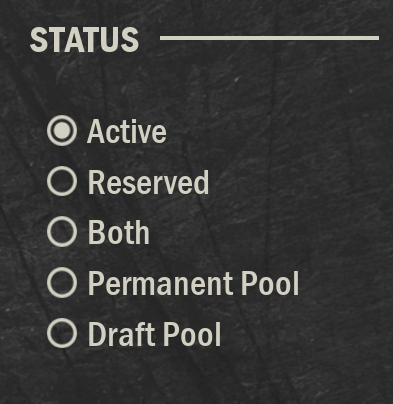
Active is the current ranked pool; Reserved cards are not allowed in ranked; Permanent cards remain in Active without rotating. Ownership, mode legality and implemented effects are separate checks.
Conditions: Official pools change by mode and update; check the client. WANGO additionally checks implemented effects and the snapshot standard-pool flag.
Example: KAMIKAZE is outside WANGO’s verified standard pool in this snapshot, so it is excluded from this sample. This does not establish current official ranked legality.
What should a beginner do next?
Practice a deck whose card roles you understand, diagnose concrete losses, then change it incrementally.
Conditions: The restored beginner route is general advice; official campaign, reward and mode availability follow the current client.
Example: Record missed early plays, operation costs, missing answers or card supply, then change a few slots and compare recurring problems.
Sources and lesson scope
Original cards and WANGO rules: seeded mulligan and first turn, 4 basic and 12 ability and resolution exercises. Cross-turn counters use a disclosed teaching script, not predicted replies. Card snapshot: 2026-10-14.
Rules checked: 2026-10-28
Interactions use WANGO’s independent rule engine, not official client code. Card values use the documented snapshot and do not claim current balance or every effect.
Official screenshot source