How to play Carcassonne
Place tiles and meeples to learn feature scoring and final field scoring.
Modern base rules with 72 land tiles and regular meeples; farmers are listed separately as the advanced base rule. Lessons are fixed local positions, not a full random game. The River, The Abbot and other expansions are disabled.
Learn by playing
Place a tile and a meeple
Rotate the city cap, connect it to the starting city, then place a knight to score 4.
Place the tile, optionally deploy a meeple, then score connected features.
Occupancy and return
Close an occupied city: no extra knight may be deployed. Confirm to score 4 and return the original knight.
Place the tile, optionally deploy a meeple, then score connected features.
Close a road
Rotate the road-ending monastery to close the road, then confirm for 2.
Place the tile, optionally deploy a meeple, then score connected features.
Eight neighbors of a monastery
Fill the last surrounding space to score 9 and return the monk.
Place the tile, optionally deploy a meeple, then score connected features.
Final field scoring
Complete the city with the final tile; the farmer scores 3 for this distinct completed city.
Place the tile, optionally deploy a meeple, then score connected features.
Tied majority
Merge three cities; no new meeple may enter the occupied city. Confirm for 8 each.
Tied majorities each receive the full value, without splitting it; all knights return.
Meeple majority
Red already has two knights in one city. Join blue’s city and resolve 10 versus 0; all knights return.
Count meeples in the merged city: red 2 versus blue 1 scores 10 to red and 0 to blue, but blue also recovers its knight. Red’s two knights came from an earlier legal merge of separate cities, not direct deployment into an occupied city.
Coat of arms
Complete a three-tile city with one coat of arms to score 8.
A complete city scores 2 per tile and 2 per coat of arms: 3×2+2=8.
Unfinished features
Place the final tile and score unfinished city, road and monastery: 3+1+4=8.
Unfinished city tiles and coats of arms score 1 each; road tiles score 1; a monastery scores itself plus existing neighbors.
Field counting
Place the last tile: repeated contact with one city counts once; unfinished cities do not count.
This field touches two distinct completed cities more than once, but scores only 2×3=6.
No meeples left
With 0 in supply, complete your city: skip deployment first, then score 4 and recover 1 meeple.
Deployment precedes scoring and return: you cannot deploy a meeple that returns later this turn.
Match every edge
Rotate the starting-pattern tile into the gap, matching both city and road. Try 180° to see why it is rejected.
Every touching edge must match; matching just one neighbor is insufficient.
Unplaceable tile
Public fixed sequence: place the monastery; the four-sided city has no legal position, so remove it and draw a city cap.
Check all positions and all rotations; a tile that fits may not be discarded voluntarily.
Pieces and the growing map
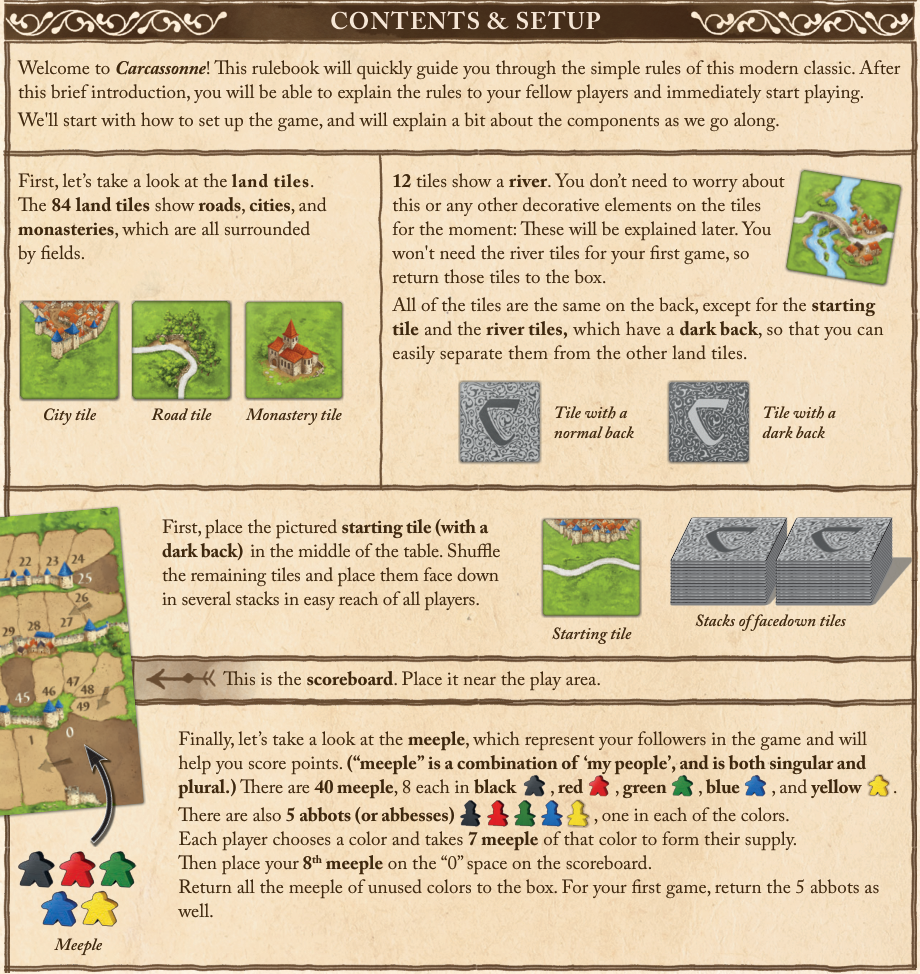
Official C3 components and setup
72 base land tiles, 40 regular meeples (8 per color), 1 scoreboard. Each color uses 1 scoring meeple and 7 in supply. The extra 12 River tiles and 5 abbots are disabled in lessons.
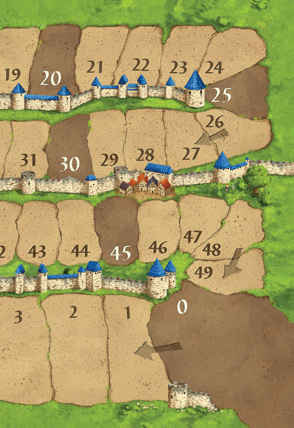
Original scoreboard detail
Continue counting beyond a lap. There is no fixed map; tiles form cities, roads, monasteries and fields.

red meeple
8 per color: 1 scoring meeple, 7 in supply.

blue meeple
8 per color: 1 scoring meeple, 7 in supply.

black meeple
8 per color: 1 scoring meeple, 7 in supply.

green meeple
8 per color: 1 scoring meeple, 7 in supply.

yellow meeple
8 per color: 1 scoring meeple, 7 in supply.
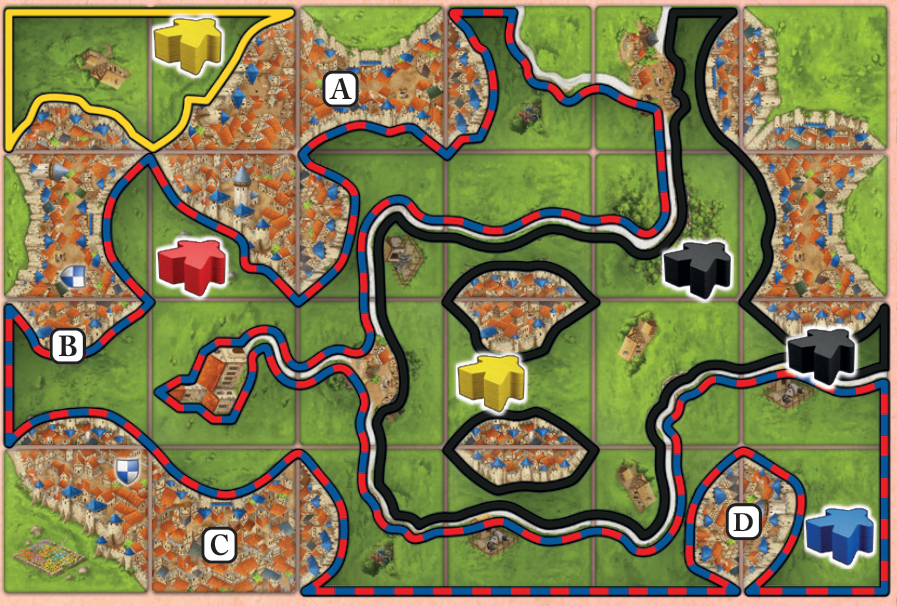
Official field example
Static reference, separate from interactive positions; roads and cities divide fields.
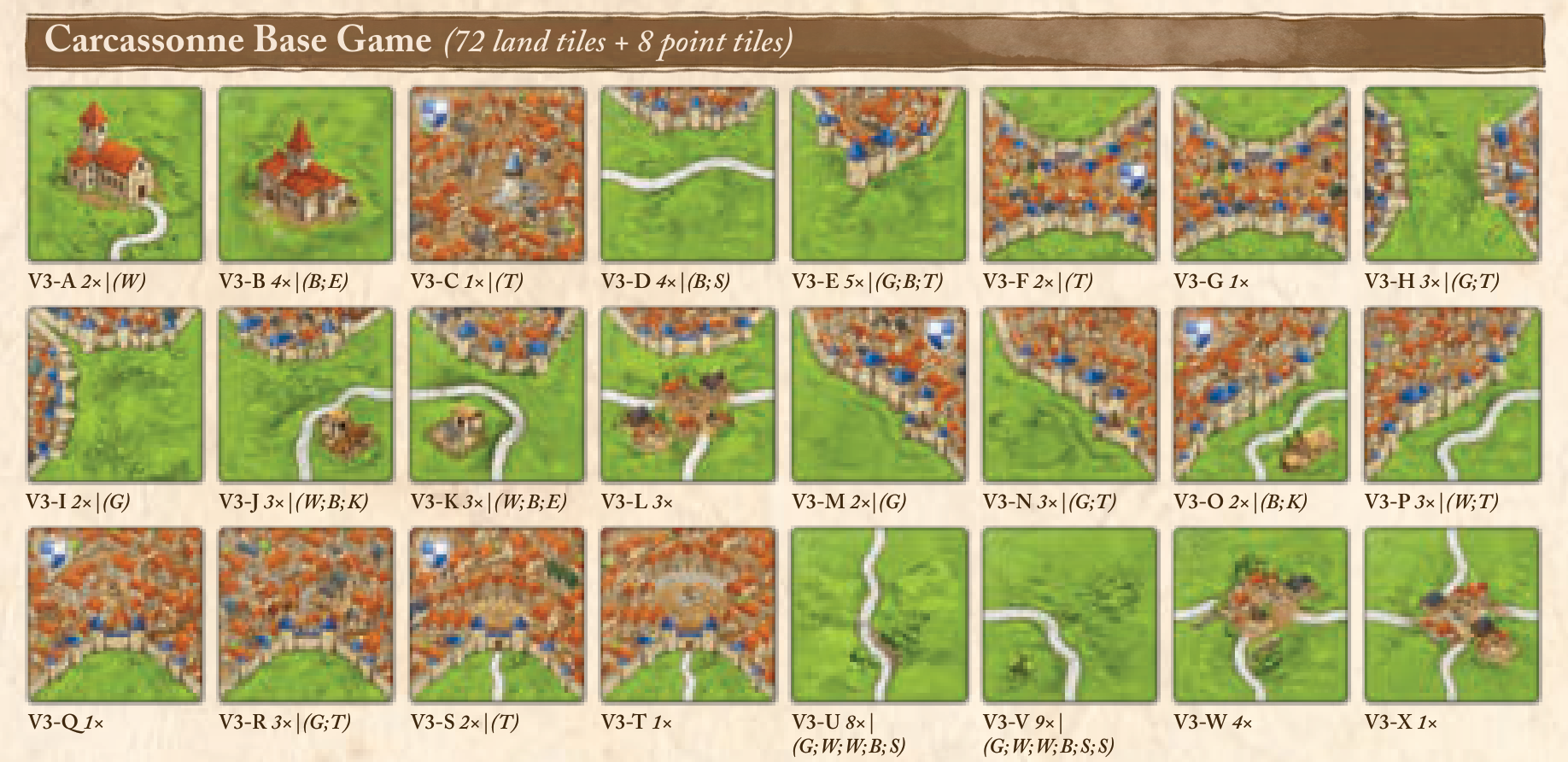
24 base tile types and counts, totaling 72
Base inventory from p.22 of the official C3 Big Box rules; excludes expansion tiles.
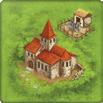
Monastery × 4
Base-tile structural index: identify regions and connectivity in the original art; tiles rotate.

Monastery with road × 2
Base-tile structural index: identify regions and connectivity in the original art; tiles rotate.
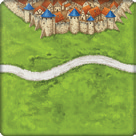
City cap and crossing road (includes start) × 4
Base-tile structural index: identify regions and connectivity in the original art; tiles rotate.
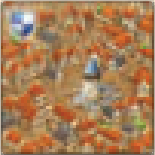
Four-sided city with coat of arms × 1
Base-tile structural index: identify regions and connectivity in the original art; tiles rotate.
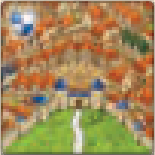
Three-sided city, road and coat of arms × 2
Base-tile structural index: identify regions and connectivity in the original art; tiles rotate.
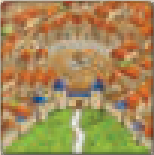
Three-sided city and road × 1
Base-tile structural index: identify regions and connectivity in the original art; tiles rotate.
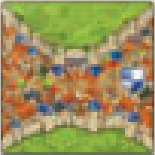
City across the tile with coat of arms × 2
Base-tile structural index: identify regions and connectivity in the original art; tiles rotate.
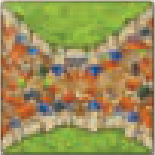
City across the tile × 1
Base-tile structural index: identify regions and connectivity in the original art; tiles rotate.
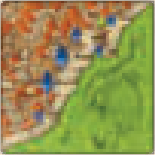
City joining adjacent sides × 3
Base-tile structural index: identify regions and connectivity in the original art; tiles rotate.
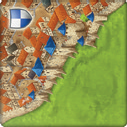
Adjacent city sides with coat of arms × 2
Base-tile structural index: identify regions and connectivity in the original art; tiles rotate.
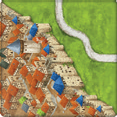
Adjacent city sides and curved road × 3
Base-tile structural index: identify regions and connectivity in the original art; tiles rotate.
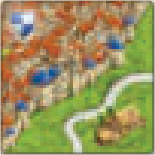
Adjacent city sides, curved road and coat of arms × 2
Base-tile structural index: identify regions and connectivity in the original art; tiles rotate.
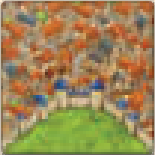
Three-sided city × 3
Base-tile structural index: identify regions and connectivity in the original art; tiles rotate.
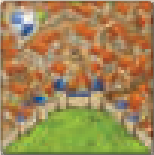
Three-sided city with coat of arms × 1
Base-tile structural index: identify regions and connectivity in the original art; tiles rotate.
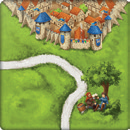
City cap and right-hand curved road × 3
Base-tile structural index: identify regions and connectivity in the original art; tiles rotate.
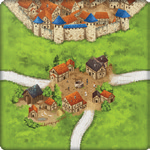
City cap and three-way junction × 3
Base-tile structural index: identify regions and connectivity in the original art; tiles rotate.
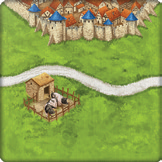
City cap and left-hand curved road × 3
Base-tile structural index: identify regions and connectivity in the original art; tiles rotate.
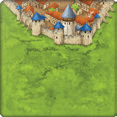
Single city cap × 5
Base-tile structural index: identify regions and connectivity in the original art; tiles rotate.
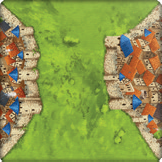
Two separate cities on opposite sides × 3
Base-tile structural index: identify regions and connectivity in the original art; tiles rotate.
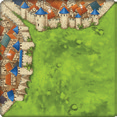
Two separate cities on adjacent sides × 2
Base-tile structural index: identify regions and connectivity in the original art; tiles rotate.
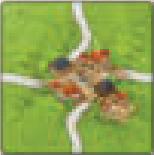
Four-way junction × 1
Base-tile structural index: identify regions and connectivity in the original art; tiles rotate.
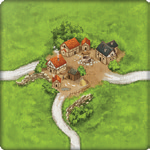
Three-way junction × 4
Base-tile structural index: identify regions and connectivity in the original art; tiles rotate.
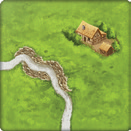
Curved road × 9
Base-tile structural index: identify regions and connectivity in the original art; tiles rotate.
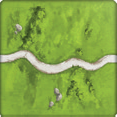
Straight road × 8
Base-tile structural index: identify regions and connectivity in the original art; tiles rotate.
Decisions
With the same city cap: A closes the city for 4 now and returns the knight; B places elsewhere for 0 now, leaving the city open and the knight committed. Future draws and opponents are unknown. This is WANGO position analysis.
Three real strategy positions
Close or leave open
Same city cap: close for 4 and recover the knight, or place elsewhere and leave the city open.
Secure 4 and recover the knight; this city can no longer grow.
Score 0 now and keep the knight committed. Future draws, opponents and completion are unknown.
Final knight or farmer
Same final tile and 7 available meeples: deploy a knight or farmer after completing the shield city, then compare 8 and 3.
The knight scores 8 for the completed city and returns. This is the known final turn, so no further deployment follows.
The farmer stays until immediate final scoring for 3 from one completed city, 5 fewer than the knight here.
Final monk or farmer
Same final monastery: a monk scores 4 with 3 surrounding tiles; a farmer scores 3 for one completed city.
The monastery is unfinished, but final scoring gives 1+3=4.
Repeated contact with the same completed city still scores 3, not 3 per contact.
Teaching coverage and remaining gaps
13 lessons and 3 strategy positions. The following have text and relevant original images, but no dedicated interactive exercise.
- Road loops and independent roads at a junction
- Count a tile once even when the same road or city passes through it repeatedly
- Score-track laps above 50 and an overall tied victory
The River, The Abbot and other expansions are disabled and are not claimed as completed lessons.
Rule questions
How do you win, and when does Carcassonne end?
After all land tiles are used and the last turn is completed, carry out final scoring. The highest total wins; tied leaders share victory.
Conditions: Include completed features during play, plus unfinished features and fields at the end.
Example: If the last tile completes a city, score that city before unfinished features and fields.
How many meeples does each player start with?
Take 8 meeples in one color: put 1 on score-track space 0 and keep 7 in your supply.
Conditions: Base game: 2–5 players. Place the starting tile face up; shuffle the other 71 face down and the youngest player starts.
Example: The scoring meeple is not an eighth deployable meeple.
What is the order of a turn?
Draw and place 1 land tile; optionally deploy at most 1 meeple from your supply on that tile; then score completed features and return their meeples.
Conditions: Deployment precedes scoring. A meeple returned later this turn cannot be deployed earlier in the same turn.
Example: With no meeples in supply, skip deployment even if scoring will return one this turn.
Can tiles touch diagonally, and which edges must match?
A new tile must share an edge with an existing tile, and every touching edge must match.
Conditions: Road meets road, city meets city, field meets field. Corner contact alone is insufficient. Rotate freely; if no position or rotation fits anywhere, remove the tile and draw another.
Example: A gap touching two neighbors must match both edges.
Can you place a meeple on an occupied road or city?
You cannot deploy directly into a connected feature that already contains any meeple, including your own.
Conditions: Check the entire connected feature, not only the new tile. Deploy only on the new tile; deployment is optional.
Example: If an opponent occupies the far end of a road, extending it does not let you deploy onto that road.
When is a road complete, and how does it score?
A road is complete when its ends reach cities, monasteries or junctions, or form a loop. Score 1 per tile and return its meeples.
Conditions: Count each tile once in that road. A junction separates roads.
Example: Two road-ending monastery tiles facing one another form a completed two-tile road worth 2 points.
How do cities and coats of arms score?
A city is complete when fully enclosed without gaps. Score 2 per tile plus 2 per coat of arms.
Conditions: Count a tile only once in the same city. Return all meeples after scoring, including a player who lost the majority.
Example: A complete city across 3 tiles with 1 coat of arms scores 3×2+2=8.
When does a monastery score 9?
A monastery is complete when all 8 surrounding spaces contain tiles. Score 9 and return the monk.
Conditions: Include diagonal spaces. Surrounding tiles need not share a feature or be placed by the monk’s owner.
Example: With 7 surrounding tiles, filling the last space completes it for 9.
What if separate occupied features merge?
Existing meeples may remain when separate features merge. The player with the most meeples scores the full value; every tied majority scores the full value.
Conditions: Do not divide the points. Minority players score 0. Return all meeples after a completed road, city or monastery scores.
Example: An 8-point city with red 1, blue 1 scores 8 each; red 2, blue 1 scores red 8, blue 0.
Where do farmers go, and when do they return?
Lay a farmer down in an unoccupied connected field on the new tile. It stays until final scoring.
Conditions: Roads, cities and map edges divide fields; follow printed connectivity. Farmers are the advanced base-game rule and may be omitted in an introductory game.
Example: Committing the last available meeple as a farmer leaves no supply until another feature returns a meeple.
How do fields score, including repeated contact with a city?
At the end, each field scores 3 per distinct adjacent completed city.
Conditions: Ignore unfinished cities and repeated contact with the same city. Use farmer majorities and full points for tied majorities.
Example: A field touching one complete city twice and one incomplete city still scores 3.
How do unfinished features score?
At the end, an unfinished road scores 1 per tile; city 1 per tile plus 1 per coat of arms; monastery 1 plus the number of surrounding tiles.
Conditions: Completed cities score 2 per tile and coat of arms instead. Roads use 1 per tile whether finished or unfinished.
Example: An unfinished 3-tile city with 1 coat of arms scores 4; a monastery with 5 neighbors scores 6.
Are The River and The Abbot enabled here?
These lessons use the 72 base land tiles, without The River or The Abbot.
Conditions: Some newer boxes include 12 River tiles and 5 abbots; these do not change the base counts of 72 land tiles and 40 regular meeples. Check the full demo’s settings for its River option.
Example: A garden is not a monastery for a regular monk; The Abbot has separate rules.
What if the drawn tile cannot be placed anywhere?
Check every location and rotation. If none is legal, remove that tile and draw another.
Conditions: Disliking a tile, a poor score, or a wrong current rotation is not a reason to redraw.
Example: In the public teaching sequence, two monasteries expose only field edges, so the four-sided city cannot fit; remove it and draw a city cap.
How do loops and junctions affect roads?
A closed road loop is complete. A junction separates the roads meeting it; they do not automatically connect.
Conditions: Cities and monasteries can also end a road. Count each tile only once in the same road.
Example: The three arms of a junction are three separate roads; a meeple on one arm does not occupy the other two.
What happens above 50 points or when final totals tie?
Keep accumulating the total after a lap; completing the score track does not end the game. Players tied for the highest final total share victory.
Conditions: The game ends when tiles run out and final scoring is complete, not at a track position.
Example: A player with 58 is 10 ahead of a player with 48; do not compare only their marker positions.
Sources and scope
Checked 2026-10-28. Modern C3 base rules (©2023), official supplement and C3 Big Box inventory. Farmers are the advanced base rule and may be omitted in a first game. Interactions use fixed local positions with the WANGO rules engine, not a full random game. Images are original official-PDF excerpts; rights remain with the publisher and artists.
Official rules: p.2 setup, p.3 turn and road, p.4 city and monastery, p.5 merging and majorities, p.6 end · Official supplement: p.1 fields, p.2 River and Abbot · Official complete base inventory, p.22