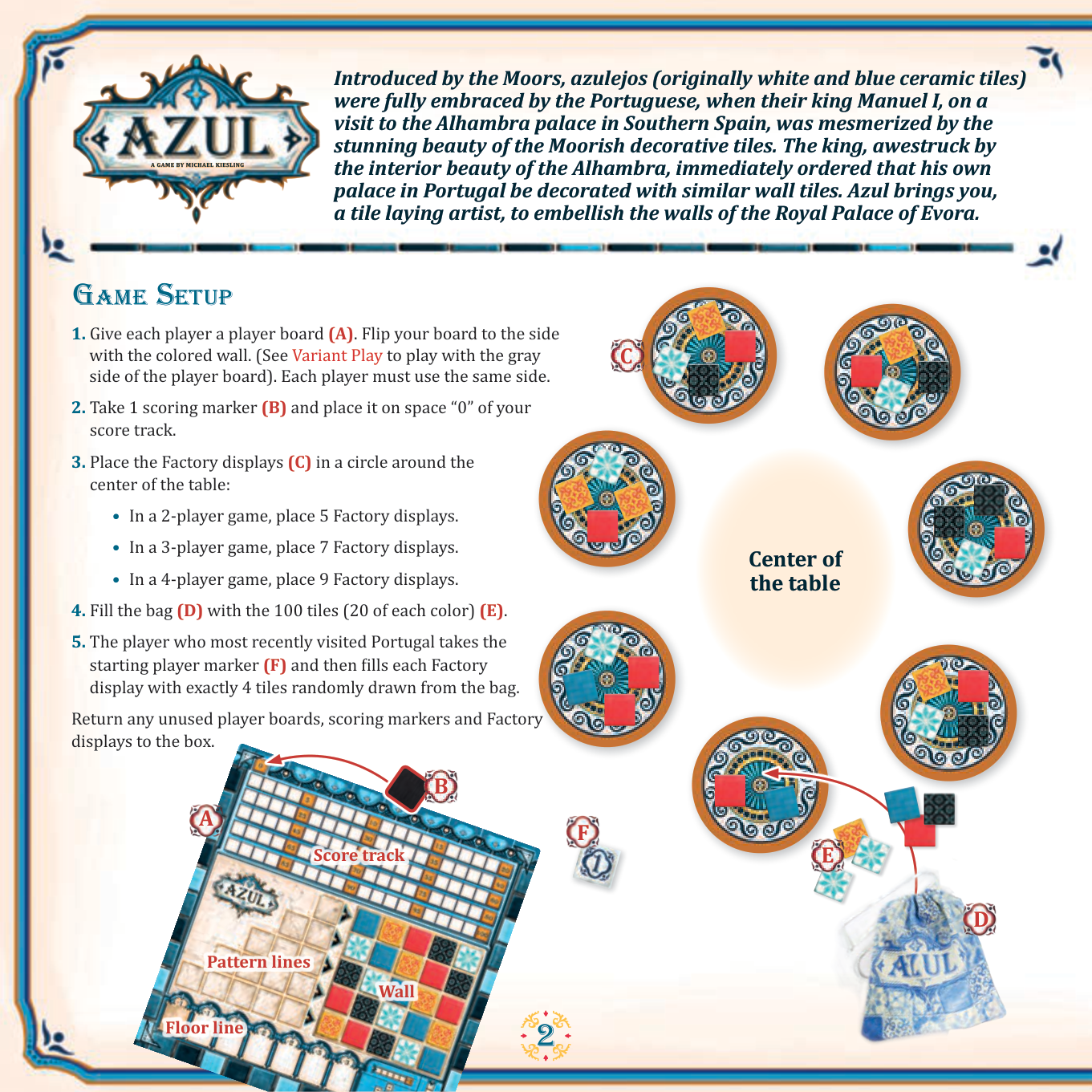
Azul · Rules and setup
Take a batch, fill a pattern line, then see wall connections and floor costs.
Learn by playing
Fourteen lessons cover drafting, pattern lines, wall scoring, floor costs, ending and refill. Choose, preview, then confirm. Original-image interaction requires JavaScript; complete rules remain readable without completing lessons.
Take a factory batch
Take blue from factory 1 into pattern line two.
Take all of that color; leftovers move to the center.
Center and starting marker
Take center reds into line three; watch the floor.
The marker costs a floor slot in exchange for starting next round.
Overflow cannot split
Take three blues to complete line three; watch the excess.
Line three has one vacancy, so two tiles fall.
Color and wall restrictions
Take blue; try lines two and three before choosing a legal line.
Line two holds red and wall row three already has blue; neither can accept blue.
Choose the floor
Take yellow, then choose the floor for the whole batch.
You may decline a pattern line, but must place the entire batch.
Complete and incomplete
Resolve wall tiling and see which lines remain.
A full line transfers one and discards the rest; incomplete lines stay.
An isolated tile
Tile the completed first line.
Only uninterrupted orthogonal neighbors connect; an isolated tile scores one.
Score a crossing
Place the row-three blue; count horizontal and vertical runs separately.
Three horizontally plus two vertically earns five; the new tile counts in both.
Resolve top to bottom
Resolve the top blue line, then the second cyan line.
Blue earns one, then cyan immediately below it earns two, for three total.
Score before floor cost
Resolve a round with the marker and two fallen tiles.
Three slots cost four: two existing points plus one wall point minus four stops at zero.
When the floor is full
Take four yellows and send them to the floor.
All seven slots are occupied; extra ordinary tiles go to the lid and the floor still costs fourteen.
A row triggers the ending
Complete the first wall row and resolve scoring and bonuses.
The complete wall row ends play; resolve the floor before adding row bonuses.
Stacking bonuses
Resolve five complete blue lines and inspect stacked bonuses.
Initially every wall row lacks blue, so no row is complete. Placing the five blues gives 5×2+5×7+5×10=95 bonus points.
Refill and recycle
With two tiles in the bag, refill using the declared teaching order.
Real draws are random. This fixed public sequence demonstrates recycling and four per factory.
Original pieces and both board sides
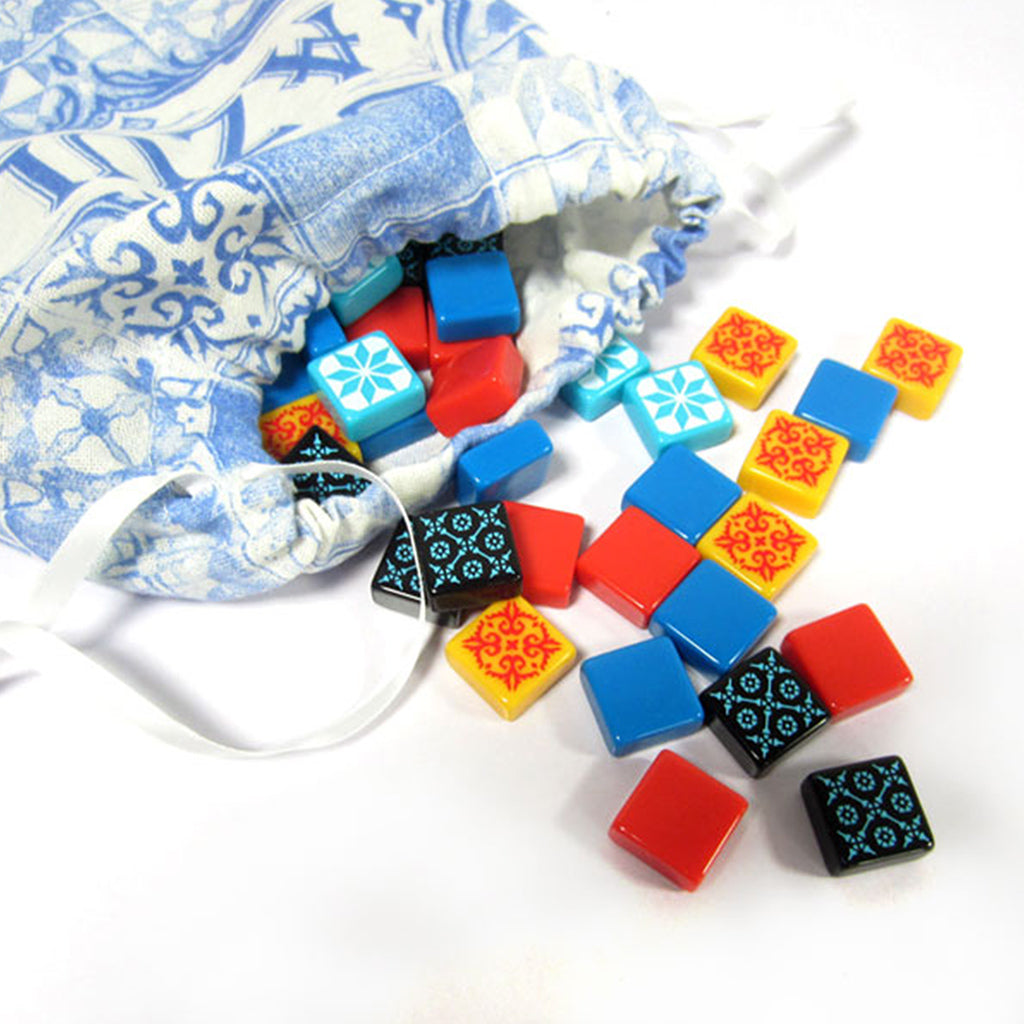
Classic contains 100 tiles (20 in each of five colors), four double-sided boards, four score markers, nine factories, one starting-player marker, a bag and rules. The box lid holds discards.


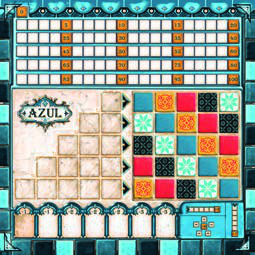

All players use the gray side together. A complete line may place its tile in an empty space of that wall row, with no repeated color in any row or column.
All other rules remain. If a complete line has no legal wall space, its entire contents fall to the floor. Interactive lessons here use only the fixed colored wall.
Decisions
Complete now or avoid overflow?
Take the same two blues into line one or line two; confirm both.
Line one completes with one fallen tile; line two completes without overflow. Here line two saves floor cost; wall value still depends on the wall.
Claim initiative or avoid the floor?
Take two reds into line two from either the center or factory.
Both fill the same line. Center claims initiative and a floor slot; factory avoids that slot but sends blue and yellow to the center for opponents.
End now or keep building?
Place the final two yellows in line one or line three; confirm then tile the wall to compare score and ending.
Line one completes a wall row: five points, one floor cost and two end-bonus points, ending play. Line three places elsewhere and continues. Delaying is not guaranteed to help; compare opponents’ totals in a real match.
Rule questions
How do you win, and when does play end?
The highest final score wins. Play ends after a round in which someone completes a five-tile wall row.
Conditions: Finish wall tiling and floor penalties for every player before end bonuses. A full pattern line does not trigger the ending.
Example: A full first pattern line places one tile; five occupied spaces in a wall row trigger the final round.
What is needed for setup?
Classic contains 100 tiles (20 in each of five colors), four double-sided boards, four score markers, nine factories, one starting-player marker, a bag and rules. The box lid holds discards.
Conditions: Use 5/7/9 factories for 2/3/4 players, with four random tiles each. Everyone uses the same board side and starts at zero. The most recent visitor to Portugal starts.
Example: Two players begin with 20 tiles across five factories; the other 80 remain in the bag, not the center.
Can you take only some tiles of one color?
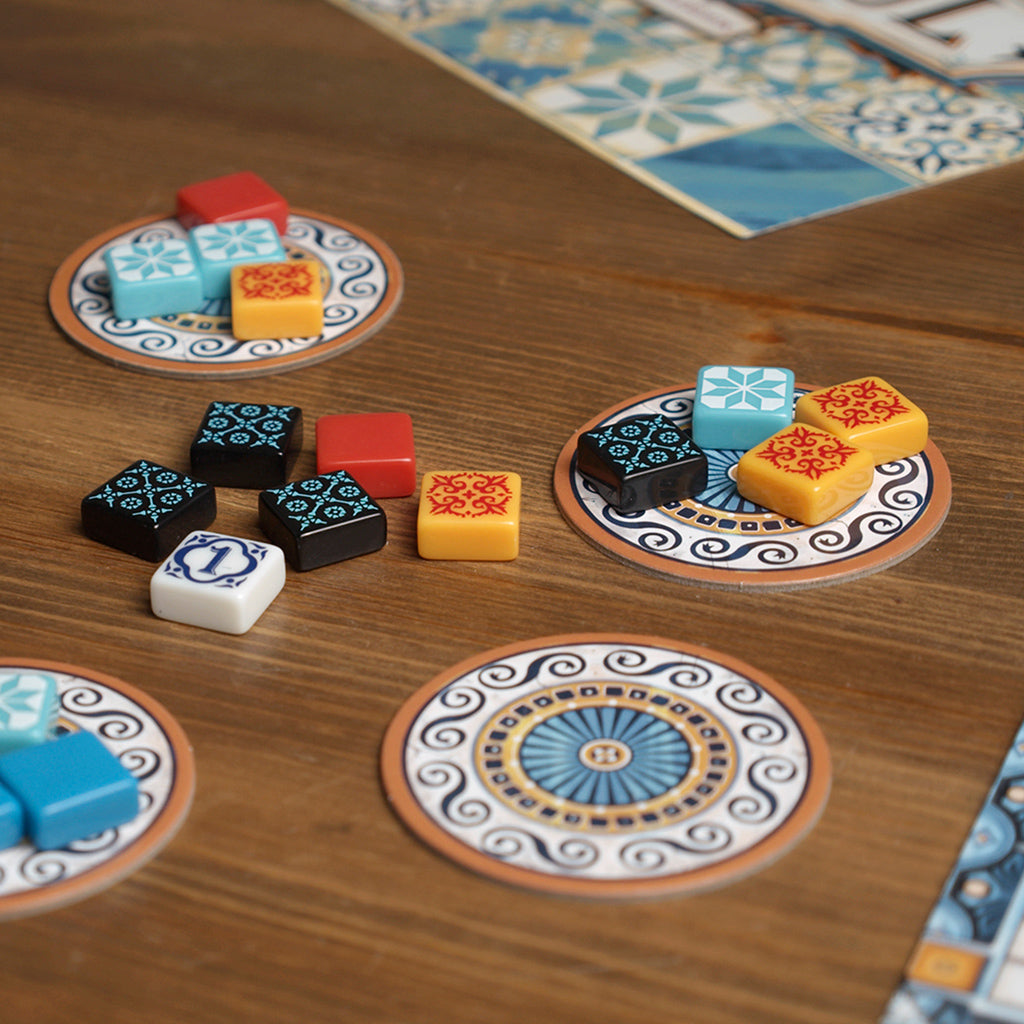
Take every tile of the chosen color from one factory; move every other tile there to the center.
Conditions: Choose exactly one source. Do not combine factories or combine a factory with the center. Place the batch after taking it.
Example: A factory with blue, blue, red and yellow yields both blues; red and yellow move to the center and the factory empties.
How do center picks and the starting marker work?
A center pick also takes all tiles of one color. The first center picker that round also takes the starting marker into the leftmost free floor space.
Conditions: The marker incurs a floor penalty. Its holder keeps it after cleanup and prepares and starts the next round. It is not a tile color that can be taken alone.
Example: Taking three red tiles from the center also claims the marker; the reds share one pattern line and the marker occupies a floor space.
Can one batch be split across pattern lines?
No. Choose one pattern line for the batch, fill it right to left, and send overflow to the floor.
Conditions: The five capacities are 1 through 5. Occupied lines accept only their existing color; full lines accept no more. You may send the entire batch to the floor.
Example: With two blues in line three, taking three more fills one space and drops two; they cannot go to line four.
Why can a wall color block its pattern line?
A pattern line cannot accept a color already present in its corresponding wall row.
Conditions: Check the matching row, not the whole wall. On the colored side, each row has one fixed space per color.
Example: A red in wall row two blocks red in pattern line two; line three may still accept it if otherwise legal.
Are incomplete lines cleared at round end?
No. Incomplete pattern lines carry over; only complete lines transfer a tile to the wall.
Conditions: Move the rightmost tile of each full line to its matching wall space and discard the rest into the lid. Process rows top to bottom.
Example: Three yellows in line four stay put; two reds in line two yield one wall tile and one discard.
How does wall placement score?
An isolated tile earns one. A horizontal connection scores its entire uninterrupted row segment; a vertical connection separately scores its full column segment.
Conditions: Score immediately per placement. At a crossing, count the new tile in both segments. Diagonals do not connect, and gaps break runs.
Example: A new tile making a horizontal three and vertical two earns five, not four and not all tiles in those rows and columns.
Why tile the wall from top to bottom?
A tile placed in an upper row can contribute to the immediate scoring of a later lower tile.
Conditions: Resolve each complete line in order. Do not place every tile first and score them all from the final wall.
Example: An isolated upper blue scores one; the red placed directly below it then scores two, for three total.
How much does the floor cost? Can scores go negative?
The seven slots cost 1,1,2,2,2,3,3 points. Add wall points first, then subtract the floor, stopping at zero.
Conditions: The starting marker counts as a slot. After all seven slots are full, extra ordinary tiles go to the lid without further floor slots. Clear ordinary floor tiles into the lid at round end.
Example: Three occupied slots cost four; all seven cost fourteen. Two old points plus one wall point minus four ends at zero.
What if the bag cannot refill the factories?
When the bag empties, mix the lid’s discards back into it and continue filling factories.
Conditions: Wall tiling begins only when both factories and center have no tiles. Refill only after wall tiling and only if nobody ended the game. If bag and lid both run out, some factories may have fewer than four.
Example: If two bag tiles remain for a four-tile factory, place them and draw two recycled discards; do not recycle wall tiles.
How do end bonuses combine?
Each complete wall row earns two, each complete column seven, and each complete set of five wall tiles of a color ten.
Conditions: These bonuses stack. Count wall tiles only; unfinished pattern lines score nothing. Do not deduct a floor penalty a second time.
Example: Two rows, one column and one color set add 4+7+10=21.
How are ties broken?
At equal final scores, more complete horizontal wall rows wins. If still tied, share the victory.
Conditions: Compare totals after bonuses. Remaining pattern tiles, starting-player status and column counts are not tiebreakers.
Example: Both players have seventy; three completed rows beat two.
How does the gray-side variant work?
All players use the gray side together. A complete line may place its tile in an empty space of that wall row, with no repeated color in any row or column.
Conditions: All other rules remain. If a complete line has no legal wall space, its entire contents fall to the floor. Interactive lessons here use only the fixed colored wall.
Example: A blue already in wall row three blocks another there; a blue in column two also blocks a new blue in that column.
Sources and scope
Checked 2026-10-29. Classic Azul for 2–4, copyright 2018, official 2024-hosted rules. Contents/setup p.2; drafting/lines/tiling pp.3–4; scoring/floor/refill p.5; ending/gray variant p.6.
Interactive art is extracted from official PDF image objects; product photos come from Asmodee’s official store. The colored empty board is 255×255 and gray board 94×94; neither is redrawn or claimed as high resolution. Original rights remain with their owners.
Interaction uses public single-board Classic colored-wall positions, omitting other players’ intermediate moves. Refill uses a fixed teaching sequence, not a prediction. Free gray-wall placement, full multiplayer matches and other editions are not implemented in lessons. Taking the marker with an already-full floor is unverified and is not a lesson. Decisions are WANGO analysis of these positions, not a guarantee of victory.
Official rules · Publisher contents · Official product photos