Dixit: Odyssey
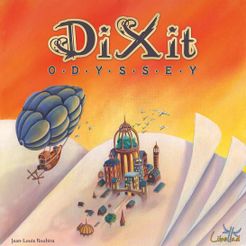
Dixit: Odyssey is a multiplayer game of dreamlike illustrations, association, and deduction. Players take turns as storyteller, offering a clue to guide others toward a chosen image. Everyone else plays a card from hand to blur the answer, then uses two voting dials to identify the original. The clue must be understandable without making the answer obvious to everyone.
Dixit: Odyssey supports 3–12 players; community best: 6 players; playing time: 30 minutes. A WANGO browser trial has not been confirmed.
Background & introduction
Dixit: Odyssey turns illustrated images into a social game about interpretation, misunderstanding, and expression. Its 84 wordless dreamlike cards invite players to see different stories in the same picture and to guess how their friends will understand a clue. Each round, one player becomes the storyteller, secretly chooses a card, and describes it with a word, phrase, quotation, gesture, or another kind of clue. The other players choose an image from their own hands that seems to fit, hoping to blend their cards into the answer lineup.
A storyteller must think beyond how to describe an image and consider the experiences, humor, and imagination of the group. A very direct clue lets everyone guess correctly, so the storyteller scores nothing; a clue that is too obscure may leave everyone guessing wrong, with the same result for the storyteller. The useful middle ground gives some players a way to find the original while leaving enough ambiguity for other cards to look plausible. Guessers must read both the clue and one another’s ideas, and may choose a misleading card to attract votes.
Under the current refreshed rules, every non-storyteller has two voting dials. They may split their votes between two cards or place both on one image. Splitting improves the chance of a correct guess, while doubling down earns credit for each vote if the guess is right. Players can also score when others vote for the card they contributed, so identifying the storyteller’s image is not the only way to move forward. Once the cards are shuffled and laid out in numbered positions, several images may seem to fit the same clue; the reveal shows how the table interpreted it.
Play continues with a new storyteller each round until someone reaches or passes thirty points at the end of a turn. The player to the storyteller’s left takes over, and everyone draws back to a six-card hand. A special three-player rule uses seven-card hands and asks each non-storyteller to submit two images. Winning is not about producing the cleverest or most abstract clue; it is about finding a level of expression that works for this particular group while anticipating the associations other players will make. The refreshed rules give larger and smaller groups the same two-vote system and make each illustration a combination of storytelling, guessing, and strategy.
Core rules & scoring
Objective and player count: Players take turns as storyteller and give a clue for a secretly chosen image. The others try to identify that image and may also benefit if votes land on the card they contributed. Libellud’s current product page lists 3–12 players, ages 8+, and about 30 minutes. Under the refreshed rules, the game ends at the end of a turn when one or more players have reached or passed 30 points; the highest score wins, and tied players share the victory.
Components and setup: The current refreshed rules list 84 illustrated Dixit cards, a scoring board with 12 card positions, 12 wooden rabbits, 12 color tokens, twelve sets of two voting dials, and a player aid. Each player chooses a color and takes the matching rabbit, color token, and two dials. Place the rabbit on the start space, shuffle and deal six cards to each player, and form a draw pile with the rest. The first storyteller is the first player who finds a clue with which to form a riddle, as stated in the rulebook.
Storytelling and clues: The storyteller examines their six cards, secretly chooses one, and announces a word, phrase, or sentence as a clue without showing the image. The rules allow a quotation from a poem, song, film, or proverb, and also singing, miming, or using an onomatopoeia. Aim for a clue that lets some players connect to the image but does not make it so descriptive that everyone selects it or so obscure that nobody understands it. The storyteller does not vote during that turn.
Choosing decoy images: Each player other than the storyteller selects one card from their hand that seems to match the clue and secretly passes it to the storyteller. The storyteller adds the original image, shuffles all submitted cards, and places them at random in the numbered positions beside the board, leaving each number visible. A chosen card can honestly echo the clue or imitate the kind of association the storyteller may have made, making the original harder to identify.
Simultaneous voting: Every non-storyteller uses two voting dials to secretly mark the number of the card they believe is the storyteller’s. A player can vote for two different images to spread the risk or put both votes on one card to score for each if correct. Players cannot vote for their own contributed image. Once everyone has chosen, reveal the dials simultaneously and place them beside the images; the storyteller then identifies the original card.
Scoring: If the storyteller’s image receives some but not all of the votes, the storyteller scores 3 points and each player scores 3 points for every dial placed on the correct image. If every dial lands on the storyteller’s image, the storyteller scores 0 and each other player scores 4 points. If no dial lands on it, the storyteller scores 0 and each other player scores 2 points. In every outcome, a non-storyteller also earns 1 point for each dial placed on the card they contributed. If both dials are on the same image, points from a correct guess or own-card bonus are counted for each dial.
End of turn and new storyteller: Move rabbits on the scoring track for points earned. Put all cards played during the turn in the discard pile and draw one card per player to return to six cards in hand. If the draw pile cannot supply everyone, shuffle its remaining cards together with the discard pile and continue drawing. The player to the storyteller’s left becomes the storyteller for the next turn. The cycle keeps the clue-giving role moving around the table.
Three-player variant: In a three-player game, each player holds seven cards rather than six. Each of the two non-storytellers contributes two cards, so five images are displayed including the storyteller’s original. At the end of the turn, each non-storyteller draws two cards and the storyteller draws one, returning to seven. The refreshed rulebook says all other rules stay the same, including two voting dials and the bonus for each dial placed on a player’s own card.
Endgame and winner: At the end of each turn, check the scoring track. If at least one player has reached or passed 30 points, the game ends immediately; the player with the most points wins, with tied players sharing the victory. The storyteller seeks a clue that some but not all players can solve. Guessers must identify that card while also considering whether their own image can attract votes and its associated bonus.
Edition and scope: This entry follows the official refreshed rules linked from Libellud’s current Odyssey product page. The 2011 first edition generally gave one vote to each player in games of three to six and two votes in games of seven to twelve; it also capped the bonus for votes on a player’s own card. The refresh gives two dials at every player count and changes the three-player hand and submission procedure. Other Dixit base games and compatible image expansions are outside this entry, as is the separate Dixit Party variant.
Rules & gameplay questions
How do you play Dixit: Odyssey?
Each round, a player becomes storyteller, chooses an image from hand, and gives a clue. The others each submit an image that seems to match. After the cards are shuffled and displayed, every non-storyteller uses two dials to guess the original. Players score from correct votes and from votes on their own contributed card. The game ends at thirty points, and the highest score wins.
What makes a good storyteller clue?
A clue can be a word, phrase, or full sentence, and may quote a poem, song, film, or proverb, or even be sung, mimed, or expressed with a sound. The key is to find the right level of clarity: a clue that is too direct lets everyone find the image, while one that is too obscure may fool everyone. A strong clue gives some players a path to the answer but leaves other cards plausible.
Does everyone get two votes in the refreshed rules?
Yes. The official refreshed rules give two voting dials to every non-storyteller player, regardless of player count. You can split the votes between different images or place both on one card; if the double vote is correct, each dial scores. You may not vote for the image you contributed, and the storyteller does not vote during their own turn.
How does the storyteller score?
When some but not all votes land on the storyteller’s original card, the storyteller scores three points, and each correct player scores three points for every dial on that card. If every dial lands on the storyteller’s image, the storyteller gets zero and each other player gets four points; if no dial lands on it, the storyteller gets zero and each other player gets two. This system encourages a clue between obvious and impossible, rather than one that everyone can solve.
Can a player score when others guess their card incorrectly?
Yes. In addition to points for finding the storyteller’s card, a non-storyteller earns one point for each voting dial placed on the image they contributed. A player may choose a card that connects to the clue but also resembles the storyteller’s possible association, inviting others to vote for it. Even a player whose guess misses can gain a bonus if their submitted image attracts votes.
What changes in a three-player game?
In the refreshed three-player variant, everyone holds seven cards instead of six. Each of the two non-storytellers submits two cards, so five images appear including the storyteller’s original. At the end of the turn, each non-storyteller draws two cards and the storyteller draws one, returning to seven. The two-dial voting and scoring rules remain in effect, including the bonus for votes on a player’s own images.
When does the game end?
At the end of each turn, check whether any player has reached or passed thirty points. If at least one has, the game ends immediately; the player with the most points wins, and tied players share the victory. If the game continues, the displayed images go to the discard pile, everyone refills their hand, and the player to the storyteller’s left takes the next turn as storyteller.
How do players refill their hands after a round?
All images played during the round are discarded, then each player draws one card to return to a six-card hand. If there are not enough cards for everyone, shuffle the remaining draw pile together with the discard pile and continue drawing. In a three-player game, each non-storyteller draws two cards and the storyteller draws one, restoring a seven-card hand.
Are the 2011 and refreshed rules identical?
No. The 2011 first edition generally used one vote per player in three-to-six-player games and two votes in games of seven to twelve; it also limited the own-card voting bonus each round. The official refreshed rules give every non-storyteller two dials at every player count, and use a seven-card hand plus two submitted cards per guesser in the three-player variant. This entry follows the refresh.
Is Dixit: Odyssey cooperative or competitive?
It is a multiplayer competitive game: players move their own rabbits along a scoring track and try to finish with the highest score. Everyone contributes clues and images, but points depend on identifying the storyteller’s card, choosing an effective clue, and attracting votes to your own image. The official base rules do not provide solo or cooperative victory modes; the listed player range is three to twelve.
Rules & introduction sources
- Edition
- This entry covers Libellud’s standalone Dixit: Odyssey base game, BGG 92828, using the official 2024 refreshed rules linked from the current product page. The current page lists 3–12 players, ages 8+, about 30 minutes, and 84 illustrated cards. The refresh uses two voting dials at every player count and a special three-player variant with seven-card hands and two cards submitted by each non-storyteller. The 2011 first edition used different voting counts and a cap on own-card bonuses; those older rules are not mixed into this entry.
- Rule references
- Introduction source
- BoardGameGeek
WANGO editorial
| Parameter | Recorded value |
|---|---|
| BGG overall rank (snapshot) | #363 |
| Complexity Weight | 1.16 / 5 |
| Best player count (community) | 6 |
| Player range | 3–12 |
| Playing time (minutes) | 30 |
| Core mechanisms | Storytelling · Targeted Clues · Voting |
| Chinese publication | Unconfirmed |
| WANGO browser play | No confirmed WANGO trial |
| Year published | 2011 |
| Suggested age | 8+ |
BGG statistics are stored snapshots, not live rankings. Source checked:2026-09-27
Player questions
What is the best player count for Dixit: Odyssey, and can I play online?
Dixit: Odyssey supports 3–12 players; community best: 6 players; playing time: 30 minutes. A WANGO browser trial has not been confirmed.
How complex is Dixit: Odyssey, and which mechanisms does it use?
Weight: 1.16 / 5. Mechanisms: Storytelling · Targeted Clues · Voting. Chinese publication: Unconfirmed.
Where can I learn Dixit: Odyssey?
No rule guide, strategy article or WANGO trial has been confirmed for this record.