The Lord of the Rings: The Card Game
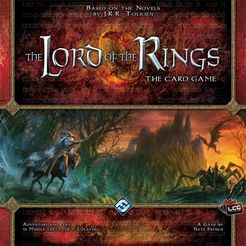
Lead heroes against an automated encounter deck, balancing quest progress, rising threat, and characters needed for combat.
The Lord of the Rings: The Card Game supports 1–2 players; community best: 2 players; playing time: 30–60 minutes. A WANGO browser trial has not been confirmed.
Background & introduction
The Lord of the Rings: The Card Game is a cooperative adventure. Players prepare heroes and player decks before facing a scenario’s quest and encounter sets. Completing the shared quest, rather than defeating another player, determines success.
The central tension is how to use your characters. Exhausting a character to contribute willpower can leave it unavailable for the defense and attacks that follow. New enemies, locations, and shadow effects make the group reconsider its allocation of effort each round.
Heroes hold separate resource pools and their spheres affect which cards those resources can buy. A group can divide questing, combat, and support responsibilities, while a solo deck must cover those needs itself. This overview uses standalone play from the Revised Core Set and distinguishes its contents from the original box.
Core rules & scoring
Edition and objective: one original Core Set supports 1–2 players, or up to four with a second set; one Revised Core Set supports 1–4. Completing the selected core scenario’s final quest stage wins collectively. All players being eliminated loses; one player leaving does not automatically defeat the group.
Setup: select heroes and player decks, assemble the scenario’s encounter sets, and stack its quest cards in order. Each player starts at the sum of their heroes’ threat costs. Draw six cards, optionally shuffle the whole hand back for one replacement hand, then perform scenario setup.
Each round has Resource, Planning, Quest, Travel, Encounter, Combat, and Refresh phases. In Resource, add one resource to each hero in play and draw one card per player. There is no general hand-size limit.
During Planning, players in order may play any number of allies and attachments. For a sphere card, spend resources from your own matching heroes; multiple matching pools may contribute. A zero-cost card still requires a match. Neutral cards need no sphere match. Events follow their action or response timing.
For the quest, exhaust the characters you commit, then normally reveal one encounter card per remaining player, resolving them one at a time. Compare committed willpower with staging-area threat: a surplus places that much progress, a deficit raises every player’s threat by that amount, and a tie does neither.
Progress normally fills the active location before reaching the current quest. During Travel, if no location is active, the group may choose one in staging and pay its travel cost. An active location no longer contributes staging threat. Excess progress beyond a completed quest stage does not carry to the next stage.
During Encounter, each player may optionally engage one staging enemy. Players then repeat engagement checks: the eligible enemy with the highest engagement cost not exceeding that player’s threat engages them. Engaged enemies normally remain engaged and stop contributing staging threat.
Combat deals shadow cards to engaged enemies, resolves enemy attacks, then allows player attacks. Normally one ready character defends an attack; reveal its shadow before calculating attack minus defense as damage. An undefended attack assigns its full damage to one hero controlled by that player, ignoring defense. Several attackers may combine against one target.
Refresh readies exhausted cards, raises each player’s threat by one, and passes the First Player token clockwise. Damage remains between rounds. A player is normally eliminated at fifty threat or after losing all heroes; remaining players continue and can still win for the group.
A standard custom deck uses 1–3 heroes and at least fifty player cards, with at most three copies by title; introductory decks instead follow the teaching lists. A unique card cannot duplicate a unique card already in play. Actions require action windows, responses require their triggering conditions, and official errata can impose further limits.
Rules & gameplay questions
Can a character quest and then fight?
Questing exhausts it. Without a later readying effect, it cannot pay the exhaustion cost to defend or attack. Readying can make it usable again at a legal time, but does not itself grant extra attacks.
Does Legolas place his kill progress past the active location?
Normally no. The official FAQ explicitly applies the active-location buffer even when an ability says to place progress on the current quest. It takes explicit bypass wording to ignore that buffer.
Does exhausting a hero also exhaust Steward of Gondor?
No. The official FAQ treats attachments and their host characters independently for exhausting and readying. Using Steward of Gondor exhausts the attachment, not its hero.
Does the group lose when one player reaches fifty threat?
No. That player is eliminated; the others continue and normally reveal one fewer encounter card in later quest phases. Completing the last quest still wins for everyone. The group loses if everyone is eliminated.
Can a readied Beravor use her two-card draw again this round?
No. The currently listed official FAQ limits that action to once per round. Readying the hero does not reset the limit.
Rules & introduction sources
- Edition
- Primarily 1–4-player standard standalone play with the Revised Core Set, supported by official Rules Reference v1.0 and applicable core material in the publisher-listed FAQ v1.9 (2017-10-16). Separately identifies the original box as 1–2 players, up to four with a second box. Core cards and three core scenarios only; optional campaign, Easy Mode, and scoring are not detailed. Excludes expansions, Saga, Nightmare, community errata, and digital adaptations.
- Rule references
- Introduction source
- BoardGameGeek
WANGO editorial
| Parameter | Recorded value |
|---|---|
| BGG overall rank (snapshot) | #187 |
| Complexity Weight | 3.22 / 5 |
| Best player count (community) | 2 |
| Player range | 1–2 |
| Playing time (minutes) | 30–60 |
| Core mechanisms | Cooperative Game · Deck Construction · Events · Hand Management · Player Elimination · Scenario / Mission / Campaign Game · Solo / Solitaire Game · Variable Set-up |
| Chinese publication | Unconfirmed |
| WANGO browser play | No confirmed WANGO trial |
| Year published | 2011 |
| Suggested age | 13+ |
BGG statistics are stored snapshots, not live rankings. Source checked:2026-09-27
Player questions
What is the best player count for The Lord of the Rings: The Card Game, and can I play online?
The Lord of the Rings: The Card Game supports 1–2 players; community best: 2 players; playing time: 30–60 minutes. A WANGO browser trial has not been confirmed. Recorded mechanism tags: Solo / Solitaire Game.
How complex is The Lord of the Rings: The Card Game, and which mechanisms does it use?
Weight: 3.22 / 5. Mechanisms: Cooperative Game · Deck Construction · Events · Hand Management · Player Elimination · Scenario / Mission / Campaign Game · Solo / Solitaire Game · Variable Set-up. Chinese publication: Unconfirmed.
Where can I learn The Lord of the Rings: The Card Game?
No rule guide, strategy article or WANGO trial has been confirmed for this record.