Pirates of Maracaibo
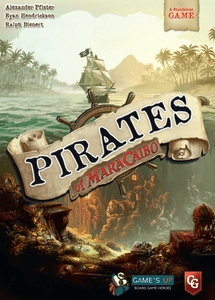
Pirates of Maracaibo is a Caribbean route and treasure race in which players sail column by column, recruit crew, improve ships, explore islands, and bury riches while seeking the most victory points over three rounds.
Pirates of Maracaibo supports 1–4 players; community best: 3 players; playing time: 40–100 minutes. A WANGO browser trial has not been confirmed.
Background & introduction
Pirates of Maracaibo sends players along a chain of Caribbean adventures. Each player is a captain trying to make the most of a limited life at sea: sail toward Maracaibo, reach the city, and set out again from the other side of the route. Captains visit ports, islands, and trading sites to recruit companions, improve their ships, and search for valuable cargo. The game focuses on repeated voyages and commercial choices rather than reenacting one naval battle. Choosing a route, deciding where to stop, and judging whether to reach the destination before rivals all affect the rewards available.
The voyage unfolds across three rounds, with cards and locations offering different opportunities. Improvements provide immediate effects, ongoing abilities, or end-game points. Residences let a captain invest doubloons in a settlement that may pay out according to a condition. Locations lead to exploration, raiding, treasure, and other special actions. Crew, equipment, and ship upgrades gradually make later turns more effective. The route is more than a movement track: each stop commits a player to one opportunity, while other ships sharing a card can affect the cost of that stop.
Treasure asks players to think about both acquisition and final value. Gold, pearls, and emeralds go onto a personal Hideout board. The markers on each Treasure Island determine the value of its treasure, and location effects may add markers before someone claims the goods. Captains can bury treasure they have already collected for extra points or rewards printed on their ship board. Exploration creates a second path of choices: dice and abilities shape how far an Explorer travels, and the route may provide rewards, quests, and ways to improve future opportunities.
The first captain to reach Maracaibo changes the pace of the table by bringing the current round toward its close. That captain receives an arrival reward, while everyone else must decide how to use the remaining route before the next voyage begins. After three rounds, doubloons, improvements, residences, quests, treasure, and exploration rewards contribute to the final score. Pirates of Maracaibo is a stand-alone game; owning Maracaibo is not required. It condenses the shared seafaring setting into shorter voyages built around route planning and a growing card engine.
Core rules & scoring
Objective and scope: Players collect victory points across three voyages. Typical scoring comes from Improvement cards, Residences, buried treasure, quests, and exploration. dlp games lists the base game for 1–4 players at about 30 minutes per player. This summary covers the base box only; expansion captain powers, alternate maps, treasure races, and shipbuilder modules are excluded.
Setup: Lay out the Caribbean card route and Exploration board, sort the Improvement, Residence, and Location cards, and prepare the Treasure Islands with their matching markers. Set out dice, doubloons, player Ship boards, Ships, Explorers, and player tokens. Each player receives the starting doubloons, ship-board configuration, and quest card specified by the base rules, then places a Ship in the starting area. The last player in turn order places the end-game order marker to show who will take the final turn when the third voyage closes.
Turn and movement: A turn begins by moving the Ship, then resolving the action at the destination. Move one to three spaces along adjacent spaces. Each card, plus the Gulf and Maracaibo on the Exploration board, counts as a space; Treasure Islands do not. The destination must be at least one card column closer to Maracaibo than the column where the Ship began. Entering the Gulf ends movement immediately, so unused movement is lost. Ships may share a space, but ending on a card with opponent Ships normally costs one doubloon to each opponent if the active player can pay.
Improvements and Residences: On an Improvement card, either ignore it and take five doubloons or buy it by paying its cost, reduced by discounts already in play. Replace a purchased card with a Tier II card. Resolve immediate lightning-bolt effects at once; ongoing benefits apply as described, and printed victory points are counted at the end. On a Residence card, choose between taking five doubloons and paying to construct it. Each player may build at most one token on a given Residence. The first builder receives its immediate bonus, while the Residence may provide end-game points based on income or another printed condition.
Locations, raiding, and exploring: Resolve a Location card in the order shown. If it displays a Treasure Value icon, add the matching marker to its Treasure Island; then activate a Black Market tile at that location if you own one, and perform the location’s exploration, raiding, or other action. Raiding usually rolls colored dice and adjusts the result with crew, strength, or other abilities, then converts Raiding Power into points, doubloons, or treasure. An Explore action moves the Explorer along the Exploration board, following a chosen route and resolving reward spaces. Abilities may change movement or trade some movement for a reward. Follow the icons at branches and destinations in order.
Collecting and burying treasure: When gaining treasure, take the top marker from the corresponding island and place it in the matching area of your Hideout board; if the island has no marker, use the supply as the base rules instruct. The markers on an island affect the value of that treasure at the end, so players may add markers before collecting a particular type. To bury treasure, meet the requirements of an available space and resolve its action. Buried treasure generally earns an additional score and may unlock an immediate or ongoing ship-board reward. Ordinary treasure and buried treasure are scored differently, so treasure above ground does not receive the burial bonus.
Ship upgrades, quests, and income: Some locations and the Maracaibo arrival reward let players upgrade the ship board. Upgrading usually places a marker on an available designated slot to unlock rewards, discounts, a figurehead, or other abilities; follow the current upgrade icons. Keep Quest cards hidden until final scoring, then score the higher listed condition met; the same achievements can count for multiple quests. At the end of each round, collect income shown by green banners on acquired Improvement cards, return Ships to the starting area, and begin the next voyage.
Round end and scoring: The first player to reach Maracaibo triggers the end of the round and receives the arrival reward. After the required players finish the round, resolve income. In round three, the player indicated by the end-game order marker takes the final turn; no fourth voyage begins. Final scoring usually includes remaining doubloons, fixed and conditional Improvement points, Residences, treasure values, burial bonuses, quests, and exploration rewards. Every five remaining doubloons convert to one point. The player with the highest total wins; use the exact card text for conditional points and the base rulebook for ties.
Solo mode: The base rules include an automated opponent, which is why the publisher’s player range begins at one. The solo player still follows the three-voyage structure and base personal-board rules, while the opponent’s cards determine its movement and priority action. The automated captain may claim treasure, advance an Explorer, or score according to the revealed card. Use the solo setup, difficulty mix, and priority order printed in the solo rules rather than treating the rival as a passive Ship.
Rules & gameplay questions
Do I need to own Maracaibo before playing Pirates of Maracaibo?
No. Pirates of Maracaibo is a stand-alone base game with its own Caribbean route, player Ship boards, Improvement cards, Treasure Islands, and quest cards. It shares a setting and designers with Maracaibo, but it is not an expansion that must be added to the Maracaibo base box. The separately published Commanders, Bermuda Triangle, and Shipbuilders products require Pirates of Maracaibo; this entry describes the base game only.
How many people can play, and is there a solo mode?
dlp games lists the base game for one to four players and about 30 minutes per player. The base rulebook includes an automated rival for solo play. In multiplayer, captains compete along the same Caribbean route for cards, treasure, and the right moment to arrive. A solo game follows the solo deck’s movement and action priorities; the rival is not simply an unregulated Ship on the board.
How far can I move on a turn?
A normal Ship movement covers one to three adjacent spaces, and the destination must finish at least one column closer to Maracaibo than the starting column. Cards, the Gulf, and Maracaibo count as spaces; Treasure Islands do not. A Ship that enters the Gulf must stop immediately and loses unused movement. Planning that mandatory forward progress matters because your destination determines the action and may affect when the round ends.
What happens if another Ship is on my destination card?
Ships can share a card space, so an opponent does not block your movement. If you end your move on a card occupied by opponents, you normally pay one doubloon to each of them when you have enough money. If you cannot pay everyone, the base rules let you choose whom to pay. The Gulf and Maracaibo are not cards, so sharing either space does not trigger the payment rule.
Do I have to buy an Improvement when I land on one?
No. You may ignore the Improvement and take five doubloons from the supply, or pay its printed cost to acquire it. Discounts from abilities you already own reduce the price. After a purchase, replace the card with a Tier II card. Resolve an immediate lightning-bolt effect when you acquire it, apply ongoing effects as stated on the card, and count its printed end-game points during final scoring.
How does the value of each treasure type change?
Gold, pearls, and emeralds each have a corresponding Treasure Island. When you claim one of those treasures, you normally remove the top marker from that island. The island’s marker stack influences the end-game value of the matching treasure, and some location or burial effects add markers back. Place collected treasure on the corresponding part of your Hideout board; bury it only when you meet the action requirements, since buried treasure can add points or unlock a ship-board reward.
When does a voyage end?
A voyage moves into its closing sequence when a player reaches Maracaibo. That captain receives the arrival reward, and the table completes the required turns for that round before resolving income. Ships then return to the starting area for the next voyage. In the third round, the final-turn marker determines who sails last; once that player finishes, the game goes to final scoring instead of starting a fourth round.
How is the winner determined?
After three voyages, total the victory points earned during play and the end-game values on Improvements, Residences, treasure, quests, and exploration rewards. Remaining doubloons are converted too, usually at one point for each five coins. Buried treasure can earn an additional bonus, while unburied treasure does not receive that burial score. The player with the highest final total wins; evaluate conditional card effects from the base rulebook and the specific card text.
Rules & introduction sources
- Edition
- This entry follows the 2023 Pirates of Maracaibo base game from dlp games / Game’s Up. The publisher lists 1–4 players, about 30 minutes per player, and age 12+. Commanders, Bermuda Triangle, Shipbuilders, and other expansion modules are excluded.
- Rule references
- Introduction source
- BoardGameGeek
WANGO editorial
| Parameter | Recorded value |
|---|---|
| BGG overall rank (snapshot) | #384 |
| Complexity Weight | 2.88 / 5 |
| Best player count (community) | 3 |
| Player range | 1–4 |
| Playing time (minutes) | 40–100 |
| Core mechanisms | Dice Rolling · Increase Value of Unchosen Resources · Multi-Use Cards · Pieces as Map · Race · Stock Holding · Variable Set-up |
| Chinese publication | Unconfirmed |
| WANGO browser play | No confirmed WANGO trial |
| Year published | 2023 |
| Suggested age | 12+ |
BGG statistics are stored snapshots, not live rankings. Source checked:2026-09-27
Player questions
What is the best player count for Pirates of Maracaibo, and can I play online?
Pirates of Maracaibo supports 1–4 players; community best: 3 players; playing time: 40–100 minutes. A WANGO browser trial has not been confirmed.
How complex is Pirates of Maracaibo, and which mechanisms does it use?
Weight: 2.88 / 5. Mechanisms: Dice Rolling · Increase Value of Unchosen Resources · Multi-Use Cards · Pieces as Map · Race · Stock Holding · Variable Set-up. Chinese publication: Unconfirmed.
Where can I learn Pirates of Maracaibo?
No rule guide, strategy article or WANGO trial has been confirmed for this record.