Space Alert
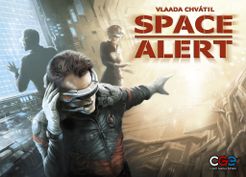
Space Alert is a real-time cooperative survival game. One to five players serve as a small spaceship’s crew, listen to computer alerts during a ten-minute mission, program action cards face down, and then see in a replay whether the team can protect the ship and return safely.
Space Alert supports 1–5 players; community best: 4–5 players; playing time: 30 minutes. A WANGO browser trial has not been confirmed.
Background & introduction
Players are the crew of a small spaceship sent to scan dangerous sectors of the galaxy. The central computer announces threats through the mission soundtrack: enemy battleships, interceptors, space monsters, asteroids, intruders, and system malfunctions may all threaten the ship. The same recording serves as the mission timer and a stream of information about what is coming next. The crew shares one clear objective: protect the ship long enough to complete its return jump.
The game layers two different kinds of time pressure. Planning happens in real time while the soundtrack plays, so the crew must listen, communicate, assign jobs, and commit to choices as the mission unfolds. Yet each player’s cards are placed face down on a personal Action Board, so teammates cannot simply see the full plan. Players may move pieces around the ship to rehearse a route, but only the cards left on the boards will determine what actually happens.
A mission has twelve action turns arranged across three planning phases: turns 1–3, turns 4–7, and turns 8–12. When players pick up cards for a new phase, cards already planned for the earlier phase become locked. Each card can be oriented to represent movement or one action in the crew member’s current zone; an empty turn space means that player does nothing on that turn.
After real-time planning, the game enters a turn-by-turn Resolution Round. The crew reveals the cards in order, checks movement, energy and weapon operations, threat trajectories, damage, and ship systems. Defeating danger depends on coordinating both the order of actions and the crew’s positions. Even individually sensible plans can fail when shields, power, and weapons compete for the same resources. The mission succeeds when the crew survives and completes the jump back to safety.
Core rules & scoring
Players, goal, and mission length: Czech Games Edition lists designer Vlaada Chvátil, 1–5 players, age 12+, and an approximate 30-minute play time. The planning soundtrack lasts about ten real-time minutes; a full play also includes setup and evaluation. Players jointly serve as the spaceship crew, scan a dangerous sector, protect essential ship systems, and try to make the return jump safely. The goal is team survival, not necessarily destroying every threat that appears. The base game supports solo play.
Soundtrack and real-time planning: Start the ten-minute recording to begin the mission. Computer announcements report threat timing, location, and changes in the planning phase. Players discuss responsibilities while placing action cards face down in the numbered spaces on their own Action Boards. The board and pieces can be used to rehearse a plan, but the cards on the Action Boards are the only actions that count. The real-time limit forces the crew to make decisions while new information continues to arrive.
Twelve action turns: A mission uses twelve action spaces divided into three planning phases: turns 1–3, 4–7, and 8–12. In a four- or five-player game, each player takes five first-phase action cards and chooses cards for the first three spaces; two- and three-player games use different deal sizes, and solo has its own setup; unused cards may remain in hand. When players pick up the second-phase cards, they plan turns 4–7, and cards on turns 1–3 can no longer be changed. The third phase works the same way for turns 8–12. Earlier plans remain locked as the team advances.
Action cards and empty spaces: Each action card has a movement half and an action half. Orient one half up when placing the card in a turn space. Movement lets the crew member move through the ship to an adjacent station or use the gravolift; an action activates a system, weapon, or other ability at the crew member’s current location. Only the half facing up is used for that turn; the other half has no effect. If the space is empty, that crew member takes no action on that turn. An empty slot does not grant a free move or a replacement choice.
Communication, new cards, and locking: Players may talk about their cards and intended actions, but they do not show their private cards to teammates. The soundtrack may announce opportunities to draw an extra action card or transfer a card, and those options are resolved only when the corresponding rule and timing allow. A player may revise cards in the current phase before it is locked. Picking up the next phase’s cards or the soundtrack announcing the phase end locks the preceding phase. The crew should decide who will handle the computer, power, weapons, and internal dangers before an important set of actions becomes fixed.
Ship stations and actions: Each numbered turn provides room for one movement or one action, and a crew member’s location determines which actions are available. Typical duties include using the computer to help identify threats, supplying energy to shields or weapons, firing, directing battlebots against intruders, and launching missiles. Energy blocks, system status, and threat paths affect whether an action can work. A weapon card alone may not be enough: a crew member may first need to reach the correct station, and an attack may need to resolve before a threat arrives.
Resolution Round: When the soundtrack ends, resolve the recorded mission in turn order. Reveal each turn’s plan, update crew positions, perform the planned movement or station action, and check weapon results, external threat trajectories, internal threats, damage, and ship systems as directed by the rules. Timing and location matter; players cannot add an unplanned action during the replay. If a card was misplaced and causes a delay, use the correction procedure in the rulebook rather than freely rearranging the crew’s whole plan.
Survival and end of mission: The evaluation checks whether the ship can return safely and what damage or threat consequences the crew suffered. Players share success or failure; an individual score cannot replace the team’s survival objective. The base game includes difficulty levels and mission variety, with different threats changing what the crew should prioritize. This description covers the base game’s one-action-per-turn card system. Double Actions, specializations, new threats, and experience progression belong to The New Frontier expansion.
Rules & gameplay questions
How many people can play Space Alert, and how long does it take?
Czech Games Edition lists Space Alert for one to five players, ages 12 and up. The mission soundtrack lasts ten minutes in real time, while a full play takes about 30 minutes including setup and evaluation. The base game includes solo play, although its central experience is a crew communicating and coordinating together. The ten-minute figure describes the mission planning experience, not the total time from opening the box to finishing.
What does the ten-minute soundtrack do?
The soundtrack is both the real-time timer and the voice of the ship’s central computer. Its announcements tell the crew when threats appear, which zones they affect, and when the planning phase changes. Players program face-down cards while the recording continues, then resolve the planned actions turn by turn after the Action Round. The crew must process new information without pausing the mission clock.
How many action turns are in a mission?
Each mission has twelve action spaces arranged in three planning phases: turns 1–3, turns 4–7, and turns 8–12. When a player takes the next phase’s cards, or the soundtrack announces the end of the phase, the previous phase becomes locked and cannot be changed. This structure lets the crew plan later actions with more information while requiring early decisions to be committed before the entire mission is known.
What do the two halves of an action card mean?
One half of each card represents movement and the other represents an action, such as activating a system at the crew member’s current station. When placing the card in a numbered space, orient the half you want to use face up. During resolution, only that half has an effect; the other half is ignored. An empty space means the crew member does nothing on that turn, not that they get a free move or an action selected later.
Can I show my cards to the other players?
Players may explain their cards and describe the actions they intend to take, but the action cards themselves are placed face down and are not shown to teammates. The soundtrack may announce a time to draw an extra action card or pass one, but those options depend on the specific timing and rules. Communication remains essential because each person’s final program is hidden on their own Action Board.
Can I change a programmed action?
You may adjust cards in the current planning phase until that phase is locked. As soon as you pick up cards for the next phase or the soundtrack announces the current phase’s end, earlier actions become fixed; for example, taking second-phase cards locks turns 1–3. Before a lock, the crew should check movement paths, action order, and who will cover each ship system. The Resolution Round does not let players rewrite a plan after they see its results.
Can we add an action during the Resolution Round?
No. The Resolution Round reveals and resolves the cards that were programmed before the soundtrack ended. Players cannot add a weapon shot, move a crew member, or invent a missing action after seeing that the current plan is going badly. If a card was misplaced and causes a delay, follow the correction rule in the rulebook; the crew does not get to freely reorder all planned actions.
Do we have to destroy every threat to win?
The official product description frames the objective as protecting the ship and surviving the ten-minute mission well enough to jump back to safety. That does not mean every visible threat must be destroyed. The crew must identify which dangers can compromise survival and prioritize essential systems, shields, power, and a safe return. The evaluation applies the base rules to the ship’s condition and mission outcome.
Are Double Action cards part of the base game?
No. In the base game, each turn space holds one action card, and its movement or action half determines the single thing the crew member attempts that turn. The New Frontier expansion adds Double Actions, specializations, new threats, and experience progression. This draft stays within the 2008 base game and does not use those expansion modules in its core rules description.
Rules & introduction sources
- Edition
- This draft follows the 2008 Czech Games Edition base game and its official product page: 1–5 players, ages 12+, about 30 minutes including setup and evaluation, with solo play supported. It excludes The New Frontier expansion’s Double Actions, new threats, specializations, and experience system. The official rules PDF currently redirects to the product page when opened directly; planning details were cross-checked against indexed rulebook text and the official training handbook.
- Introduction source
- BoardGameGeek
WANGO editorial
| Parameter | Recorded value |
|---|---|
| BGG overall rank (snapshot) | #392 |
| Complexity Weight | 2.97 / 5 |
| Best player count (community) | 4–5 |
| Player range | 1–5 |
| Playing time (minutes) | 30 |
| Core mechanisms | Action Queue · Area Movement · Cooperative Game · Elapsed Real Time Ending · Hand Management · Programmed Movement · Real-Time · Simultaneous Action Selection · Solo / Solitaire Game |
| Chinese publication | Unconfirmed |
| WANGO browser play | No confirmed WANGO trial |
| Year published | 2008 |
| Suggested age | 12+ |
BGG statistics are stored snapshots, not live rankings. Source checked:2026-09-27
Player questions
What is the best player count for Space Alert, and can I play online?
Space Alert supports 1–5 players; community best: 4–5 players; playing time: 30 minutes. A WANGO browser trial has not been confirmed. Recorded mechanism tags: Solo / Solitaire Game.
How complex is Space Alert, and which mechanisms does it use?
Weight: 2.97 / 5. Mechanisms: Action Queue · Area Movement · Cooperative Game · Elapsed Real Time Ending · Hand Management · Programmed Movement · Real-Time · Simultaneous Action Selection · Solo / Solitaire Game. Chinese publication: Unconfirmed.
Where can I learn Space Alert?
No rule guide, strategy article or WANGO trial has been confirmed for this record.