Turing Machine
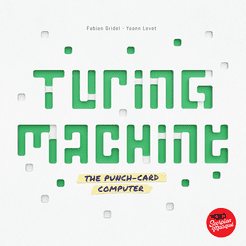
Turing Machine is a logic-deduction game using punch cards and Verifiers. Players test three-digit code proposals against conditions and use pass/fail feedback to narrow the possibilities. Competitive players race to solve the code; solo and cooperative players compare their efficiency with the Machine.
Turing Machine supports 1–4 players; community best: 1 players; playing time: 20 minutes. A WANGO browser trial has not been confirmed.
Background & introduction
Turing Machine turns a computer without electronics into a tabletop deduction device. Each problem has a unique three-digit code, with one digit in each of three colored positions and values from one to five. Verifiers each test a particular condition, but players cannot see the condition itself. They submit candidate codes and watch each verifier pass or fail, then use those constraints to infer the only code that works.
Each round, players simultaneously choose a three-digit proposal and decide which Verifiers to question. Punch cards combine with a Verification card so a window reveals only a pass or fail marker; the response does not disclose the correct digit. Players record each result on a note sheet, infer what conditions the Verifiers may represent, and combine those conditions to find the code. Each round allows at most three questions, so choosing which tests to run is a limited resource.
The base game supports both a race on the same problem and solo or cooperative solving. Competitive play rewards a correct answer reached efficiently; solo and cooperative players aim to solve with fewer rounds and questions and compare their result with the Machine’s benchmark. The rules also describe online modes such as Classic, Extreme, and Nightmare, with more complex relationships between Verifiers and criteria. This entry follows the standard base rules and separates those web challenges from the physical game.
Core rules & scoring
Goal and scope: The 2022 English base game is for one to four players and takes about 20 minutes. Players find the unique three-digit code, with a value from one to five in each colored position, that passes all Verifiers in the problem. Competitive players race to solve it; solo and cooperative players try to use fewer rounds and questions and can compare their result with the Machine. Competitive results use correct solves in the deciding round and counted questions.
Problem setup: Place the Machine tile at the center, assemble the Punch-card Holder, and arrange the three colors of Punch cards as directed. Select a problem and place the specified Criteria card and Verification card in front of each Verifier. Problems can use four, five, or six Verifiers. Each player takes a screen, Player Aid, and Note Sheet. The base booklet includes 20 problems, while the official website can generate more. Match the specified Verification card number and symbol exactly, keep it face down, and temporarily mark its A–F letter to avoid mixing cards. Erase that mark after play. The Player Aid doubles as the screen rather than requiring a second separate aid.
The code and a proposal: The secret code has one value from one to five in each of three colored positions. A player selects one Punch card of each color and combines them into a three-digit Proposal. The Proposal is the candidate being tested that round, not the player’s final declaration. It is correct only if it satisfies the criteria checked by every Verifier in the problem. Digits may repeat:113 and333 are valid proposals, subject to the puzzle’s conditions. There are125 possible triples rather than only permutations of distinct digits. Punch cards are shared; wait if another player is using the copy you need.
Question limit each round: All players simultaneously go through Compose, Question, Deduce, and End of Round. First create a Proposal, then use it to question at most three Verifiers. The Proposal cannot change while questioning in that round. Each Verifier checks the proposal against its own criterion and returns a pass or fail result. Players then record the feedback, update their deductions, and simultaneously indicate whether they have found the code.
Punch-card operation: Overlay three different-colored digit cards to leave one viewing hole. Place the selected Verifier’s Verification card underneath, aligning the corner symbols, and read its check or cross through the hole. Do not insert the stack into the storage support to test it. Immediately return the Verification card face down to its correct Verifier; the support only stores punch cards. A result reports whether this proposal meets that Verifier’s hidden criterion, not which digit is the answer.
Recording and information: Record the proposal, every question and each check/cross to count questions. Proposals and which Verifiers you ask are public; answers and notes are secret. Evaluate feedback against the candidate criteria printed on that card. For example, if its options are blue equals1 or blue greater than1, a pass with blue3 identifies greater than1, not blue3 as the secret answer. Every Verifier is necessary to the unique code and none repeats another’s information. You may stop below three questions when you have enough information.
Competitive round end: Once everyone has finished questions and deductions, extend a fist, count to three together and simultaneously show thumbs up for solved or down for not solved. With no up, start another round. Claimants first secretly write their codes clearly, then check the booklet solution or official app in turn. Among correct claimants in that deciding round, fewest total questions wins; a remaining tie is shared. Compose the claimed solution and pass all tests to demonstrate it. If none is correct, wrong claimants are eliminated while others continue; a sole remaining player wins by default. Do not disclose a code before other claimants commit theirs.
Solo and cooperative modes: A solo player or team shares one Note Sheet and works through the same puzzle together. Each round still allows at most three questions. The goal is to solve using as few rounds and questions as possible, then compare the result with the Machine through the official “Did you beat the MACHINE?” process. Matching or beating the Machine’s round/question result counts as success. This is not the same judging framework as the multiplayer race.
Online problem modes: Classic matches the standard physical rules. In Extreme, each Verifier has two candidate Criteria cards in front of it, but only one condition is active. In Nightmare, players do not know which Verifier corresponds to which Verification card. These are official online challenge modes that change the information structure; they are not the default setup for every problem in the base box.
Criterion wording and handicap: Discuss the meaning of the printed criteria before starting. Exactly one pair means two matching digits;333 is not exactly a pair. Ascending order is strict, so223 is not ascending; consecutive values differ from merely increasing, so135 is not a consecutive sequence. The optional handicap prefills one or two answer squares for an experienced player in round one only. These count as questions and consume that round’s three-question allowance:two filled squares leave one real question. Later rounds use the normal limit.
Rules & gameplay questions
How many players does Turing Machine support? Can it be played solo or cooperatively?
The official English base game lists one to four players. Multiplayer groups can race on the same problem, while one person can solve alone or a team can share a note sheet and work together. Solo and cooperative players try to solve in fewer rounds and questions, then compare their result with the official Machine benchmark. A Verifier is an automatic test device in the game, not an additional human player. Check the selected problem using its official answer process; the Machine benchmark is tied to that specific problem.
What does the secret code look like?
The code has three digits, one in each of three colored positions, and every digit is between one and five. Each problem has a unique combination that passes all of its Verifiers. Players cannot infer the answer merely because one card number appears more often; they must combine the criteria represented by the Verifiers with the pass/fail feedback to eliminate impossible codes. Digits can repeat;113 and333 are valid proposals, although a particular puzzle may rule them out.
Does a Verifier tell me which digit is wrong?
No. A Verifier only reports whether the current Proposal passes the one condition it checks. It does not identify a wrong position or reveal the hidden criterion. Players compare the results from different Verifiers for the same Proposal, use the structure of the problem, and record their deductions. A single pass/fail result should not be treated as a direct clue to one colored digit. The candidate criteria are printed openly; what is hidden is which one is active.
How many questions can I ask in a round, and can I change my Proposal?
Each round allows at most three Verifier questions, and all of them use the same Proposal. Players first combine the three colored Punch cards into a candidate code and then choose which Verifiers to test. They cannot switch the digits during the questioning step. After recording the results, players can create a new Proposal in the next round. The limit makes information value part of the strategy.
If one Verifier passes, does that mean my Proposal is correct?
No. A pass means this proposal meets one Verifier’s active criterion, while the solution must meet all of them. If a card checks blue equals one versus blue greater than one, a pass with blue three identifies greater than one; blue two, four and five can still qualify. A fail rules out candidate criteria inconsistent with that test, rather than reporting a wrong digit. Record the complete proposal and feedback and combine the different conditions to deduce the unique code.
How is a multiplayer winner determined?
Players who believe they have solved the puzzle secretly write their codes and check them. Of the correct answers, the player who used the fewest questions wins; players tied on questions share the win. If every answer declared in a round is wrong, those players are eliminated and the others continue. If only one player remains, that person wins by default. There is no accumulated VP campaign; correctness and question efficiency determine the result.
How do solo and cooperative players win?
A solo player or team shares a Note Sheet and still asks no more than three Verifiers per round. The goal is to solve in as few rounds and questions as possible, then compare that result with the Machine using the official “Did you beat the MACHINE?” process. Matching or beating the benchmark counts as a win. This comparison with the Machine is different from the multiplayer rule that compares players with one another.
Are Extreme and Nightmare part of the standard setup?
No. Classic uses the same information structure as the physical base rules. The official online Extreme mode puts two candidate Criteria cards in front of each Verifier even though only one is active; Nightmare hides which Verifier belongs with which Verification card. These are website challenge modes that increase deduction difficulty, not settings automatically used for each paper problem. This account follows the2022 rulebook’s mode description rather than asserting the present site’s interface or ranking implementation.
Rules & introduction sources
- Edition
- Le Scorpion Masqué Turing Machine, BGG356123, following the official English PDF dated 11 November2022 (five PDF canvases containing printed pages1–8). Covers1–4-player competition and solo/co-op. Classic/Extreme/Nightmare are described as in that rulebook, without claiming verification of the current website interface or leaderboard algorithm.
- Rule references
- Introduction source
- BoardGameGeek
WANGO editorial
| Parameter | Recorded value |
|---|---|
| BGG overall rank (snapshot) | #329 |
| Complexity Weight | 2.53 / 5 |
| Best player count (community) | 1 |
| Player range | 1–4 |
| Playing time (minutes) | 20 |
| Core mechanisms | Deduction · Paper-and-Pencil · Solo / Solitaire Game |
| Chinese publication | Unconfirmed |
| WANGO browser play | No confirmed WANGO trial |
| Year published | 2022 |
| Suggested age | 14+ |
BGG statistics are stored snapshots, not live rankings. Source checked:2026-09-27
Player questions
What is the best player count for Turing Machine, and can I play online?
Turing Machine supports 1–4 players; community best: 1 players; playing time: 20 minutes. A WANGO browser trial has not been confirmed. Recorded mechanism tags: Solo / Solitaire Game.
How complex is Turing Machine, and which mechanisms does it use?
Weight: 2.53 / 5. Mechanisms: Deduction · Paper-and-Pencil · Solo / Solitaire Game. Chinese publication: Unconfirmed.
Where can I learn Turing Machine?
No rule guide, strategy article or WANGO trial has been confirmed for this record.