Slay the Spire: The Board Game
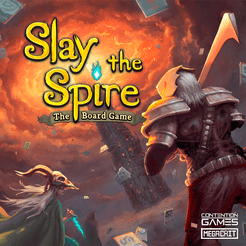
Cooperate to build your decks, explore the map and manage energy and Block to defeat the boss of your chosen final Act.
Slay the Spire: The Board Game supports 1–4 players; community best: 2 players; playing time: 30–150 minutes. A WANGO browser trial has not been confirmed.
Background & introduction
Slay the Spire: The Board Game turns deckbuilding and a climb through connected locations into a cooperative tabletop adventure. Each player controls a character and follows the map through combats, events, shops and opportunities to rest.
In combat, spend energy to play cards and plan Block, attacks and teamwork around enemy intentions. Victory rewards reshape your deck, while upgrades and relics create different combinations.
The board game has different numbers, multiplayer timing and trading limits from the video game. Potions can be passed outside combat, but gold, cards and relics cannot be freely given to teammates. However, at a Merchant or Event you may use your own gold to pay all or part of another player's purchase.
Core rules & scoring
The base board game supports 1–4 cooperating players, each controlling one character and choosing the next room along connected map paths. Defeat your chosen final Act's boss to win; at the end of any Act you may stop, continue or save. Four Acts are not mandatory. Under standard rules, any player reaching zero HP immediately defeats the whole party.
Resolve rooms as combats, Events, Merchants, Treasures or Campfires. At a Campfire each player either heals 3 HP or upgrades one card. Upgrade by flipping the same card to its green-text side, not by keeping two copies. Removing and transforming cards follow their own procedures; do not import video-game costs or numbers.
Each combat round has one shared Player Turn followed by an Enemy Turn. Players begin together: set energy to 3 and Block to zero, draw five cards, roll one shared die, resolve die changes and start-of-turn abilities. That result applies to all relevant relics and enemies for the round; do not reroll per player or monster. Energy has a maximum of 6, player Block 20, and there is no hand-size limit.
During play, coordinate cards, potions and abilities between players in any order, but finish resolving the current card first. Pay your own energy, choose targets and resolve text from top to bottom. Normally discard the card; Powers remain in play and Exhaust cards enter the exhaust pile. If you need to draw from an empty deck, shuffle discards, excluding the draw card currently resolving. Resolve end-of-turn abilities and discard your hand, subject to explicit exceptions such as Retain.
Players can normally target enemies in any row. A row-wide effect affects every enemy in the chosen row and always includes the Boss. Effects on yourself normally affect only you: energy and Block are not freely shared, though text may explicitly help teammates. Enemies normally target their own row's player, while group attacks affect all players as their icons instruct.
At the start of the Enemy Turn, remove enemies' leftover Block. Resolve enemies from the top row downward, left to right in each row, with Bosses last; follow the rules for enemies explicitly saying they act last. Use their fixed, die-based or cube-indicated intentions, then advance cube action tracks. Block prevents damage, but not effects explicitly saying to lose HP.
Combat ends immediately when every monster is dead or has left, except that pending on-death summons must still be handled. Resolve end-of-combat abilities and rewards. A normal card reward reveals three cards and lets you take at most one, or skip; unchosen cards go to the bottom of the appropriate reward deck. Return Powers, discards and exhausted cards to your deck, remove temporary Status cards and reset combat resources. Ending combat does not automatically restore full HP.
Base rules allow only potions to be given to teammates outside combat; cards, relics and gold cannot be freely traded. However, at a Merchant or Event you may pay any portion of another player's purchase with your gold. Each player holds at most three potions. They are normally single-use and return to the potion deck's bottom after use. An over-limit gain must be skipped, passed to a teammate below the limit, or accommodated by first making room under the rules.
Rules & gameplay questions
If gold cannot be traded, can I still pay for a teammate's purchase?
Yes. You cannot freely hand over gold, but the rules explicitly let you pay all or part of another player's purchase at a Merchant or Event with your own gold. Potions can be passed outside combat; this does not allow free exchanges of cards or relics.
Does upgrading add another card to my deck?
No. Unsleeve the same card, flip it to the green-text upgraded side and sleeve it again. You may inspect upgrades at any time. Use the board-game card's costs and effects rather than the video-game numbers.
Must each player finish a separate turn before another can play?
No. Everyone shares the Player Turn and can discuss and coordinate cards, potions and abilities, finishing the current card before proceeding. Each player still manages their own energy, hand and Block; cooperation does not pool every resource.
Can Block prevent losing HP?
Block prevents attacks and effects dealing damage, spending one Block per damage prevented. It does not prevent effects explicitly saying “Lose HP.” Player Block resets at the start of the Player Turn; enemy Block is removed at the start of the Enemy Turn.
Can teammates keep fighting a Boss after a player dies, and must we finish Act IV to win?
Under standard base rules, any player's death immediately defeats the party. Continuing a Boss fight is the optional Last Stand rule, excluded here. Defeating your chosen final Act's boss wins, and the rules allow stopping after any Act. Act IV is additional content with its own requirements, not a mandatory part of every game.
Rules & introduction sources
- Edition
- Slay the Spire: The Board Game base tabletop game for 1–4 players, official 24-page reprint rules v2.30. Ordinary Act play may end after any Act; excludes additional Act IV, Ascension, Quick Start and optional rules such as The Last Stand. No video-game rules, expansions, locked-content details or later card/boss spoilers.
- Rule references
- Introduction source
- BoardGameGeek
WANGO editorial
| Parameter | Recorded value |
|---|---|
| BGG overall rank (snapshot) | #15 |
| Complexity Weight | 2.91 / 5 |
| Best player count (community) | 2 |
| Player range | 1–4 |
| Playing time (minutes) | 30–150 |
| Core mechanisms | Cooperative Game · Deck Construction · Deck, Bag, and Pool Building · Dice Rolling · Hand Management · Scenario / Mission / Campaign Game · Simultaneous Action Selection · Solo / Solitaire Game · Variable Player Powers |
| Chinese publication | Unconfirmed |
| WANGO browser play | No confirmed WANGO trial |
| Year published | 2024 |
| Suggested age | 12+ |
BGG statistics are stored snapshots, not live rankings. Source checked:2026-09-27
Player questions
What is the best player count for Slay the Spire: The Board Game, and can I play online?
Slay the Spire: The Board Game supports 1–4 players; community best: 2 players; playing time: 30–150 minutes. A WANGO browser trial has not been confirmed. Recorded mechanism tags: Solo / Solitaire Game.
How complex is Slay the Spire: The Board Game, and which mechanisms does it use?
Weight: 2.91 / 5. Mechanisms: Cooperative Game · Deck Construction · Deck, Bag, and Pool Building · Dice Rolling · Hand Management · Scenario / Mission / Campaign Game · Simultaneous Action Selection · Solo / Solitaire Game · Variable Player Powers. Chinese publication: Unconfirmed.
Where can I learn Slay the Spire: The Board Game?
No rule guide, strategy article or WANGO trial has been confirmed for this record.