Keep the Heroes Out!
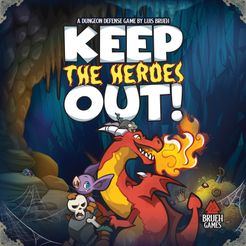
Keep the Heroes Out! is an asymmetric cooperative dungeon-defense game. Control monster clans, manage tactics, protect treasure, and repel invading heroes through two waves.
Keep the Heroes Out! supports 1–4 players; community best: 2 players; playing time: 40 minutes. A WANGO browser trial has not been confirmed.
Background & introduction
Keep the Heroes Out! puts players on the monsters’ side of a dungeon invasion. Each player chooses a clan with its own monsters, Tactics deck, and special abilities, then works with the others to protect rooms and treasure from waves of invading heroes. The team must coordinate movement, attacks, traps, and room powers while using each clan’s different strengths. Heroes are not controlled by another player; they enter automatically according to the scenario and difficulty rules.
Each player turn has five phases: play Tactics cards, optionally refresh the Loot market, discard and refill a hand, resolve the Heroes Invasion, and pass the active-player marker. Actions on cards can be assigned among different monsters in the dungeon and are usually resolved in any order. Monsters can move, fight at range or in melee, summon allies, place traps, activate rooms, create portals, or collect resources. The scenario layout and number of incoming heroes change where the team must defend.
The team’s result depends on whether the Vault treasure survives. Heroes fight monsters in occupied rooms, but may loot treasure and move toward the Vault when rooms are undefended. If the value-4 Vault treasure is looted, everyone immediately loses; if the team completes the second wave while it remains, all players win together. The game supports one to four players, with a true solo option and five- or six-player adjustments in the Dungeon Book. Scenarios can be played as one-shots or as an ongoing Chronicle.
Core rules & scoring
Objective and players: Choose Monster Clans and work together to protect the Vault treasure through two waves of Heroes. If the value-4 Vault treasure is looted, the team immediately loses; if Wave 2 is fully completed while it remains, everyone wins. The base rules list 1–4 cooperative players. The Dungeon Book adds true solo and adjustments for five or six players. The 40-minute and age-10 figures are catalogue or licensed-edition data.
Scenario setup: Choose a dungeon from the Dungeon Book and build the rooms, treasure, events, and starting monsters shown. Each player chooses a Monster Clan, takes its Monsters and Tactics deck, and draws five starting cards. Build the Guild deck and Loot market according to the scenario and Family, Challenging, or Hardcore difficulty. Clans differ in monster count, abilities, and tactics, so read the scenario and clan rules before play.
Five phases in a player turn: Play Tactics cards; optionally discard a card to refresh one to five cards in the Loot display; discard played cards and refill your hand to five; resolve the Heroes Invasion; then pass the Active Player marker left. The order determines when resources, hand cards, and incoming heroes are handled. Do not resolve the invasion before the discard-and-refill phase.
Card actions: Resolve actions on Tactics cards in an order of your choice and assign them among different Monsters in your dungeon; you do not need to use every action printed. Common actions include activating a room or clan power, moving, melee or ranged attacks, drawing cards, placing traps, reacting defensively, creating portals, placing resources, summoning Monsters, and Reinforcing. A moving Monster may carry one resource or trap marker; follow the card and room text.
Loot and Cells: To refresh Loot, discard a hand card and replace one to five cards in the market. Once per turn, at any point during your turn, you may also try to send a Hero to the Cells: reveal a Guild card; if it is a Hero, exhaust it in the Cells and draw three extra Tactics cards, while a Scenario card gives no such reward. A Hero sent to the Cells still resolves its normal summon ability under the designer’s clarification, so effects such as a Mage may release Heroes from the Cells.
Heroes Invasion: At the end of each player turn, reveal Guild cards according to the current Wave and difficulty. Family reveals one card at a time in Wave 1 and two in Wave 2; Challenging reveals two in both Waves; Hardcore reveals two in Wave 1 and three in Wave 2. A Hero enters the indicated room and resolves Show Off. If a Monster is there, the Hero attacks and becomes exhausted; if the room is empty, treasure value, active Heroes, and room state determine looting, waiting, or charging.
Treasure and defense: In an undefended room, if the number of active Heroes reaches the treasure value, exhaust the required Heroes to loot it and resolve its effect; otherwise the Heroes wait. With no Monster and no treasure, a Hero charges along passageways toward the nearest Vault. A new Hero entering a room can also activate exhausted Heroes there, increasing the pressure on the defense. Guard the Vault and block routes before Heroes advance to the core treasure.
Waves and victory: When the Guild deck is exhausted, shuffle it as instructed and enter Wave 2. If the value-4 Vault treasure is looted, the team loses immediately regardless of remaining rooms or treasure. If the team finishes the full second Wave with that treasure still safe, all players win. Treasure can be looted by Heroes and may trigger effects, so each invasion can alter the defense rather than merely adding a defeat count.
Difficulty, solo, and player count: The Dungeon Book explicitly supports true solo: one player uses one chosen Monster Clan, with its figures set up according to the Clan card and leaves the difficulty rules unchanged. The base game is cooperative for 1–4 players. Its five- to six-player adjustment keeps Family rules unchanged; Challenging and Hardcore add a Wave 0, revealing two Guild cards at a time before normal Waves 1 and 2. This scenario-book adjustment is distinct from the base rulebook’s standard player count.
One Shot, Chronicle, and expansions: A One Shot is a single selected scenario. Chronicle mode plays four specified scenarios in each chapter; losing a scenario does not stop the sequence, while winning the chapter’s final scenario unlocks an ability for the remaining Chronicle. Guild Master’s Revenge adds 1-vs-many play, while Boss Battles and other content have separate expansion rules. These are not default modes in the base box.
Rules & gameplay questions
Who are the players, and how do you win?
Players control different Monster Clans and cooperate to defend the dungeon and its treasures; Heroes invade automatically rather than being controlled by an opposing player. The whole team immediately loses if the value-4 Vault treasure is looted. If the team completes the entire second wave while that core treasure is still safe, everyone wins together. Defeating a certain number of Heroes by itself is not the victory condition.
How do I set up a scenario and choose a Monster Clan?
Choose a scenario from the Dungeon Book and build the rooms, treasure, events, and starting Monsters shown on its map. Each player chooses a Clan, takes its Monsters and Tactics deck, and draws five starting cards. Then build the Guild deck and Loot market using the scenario and the Family, Challenging, or Hardcore difficulty. Clans are asymmetric, so read their abilities as well as the scenario rules.
What are the phases of a player turn?
Each player plays Tactics cards, may refresh the Loot market, discards played cards and refills to five, resolves the Heroes Invasion, and passes the active-player marker left. To refresh, discard a card and replace one to five market cards. The invasion happens at the end of each player turn and its reveal count depends on the current Wave and difficulty.
How can I assign actions from a Tactics card?
Resolve the printed actions in an order you choose and distribute them among different Monsters in your dungeon; you may skip actions you do not want or cannot use. Effects can move or attack, draw cards, place traps, defend, make portals, place resources, summon Monsters, Reinforce, or activate a Clan or room ability. Check the action’s target and cost on the card before resolving it.
How do Heroes attack and loot treasure?
At the end of each player turn, reveal Guild cards for the active Wave and difficulty. A Hero enters its indicated room and resolves Show Off. If a Monster is there, the Hero attacks and becomes exhausted. If the room has no Monster, enough active Heroes may exhaust themselves to loot treasure; otherwise they wait. An empty room without treasure sends the Hero charging toward the nearest Vault. New Heroes can also reactivate exhausted Heroes in a room.
How many Guild cards are revealed at each difficulty?
Family reveals one card at a time in Wave 1 and two in Wave 2. Challenging reveals two in both Waves. Hardcore reveals two in Wave 1 and three in Wave 2. For five or six players, the Dungeon Book keeps Family unchanged, but Challenging and Hardcore add a Wave 0 that reveals two Guild cards at a time before the normal first Wave. Confirm the scenario and player-count setup before starting.
Does the base game have a true solo mode?
Yes. The Dungeon Book’s true solo mode has one player control one chosen Monster Clan, with its figure count set by the Clan card while keeping the selected difficulty unchanged. The automatic Hero-invasion system still provides the opposition, so there is no AI teammate or player-versus-player conversion. The base rules list 1–4 players; the scenario book separately adds adjustments for five or six players.
What is the difference between One Shot and Chronicle?
One Shot mode plays one scenario selected from the Dungeon Book. Chronicle mode links four specified scenarios into each chapter. Losing a scenario does not stop the campaign; the team moves to the next one. Winning the final scenario of a chapter unlocks an ability that lasts through the remaining Chronicle. Both formats keep the cooperative treasure-defense objective and the same basic Hero-invasion system.
Is the Guild Master competitive mode part of the base game?
No. The base box has players cooperate as Monsters against automatically controlled Heroes. Guild Master’s Revenge is a separate expansion that adds a one-versus-many mode with one player acting as Guild Master against the other players. Boss Battles and other special encounters are also separate expansion content. Do not describe those modes as default rules for BGG 333255’s base game.
Rules & introduction sources
- Edition
- This entry covers Brueh Games’ 2022 English base game, BGG 333255, using the readable base rulebook and Dungeon Book 0.98 text. The base rules list 1–4 cooperative players; the Dungeon Book adds true solo (one chosen Monster) and adjustments for 5–6 players. The 40-minute and age-10 figures come from BGG and licensed publisher Delirium Games; the original rulebook does not print them. A designer-uploaded 2026 print-rulebook PDF could not be compared page by page because BGG returned 403, so this entry does not claim verification against that print PDF. Guild Master’s Revenge 1-vs-many, Boss Battles, and other expansion content are excluded.
- Rule references
- Brueh Games — official Keep the Heroes Out! project page and rules resources
- Brueh Games — Keep the Heroes Out! base rulebook 0.98, pp. 2–15 (Tabletopia rules link)
- Brueh Games — Keep the Heroes Out! Dungeon Book 0.98, pp. 2–3 (Tabletopia rules link)
- Delirium Games — licensed Keep the Heroes Out! product specifications
- BoardGameGeek — Keep the Heroes Out!, game ID 333255
- Hive / Brueh Games — Guild Master’s Revenge expansion, for mode separation
- BoardGameGeek — designer’s 2026 print rulebook file entry and clarification (page may be access restricted)
- Introduction source
- BoardGameGeek
WANGO editorial
| Parameter | Recorded value |
|---|---|
| BGG overall rank (snapshot) | #353 |
| Complexity Weight | 2.49 / 5 |
| Best player count (community) | 2 |
| Player range | 1–4 |
| Playing time (minutes) | 40 |
| Core mechanisms | Action Retrieval · Area Movement · Cooperative Game · Deck, Bag, and Pool Building · Modular Board · Scenario / Mission / Campaign Game · Solo / Solitaire Game · Variable Player Powers · Variable Set-up |
| Chinese publication | Unconfirmed |
| WANGO browser play | No confirmed WANGO trial |
| Year published | 2022 |
| Suggested age | 10+ |
BGG statistics are stored snapshots, not live rankings. Source checked:2026-09-27
Player questions
What is the best player count for Keep the Heroes Out!, and can I play online?
Keep the Heroes Out! supports 1–4 players; community best: 2 players; playing time: 40 minutes. A WANGO browser trial has not been confirmed. Recorded mechanism tags: Solo / Solitaire Game.
How complex is Keep the Heroes Out!, and which mechanisms does it use?
Weight: 2.49 / 5. Mechanisms: Action Retrieval · Area Movement · Cooperative Game · Deck, Bag, and Pool Building · Modular Board · Scenario / Mission / Campaign Game · Solo / Solitaire Game · Variable Player Powers · Variable Set-up. Chinese publication: Unconfirmed.
Where can I learn Keep the Heroes Out!?
No rule guide, strategy article or WANGO trial has been confirmed for this record.