Revive
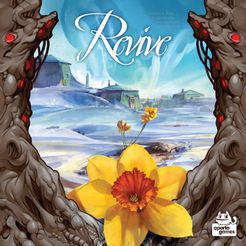
Explore a frozen world, recruit citizens and build an engine of card slots, machines and tribal technologies while collecting artifacts for final scoring.
Revive supports 1–4 players; community best: 3 players; playing time: 90–120 minutes. A WANGO browser trial has not been confirmed.
Background & introduction
In Revive, each player leads a tribe rebuilding a lost world. Exploration reveals the map and recruits citizens, construction advances machine tracks, and populating ancient locations unlocks tribal technologies. Different tribes and a variable map encourage a new development order each game.
Citizen cards offer different upper and lower effects, while matching slot modules add benefits. Machines spend energy for extra effects, and hibernation cycles cards and energy back into use. Deciding when to keep acting and when to refresh the engine shapes the game’s rhythm.
Multiplayer revolves around a limited supply of major artifacts. Their colors increase how often personal scoring categories are counted. A five-chapter base-box campaign gradually introduces content, although the basic rules can be played directly. This overview avoids later unlock details and distinguishes the base solo game’s timer.
Core rules & scoring
The base box supports 1–4 players. Select major artifacts for the player count and prepare the variable map and citizen, machine and module displays. Each player receives a tribe board, player board, starting citizens and a secret artifact scoring card. Leave locked components aside until instructed by the campaign.
On a multiplayer turn, perform up to two actions or hibernate instead. Actions may repeat and include playing a card, using the switch, exploring, populating and building. During your turn you may also freely convert crystals to basic resources, activate machines and open crates. If you cannot or do not want to take at least one action, you must hibernate.
To play a citizen, place an active-area card in an available slot: upper slots use its upper effect and lower slots its lower effect, also activating matching-color modules in that slot. Unlock the fifth slot before using it. The basic switch action gains one basic resource; its token must be reset before reuse.
To explore, pay the tile’s printed cost and food for range, gain its points, recruit one citizen to your active area, then reveal and orient the tile. Initially count range from the central chasm; after placing your first building or population figure, count from your nearest own piece instead. Pay one food per intervening space, excluding origin and destination; normally you cannot count through unexplored tiles.
To populate, choose a location where you have no population figure and remove a figure from your tribe board to unlock its technology. Unlock the bottom technology first, then only technologies connected to unlocked ones. Pay the technology’s book cost, range cost, and one book to each other player already present. Locations can be shared, but each player can populate a given location only once.
Build only on vacant sand: a small building normally costs three gears and a large one five, plus range. Adjacent forest, mountain and field spaces advance matching machine tracks; new adjacent water spaces give their reward once per player. Large buildings double terrain and crystal rewards, not water rewards. Move progress markers from unlocked track rewards onto the progress track, potentially gaining machines, energy or artifacts.
To hibernate, return machine energy, move resting cards to the active area, move played slot cards to the resting area, reset the switch and advance the hibernation marker for a reward. Thus a card just removed from a slot normally needs another hibernation to become active. Reaching the fourth hibernation space also removes a major artifact. You cannot activate machines after returning energy during that hibernation turn.
In multiplayer, taking the last major artifact grants the end-game tile; finish that turn, then every other player takes one last turn. Removing the last artifact through hibernation also triggers this ending. Later artifact rewards give minor artifacts. Add progress-track points, technologies, populated large locations, unlocked card-color bonuses, four points for the end-game tile, two per minor artifact and one per five remaining resources. Score all three artifact-card categories once, then each matching category once more per major artifact.
Purple end-game points do not trigger scoring-track rewards. Most points wins; break ties by remaining unscored resources, then total advancement on the three machine tracks, then share victory. Solo takes one action per turn with a twenty-space timer: playing a card advances it one space, hibernating two, and other actions none. End only when the counter passes the top of the progress track, not when major artifacts run out, and compare the score with the rulebook’s achievement bands.
Rules & gameplay questions
Does hibernation immediately return the cards I just played?
Normally no. First recover the old resting-area cards, then move slot cards into resting. Those cards wait until another hibernation. Effects such as a machine that moves a card into resting earlier can change when it returns.
Does a large building double a water-space reward?
No. It doubles terrain advancement and crystals, while water rewards remain single. Each player normally claims a particular water reward through building only once.
Does a scoring category score nothing if I have no matching artifact?
No. Each of the three categories on your secret artifact card is scored once regardless. Major artifacts add further scoring of their matching category.
Must the same group finish the campaign together?
No. The five chapters gradually unlock content without requiring the same players throughout. You may also play only the basic rules. After completion, continue with all or selected unlocked elements.
Does taking the last major artifact end solo play too?
No. Solo uses an action counter and omits the multiplayer end-game tile. Playing cards and hibernating consume the timer; other actions do not. After major artifacts run out, further artifact rewards give minor artifacts.
Rules & introduction sources
- Edition
- Revive 2022 base-box English rules, covering multiplayer and base solo play. Preserves the five-chapter progression without detailing later tribes or optional rules. Excludes Call of the Abyss.
- Rule references
- Introduction source
- BoardGameGeek
WANGO editorial
| Parameter | Recorded value |
|---|---|
| BGG overall rank (snapshot) | #92 |
| Complexity Weight | 3.46 / 5 |
| Best player count (community) | 3 |
| Player range | 1–4 |
| Playing time (minutes) | 90–120 |
| Core mechanisms | Deck, Bag, and Pool Building · Hexagon Grid · Map Addition · Network and Route Building · Open Drafting · Scenario / Mission / Campaign Game · Tech Trees / Tech Tracks · Variable Player Powers |
| Chinese publication | Unconfirmed |
| WANGO browser play | No confirmed WANGO trial |
| Year published | 2022 |
| Suggested age | 14+ |
BGG statistics are stored snapshots, not live rankings. Source checked:2026-09-27
Player questions
What is the best player count for Revive, and can I play online?
Revive supports 1–4 players; community best: 3 players; playing time: 90–120 minutes. A WANGO browser trial has not been confirmed.
How complex is Revive, and which mechanisms does it use?
Weight: 3.46 / 5. Mechanisms: Deck, Bag, and Pool Building · Hexagon Grid · Map Addition · Network and Route Building · Open Drafting · Scenario / Mission / Campaign Game · Tech Trees / Tech Tracks · Variable Player Powers. Chinese publication: Unconfirmed.
Where can I learn Revive?
No rule guide, strategy article or WANGO trial has been confirmed for this record.