The King Is Dead: Second Edition
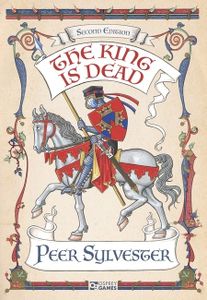
The King Is Dead: Second Edition is a compact political game about medieval Britain. Players manipulate Scottish, Welsh, and English followers across eight regions, then try to become the preferred ruler of whichever faction holds the strongest claim when the crown is decided.
The King Is Dead: Second Edition supports 2–4 players; community best: 3 players; playing time: 30–45 minutes. A WANGO browser trial has not been confirmed.
Background & introduction
After the king dies, Britain is left without a ruler and three factions compete for influence: Scotland, Wales, and England. Players are nobles and powerbrokers rather than fixed leaders of one faction. They shift the balance of followers in the regions while drawing supporters into their own courts, hoping to become the candidate favored by the faction that eventually prevails.
The design compresses long-term planning into eight action cards per player. Once used, a card is gone, so players must choose whether to change the board now or let an opponent move first. Actions can add, exchange, or reposition followers and alter the order in which regions are resolved. After every action, the player also recruits one follower from a region into their court, affecting local strength and their own claim to the throne.
Eight regions are resolved in order. A region goes to the faction with the most followers there; a tie or an empty region becomes unstable. Britain may reach a coronation, or repeated instability may lead to a French invasion. These endings use different victory tests: one rewards support for the most powerful faction, while the other rewards balanced sets of followers from all three factions.
The second edition keeps the core action loop brisk and adds optional cunning cards for experienced groups. In a four-player game, players form two teams, but teammates may not discuss tactics or show their cards. The game rewards timing and reading hidden intentions: acting too soon can reveal a plan, while waiting may let a crucial region settle before a player can intervene.
Core rules & scoring
Goal and factions: The board shows eight regions of Britain and followers from three factions: Scottish, Welsh, and English. Players use action cards to change where followers stand, influencing which faction controls each region. The faction with the strongest territorial position matters at the end, while court followers determine who can claim to rule for that faction. Players are not permanently assigned to a faction.
Setup: In a two-player game, remove two followers of each faction first. Put two Scottish, Welsh and English followers into their respective home regions. Bag the rest, randomly give each player two court followers, then fill every region to four followers and place the remainder in the supply. Give each player the same eight basic action cards and a negotiation disc. Shuffle the eight region cards and deal one beside each numbered position; the region order is random, not fixed by region name.
Turn choices: Turns proceed clockwise from the start player. On a turn, play one card and resolve it, or pass. A played card is discarded and cannot be used again, so each player may take no more than eight actions. Passing skips only the current opportunity; when the turn returns, the player may act or pass again. A regional struggle must occur after everyone passes in succession.
Actions and recruiting: Cards may add followers from the supply, exchange followers between regions, or change the order of unresolved region cards. After resolving an action, the active player must take one follower from any region and place it in their own court; the supply is not a legal source. This strengthens their claim to rule for that faction while reducing its presence in a region. Even a partial action is followed by recruitment.
Region struggles: Find the lowest-numbered face-up region card and compare the three factions’ followers there. The faction with the most places a control disc, then all local followers return to the supply. If the lead is tied or nobody is present, add an instability disc instead and return the followers. Flip the region card face down. Controlled or unstable regions cannot receive or move followers later.
French invasion ending: If the third instability disc is placed, the game ends immediately in a French invasion. Each player counts complete sets in their court, with one Scottish, one Welsh, and one English follower in each set. The player with the most sets wins; a tie goes to the player who most recently played an action card. In the four-player team game, combine each team’s two courts for this count.
Coronation ending: If all eight regions are resolved without an invasion, hold a coronation. The faction controlling the most regions is strongest; if factions tie, the one that most recently won a struggle is strongest. The player with the most followers of that faction in court wins. Break a tie using support for the second-strongest faction and then the player who first used all their cards. Team results follow the second-edition rules.
Advanced and team play: In the advanced game, remove each player’s three faction-support cards and secretly deal three Cunning Action Cards instead. These provide less predictable options. With four players, people opposite one another form a team, but cannot discuss strategy or reveal cards. Players still act and recruit individually; the ending determines how teammates share the result.
Strategic timing: Each card is a limited resource, so consider the next region to be resolved, the faction majority, and the followers available to recruit into a court. Recruiting can improve a player’s claim but may remove a crucial supporter from the board. Passing can delay a struggle, but a full sequence of passes forces one to happen. The instability count also shows whether an invasion is near.
Rules & gameplay questions
What is the game about?
After the king dies, Scottish, Welsh, and English factions compete across Britain. Players are nobles seeking the crown. They use action cards to change follower distributions and then recruit one follower into a personal court. Players influence which faction controls regions while building support to rule on that faction’s behalf.
Does each player control a faction?
No. Players are not locked to Scotland, Wales, or England. They can change all three factions’ presence and recruit any faction’s follower from a region into their own court. Their best allegiance can change as regions are resolved, because territorial control and court support work together to decide the final result.
How many actions does each player get?
Each player begins with eight action cards, and a card cannot be used again once played. A player can therefore take at most eight actions over the game. Players may pass instead; passing skips the current opportunity but does not remove a card from hand. When everyone passes consecutively, resolve the next regional struggle.
Why recruit a follower after taking an action?
After resolving a card, the active player must take one follower from any region and put it in their court. They cannot take one from the supply. This increases their support for a faction’s crown while removing that follower from a region, so recruitment changes both the player’s personal position and the local majority.
How is a regional struggle decided?
Resolve the lowest-numbered face-up region card. Compare the Scottish, Welsh, and English followers there. The faction with the most places a control disc, and all followers return to the supply. If the lead is tied or the region is empty, place an instability disc instead. Flip the region card face down afterward.
Who wins after a French invasion?
The third instability disc ends the game immediately. Each player counts complete sets in their court, with one Scottish, one Welsh, and one English follower per set. The player with the most complete sets wins. If players tie, the winner is the person who most recently played an action card. Four-player teams combine both courts for this count.
How is the winner chosen at a coronation?
If all eight regions are resolved without an invasion, determine which faction controls the most regions. A tie favors the faction that most recently won a struggle. The player with the most of that faction’s followers in court wins; further ties use support for the second-strongest faction and then card-play timing.
What changes in advanced and four-player games?
The optional advanced game replaces three standard faction-support cards with three secretly dealt Cunning Action Cards per player. In a four-player game, opposite seats form teams, but teammates may not show cards or discuss tactics. Each person still acts and recruits individually; the rules explain how the team shares the outcome at either ending.
Rules & introduction sources
- Edition
- This entry follows the Osprey Games second edition. It covers the base action-card game, the optional advanced Cunning Action Cards, and four-player team rules. It does not merge in first-edition procedures or another game with a similar title.
- Rule references
- Introduction source
- BoardGameGeek
WANGO editorial
| Parameter | Recorded value |
|---|---|
| BGG overall rank (snapshot) | #373 |
| Complexity Weight | 2.16 / 5 |
| Best player count (community) | 3 |
| Player range | 2–4 |
| Playing time (minutes) | 30–45 |
| Core mechanisms | Area Majority / Influence · Campaign / Battle Card Driven · Communication Limits · Hand Management · Map Reduction · Memory · Stock Holding · Variable Set-up |
| Chinese publication | Unconfirmed |
| WANGO browser play | No confirmed WANGO trial |
| Year published | 2020 |
| Suggested age | 14+ |
BGG statistics are stored snapshots, not live rankings. Source checked:2026-09-27
Player questions
What is the best player count for The King Is Dead: Second Edition, and can I play online?
The King Is Dead: Second Edition supports 2–4 players; community best: 3 players; playing time: 30–45 minutes. A WANGO browser trial has not been confirmed.
How complex is The King Is Dead: Second Edition, and which mechanisms does it use?
Weight: 2.16 / 5. Mechanisms: Area Majority / Influence · Campaign / Battle Card Driven · Communication Limits · Hand Management · Map Reduction · Memory · Stock Holding · Variable Set-up. Chinese publication: Unconfirmed.
Where can I learn The King Is Dead: Second Edition?
No rule guide, strategy article or WANGO trial has been confirmed for this record.