Frostpunk: The Board Game
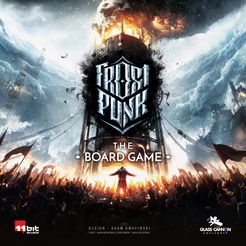
Frostpunk: The Board Game is a 1–4 player cooperative survival city-builder. Govern the last city in a frozen world, keep the Generator running, expand infrastructure, and manage hunger and cold while pursuing a scenario objective.
Frostpunk: The Board Game supports 1–4 players; community best: 1 players; playing time: 120–150 minutes. A WANGO browser trial has not been confirmed.
Background & introduction
Frostpunk: The Board Game is set in a frozen world where the last survivors gather around a Generator and try to build a city that can endure the winter. Players are not rival rulers; they act together as advisors, deciding where citizens work, where they sleep, and which laws and technologies can keep the settlement functioning. Each scenario sets its own goal, and decisions change how citizens respond to their leadership.
The city depends on its Generator. It needs coal and other fuel to maintain heat, accumulates stress, and can break down. The weather advances the cold and affects whether buildings can provide warmth. Citizens may go hungry, become sick, or die, changing the city’s population and resources. Hope and Discontent tracks express the social condition of the settlement, and laws or sacrifices can shift both at once.
Play is cooperative. Players manage Workers, Engineers, and Children, clear snow, gather resources, construct homes and facilities, research technologies, send expeditions, and resolve events. Many actions require citizens at specific locations or consume supplies. Poor sequencing may leave too few citizens or resources for the later heating, feeding, or treatment steps. The Leadership marker gives one player the final say when the group cannot agree.
Each round moves through a series of phases, starting with events and Generator checks, then weather, preparation, actions, dusk events, hunger, and night. Scenario cards state the goal, while the general rules list ways the city can fail through lost Hope, high Discontent, repeated Generator breakdowns, illness, hunger, or deaths. Cooperation means maintaining basic survival while making progress toward the current scenario objective.
Core rules & scoring
Objective and modes: The core box supports 1–4 players cooperatively. Players act as advisors to the last city and work together to complete the goal on the chosen Scenario card. Glass Cannon Unplugged lists a play time of about 120 minutes; the box includes a Rulebook and Scenario Book. Goals vary by scenario. When a Scenario Book or card conflicts with a general rule, follow the stated priority order.
First setup and round: Choose a scenario from the Scenario Book, place the map, Generator, shared tracks, resources, and citizen markers, then prepare cards as instructed. The first round begins with the Action Phase and skips the first five phases normally used in later rounds. Each scenario may add objectives, components, or rules, so do not substitute another scenario’s setup or special instructions.
Nine-phase sequence: A complete round proceeds through Dawn, Morning, Generator, Weather, Preparation, Action, Dusk, Hunger, and Night. Dawn passes Leadership and advances the round; Morning reveals an event; Generator checks fuel, heat, stress, and cold-related sickness; Weather advances heat ranges, hunting, expeditions, and the storm; Preparation chooses an Advisor and resolves sickness.
Action Phase: During the Action Phase, players place Citizen Meeples on available action locations and resolve them. Common actions remove snow, gather resources such as wood, coal, steel, and other supplies, construct buildings, use buildings, deploy Scouts, and perform special actions from the scenario or cards. Workers, Engineers, and Children have different abilities and limits. Temperature, building condition, health, and scenario effects may restrict an action.
Generator and heat: In the Generator Phase, players may spend coal to increase heat, then resolve cold-related sickness and check Generator Stress. The Generator provides heat to the city; Weather changes the heat ranges. If stress becomes too high, the Generator may break down, and its second breakdown causes a loss. Whether a building provides shelter or a work place must be checked against heat range, insulation, and the building’s current side.
Social condition, laws, and events: Hope and Discontent use tokens on separate tracks, and changes can add, activate, exhaust, or remove tokens. During Dusk, resolve Dusk effects on the Scenario and Event displays, then reveal a Dusk card and carry out its option or consequence. Laws, Morning events, and scenario cards can change available actions, so apply the exact card and Scenario Book text when a new situation appears.
Hunger, sickness, and night: In the Hunger Phase, handle the previous round’s Hunger, spend Food to reduce it, and feed citizens as required for the current round. During Night, place citizens in Shelters covered by heat; citizens without a warm bed may become sick. Resolve Sickness markers in later Preparation phases. Illness, death, and the Corpse track all make the city’s remaining capacity more fragile.
Victory and loss: Complete the objective on the current Scenario card to win. The general rules list six loss conditions: the last Hope token is removed; a sixth Discontent token is placed; the Generator breaks down for a second time; any Sickness marker reaches 26 or higher in Preparation; Hunger remains at 25 or higher after spending Food to reduce it during Hunger; or the Corpse marker reaches its final space. A scenario may add its own rules and goals; card text has priority.
Rules & gameplay questions
How many players can play Frostpunk: The Board Game?
Glass Cannon Unplugged lists the core box for one to four players cooperatively and a play time of about 120 minutes. A solo player manages the whole city; in a group, players jointly assign workers, pass laws, distribute resources, and make risky decisions. If the group cannot agree, the Leadership marker determines who has the final say.
Does every scenario use the same victory goal?
No. Choose a scenario from the Scenario Book, then complete the goal written on that Scenario card. The rulebook gives scenario text priority over general rules, and card text has priority over both. Unless a scenario says otherwise, the general survival loss conditions still apply, so setup should include a careful check of that scenario’s extra pieces and special instructions.
What phases happen in each round?
A full round proceeds through Dawn, Morning, Generator, Weather, Preparation, Action, Dusk, Hunger, and Night. These phases advance the round and Leadership, resolve events and heat, update weather, assign actions, then handle social consequences, food, and shelter. The first round of the base game skips the first five phases and starts directly with the Action Phase.
What can players do during the Action Phase?
Players place Workers, Engineers, or Children at eligible locations to remove snow, gather resources, construct or use buildings, deploy Scouts, and perform special actions. Citizen type affects which actions are available and what they produce. Weather, sickness, heat, building condition, and Scenario cards can add restrictions. Action order matters because citizens and supplies must remain available for the later feeding and shelter phases.
How do the Generator and heat affect the city?
The Generator needs coal and other fuel to maintain heat, and its stress is checked during the Generator Phase. Weather changes heat coverage and can affect whether buildings keep citizens warm. Stress may cause a breakdown, and the second Generator breakdown is a general loss condition. Check the board’s heat range, insulation markers, and building state before deciding which areas can safely shelter citizens.
What do Hope and Discontent represent?
Hope represents citizens’ confidence in the city’s future, while Discontent tracks social dissatisfaction. They use separate token tracks, and changes may draw, activate, exhaust, or remove tokens. Events, laws, and decisions can shift both tracks during play. Losing the last Hope token or placing a sixth Discontent token triggers one of the general loss conditions.
When do citizens become hungry or sick?
The Hunger Phase first resolves the previous round’s Hunger, then players spend Food and feed citizens for the current round. At Night, citizens need Shelters within the city’s heat coverage; those without a warm place may become sick. Sickness markers are handled during Preparation. Illness, hunger, Generator trouble, and deaths all threaten the city, so long-term construction must not displace basic care.
What conditions can cause a loss?
Unless the scenario overrides them, the general rules say the city loses if its last Hope token is removed, a sixth Discontent token is placed, the Generator breaks down for the second time, a Sickness marker reaches 26 in Preparation, Hunger remains at 25 after food is spent to reduce it, or the Corpse marker reaches its final space. The Scenario card defines the victory goal, and scenario/card text takes priority over the general rulebook.
Rules & introduction sources
- Edition
- This entry covers the Glass Cannon Unplugged core box and its official Rulebook and Scenario Book. Scenario cards can override general rules. Frostlander, Timber City, and other expansions are excluded, as is the companion app’s optional Trade mode. The publisher lists a play time of about 120 minutes.
- Rule references
- Introduction source
- BoardGameGeek
WANGO editorial
| Parameter | Recorded value |
|---|---|
| BGG overall rank (snapshot) | #380 |
| Complexity Weight | 4.41 / 5 |
| Best player count (community) | 1 |
| Player range | 1–4 |
| Playing time (minutes) | 120–150 |
| Core mechanisms | Cooperative Game · Cube Tower · Events · Modular Board · Scenario / Mission / Campaign Game · Solo / Solitaire Game · Variable Player Powers · Variable Set-up · Worker Placement, Different Worker Types |
| Chinese publication | Unconfirmed |
| WANGO browser play | No confirmed WANGO trial |
| Year published | 2022 |
| Suggested age | 16+ |
BGG statistics are stored snapshots, not live rankings. Source checked:2026-09-27
Player questions
What is the best player count for Frostpunk: The Board Game, and can I play online?
Frostpunk: The Board Game supports 1–4 players; community best: 1 players; playing time: 120–150 minutes. A WANGO browser trial has not been confirmed. Recorded mechanism tags: Solo / Solitaire Game.
How complex is Frostpunk: The Board Game, and which mechanisms does it use?
Weight: 4.41 / 5. Mechanisms: Cooperative Game · Cube Tower · Events · Modular Board · Scenario / Mission / Campaign Game · Solo / Solitaire Game · Variable Player Powers · Variable Set-up · Worker Placement, Different Worker Types. Chinese publication: Unconfirmed.
Where can I learn Frostpunk: The Board Game?
No rule guide, strategy article or WANGO trial has been confirmed for this record.