Long Shot: The Dice Game
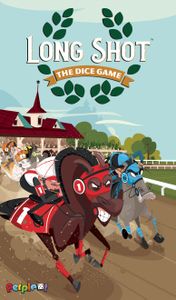
Long Shot: The Dice Game is a horse-racing dice and betting game. Buy horses, place wagers, and influence the race before the third finisher triggers scoring; the player with the most money wins.
Long Shot: The Dice Game supports 1–8 players; community best: 4–5 players; playing time: 25 minutes. A WANGO browser trial has not been confirmed.
Background & introduction
Long Shot: The Dice Game turns an eight-horse race into a table-wide exercise in investment and timing. Each player decides whether to spend money buying a horse, place a wager, or invest in a helmet, jersey, or concession reward. Dice determine the main movement, but they do not decide how anyone earns money. The same result can create an opportunity for one player and a problem for another.
Players may back a horse they own or bet on any runner that still meets the betting rules. Horse cards have distinct abilities and secondary movement bars, so a horse moving forward can pull other runners along as well. Buying a horse provides access to its ability and a possible purse when it finishes; betting depends on the odds and the order in which horses reach the winner’s circle.
Every player participates in each round, not only the person rolling the dice. The horse die and movement die first change the race, and then each player takes one action in turn order using the rolled horse number as the usual reference. Players can buy an available horse, wager, add equipment, or mark a space on their concession grid. Those choices overlap and make the race feel interactive from lap to lap.
When the third horse crosses the finish line, the race moves into final scoring after the current round is completed. The winner is determined by more than the finishing order: wager returns, purses from owned horses, paired equipment, concession benefits, and cash left in hand all matter. Players must judge the race while it is still uncertain and decide when saving money is wiser than chasing a favorite.
Core rules & scoring
Objective and scope: Players manage their own money and use horse purchases, bets, equipment, and concession rewards to build the largest final total. Eight horses run on one shared track. The race is triggered to end when the third horse finishes, and the player with the most money wins. Perplext lists the retail game for 1–8 players, about 25 minutes, and ages 14+. This summary covers the base game and excludes separately sold mini-expansions.
Setup: Put the track board in the middle of the table and place all eight horses behind the start line. Choose one numbered set of eight horse cards to make the public market; the rules recommend the introductory set for a first game. Give each player a personal sheet and marker, draw a Starting Card, copy its free concession marks and starting bets, and record starting cash. Choose the first Active Player and give that player both dice.
Dice and race movement: At the start of a round, the Active Player rolls the Horse Die and Movement Die together. The Horse Die identifies the horse for the primary movement, and the Movement Die gives the number of spaces it advances. If that horse has already finished, it does not move. Then read the corresponding horse card’s Secondary Movement Bar and advance each horse marked with an X by one space. Resolve multiple horses in ascending horse-number order; printed X marks on the card also count.
Player actions: After movement, starting with the Active Player and proceeding clockwise, every player takes one action. The rolled horse number is normally used for that action. A player may spend an available Wild Number on their sheet to use a different horse number, but doing so does not trigger the selected horse’s rolled ability. The five actions are Concession, Helmet, Jersey, Bet, and Buy; check the selected horse, the action rules, and available money before marking or paying.
Concessions and equipment: Mark the appropriate number in the Concession grid when taking that action. Completing any row or column earns one of its one-time Concession bonuses, which is resolved immediately. A Helmet permits betting on its horse after it has passed the No Bet line. A Jersey adds an X for any chosen horse on the selected horse card’s Secondary Movement Bar; that marked horse moves one space when that bar is used. Buying a horse costs the amount printed on its market card; only its owner receives its special ability.
Bets: A Bet action records a wager on a legal horse and deducts the money from the player’s cash. The usual action permits a wager of $1–$3, subject to the player’s balance and the bet rules. A horse beyond the No Bet line normally cannot receive a new wager unless the player has its Helmet; a finished horse can never be bet on. Starting Cards may provide initial bets. At scoring, finishing position and printed odds determine returns; an unfinished horse past the No Bet line returns one times its bet.
Finish rules and abilities: A horse may cross the finish line because of its dice movement or a move shown on a Secondary Movement Bar. Direct player effects that move a horse cannot send it across the line. Each horse ability resolves at the time specified by its card and generally applies only while a player owns that horse. When the third horse finishes, complete the current round’s player actions; no additional horse may finish after the race-ending trigger.
Final scoring and solo play: Add the purse for each finished horse a player owns, returns from bets, any Helmet-and-Jersey pair bonus on the same horse, remaining cash, and applicable card effects. The highest total wins. The box includes a Solo Board for the Roland Wright automated opponent; use its dedicated solo setup and action procedure. Track Events and Horse Sets 4–8 are separately sold mini-expansions and are outside this base-game summary.
Rules & gameplay questions
How many players can play Long Shot: The Dice Game?
Perplext lists the retail base game for one to eight players and about 25 minutes. The booklet provides a multiplayer race for two to eight players and a separate solo race against the automated opponent Roland Wright. The solo board is included with the base game, so a single player does not need to buy an expansion to use that mode.
What do the two dice do each round?
The Horse Die selects the runner for the main movement, and the Movement Die determines how many spaces that horse advances. Afterward, use the selected horse card’s Secondary Movement Bar to move every marked horse one additional space. This shared race change occurs before the players take their individual actions, giving everyone a chance to react to the same roll.
Does every player take an action on each turn?
After the race movement, each player takes one action in clockwise order, beginning with the Active Player. The rolled horse number normally determines the target for the action. Players choose among Concession, Helmet, Jersey, Bet, and Buy. A Wild Number can change which horse number is used, although it does not activate that horse’s rolled ability.
What limits a bet?
A wager must target a horse that has not finished, and the No Bet line normally prevents new bets on horses that have passed it. A Helmet lets its owner continue betting on that horse beyond the line, but it does not permit a bet after the horse finishes. A usual Bet action allows one to three dollars, subject to available cash, and the horse’s printed odds determine the eventual payout.
What do players gain by buying a horse?
A player pays the cost printed on an available market card to own the horse matching the selected number. Ownership enables that horse’s special ability and pays the player its purse if it finishes. Buying also competes for the same cash players might need for later wagers and equipment, so an early purchase has both a strategic benefit and an opportunity cost.
How are a Helmet and Jersey different?
A Helmet removes the No Bet line restriction for its horse, allowing the owner to keep betting after that horse passes the line. A Jersey adds an X for any chosen horse on the selected horse card’s secondary movement bar; the marked horse advances when that card’s bar is used. Owning both items for the same horse also provides a final scoring bonus, so each item can matter both during the race and at the end.
Does the game end as soon as the third horse crosses?
The third finisher triggers the end of the race, but the current round is completed before final scoring. Other horses may not finish after that trigger. Players then calculate purses from owned finishers, returns from wagers, paired equipment bonuses, remaining cash, and relevant card effects. The player with the largest money total is the winner.
Which variable content is included in the base game?
The base game lets players choose a set of eight numbered horse cards and includes the Starting Cards and the Roland Wright solo board. Perplext lists Track Events and Horse Sets 4–8 as separate mini-expansions. Those add optional content for later races, but they are not required for the base game described here.
Rules & introduction sources
- Edition
- This entry covers Perplext’s base retail game, including the boxed Roland Wright solo race and the rules booklet v4.1. Track Events and Horse Sets 4–8 are separately sold mini-expansions and are excluded. Detailed rules were checked against a third-party hosted copy of the booklet; see the source note for that limitation.
- Rule references
- Introduction source
- BoardGameGeek
WANGO editorial
| Parameter | Recorded value |
|---|---|
| BGG overall rank (snapshot) | #375 |
| Complexity Weight | 1.96 / 5 |
| Best player count (community) | 4–5 |
| Player range | 1–8 |
| Playing time (minutes) | 25 |
| Core mechanisms | Betting and Bluffing · Bids As Wagers · Bingo · Dice Rolling · End Game Bonuses · Paper-and-Pencil · Solo / Solitaire Game · Victory Points as a Resource |
| Chinese publication | Unconfirmed |
| WANGO browser play | No confirmed WANGO trial |
| Year published | 2022 |
| Suggested age | 14+ |
BGG statistics are stored snapshots, not live rankings. Source checked:2026-09-27
Player questions
What is the best player count for Long Shot: The Dice Game, and can I play online?
Long Shot: The Dice Game supports 1–8 players; community best: 4–5 players; playing time: 25 minutes. A WANGO browser trial has not been confirmed. Recorded mechanism tags: Solo / Solitaire Game.
How complex is Long Shot: The Dice Game, and which mechanisms does it use?
Weight: 1.96 / 5. Mechanisms: Betting and Bluffing · Bids As Wagers · Bingo · Dice Rolling · End Game Bonuses · Paper-and-Pencil · Solo / Solitaire Game · Victory Points as a Resource. Chinese publication: Unconfirmed.
Where can I learn Long Shot: The Dice Game?
No rule guide, strategy article or WANGO trial has been confirmed for this record.