Dead Reckoning
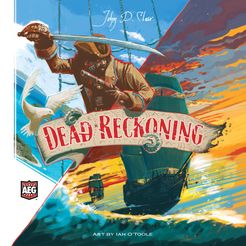
Dead Reckoning is a strategy game of seafaring exploration and card crafting. Players captain ships, discover islands, trade cargo, grow their crews, and may turn to privateering or naval combat. By improving cards, building influence, and accumulating wealth, they aim to finish with the greatest fortune when achievements trigger the endgame.
Dead Reckoning supports 1–4 players; community best: 3 players; playing time: 90–150 minutes. A WANGO browser trial has not been confirmed.
Background & introduction
Dead Reckoning combines seafaring exploration, economic development, influence, and combat in a map that unfolds as ships travel. Each player captains a vessel and sails toward unrevealed ocean boards, where islands, merchant ships, and other opportunities may appear. A route can lead to very different plans: trade cargo for income, establish influence and buildings on islands, or raise a pirate flag and seek privateering or battle. The game offers several ways to pursue wealth, so combat is a choice rather than a requirement for victory.
Its distinctive card-crafting system lets a crew develop over the course of play. Advancement cards are inserted into transparent sleeves with sailor cards, improving or changing the abilities those sailors provide. Each upgrade can shape later turns, but simply collecting powerful cards is not enough: a player must connect them to the ship’s position, its cargo, island opportunities, and the encounters available nearby. Timing an investment against exploration, trading, and influence is a central strategic decision.
Players take turns, each with a main phase followed by cleanup. Depending on the hand and the current situation, a turn may include moving the ship, playing cards or using abilities, loading or unloading cargo, buying advancements, or resolving an encounter. A merchant-ship encounter can be handled through trade or attack. Battles send cubes through a battle tower and resolve them with crew abilities and other battle components. Combat may offer valuable rewards, but it also costs resources and can disrupt a longer economic plan.
Achievement markers track progress toward the endgame. One captain might build a dependable income engine through crew upgrades and trade, while another explores outward, contests islands, or uses privateering to change the pace. The endgame begins when a player reaches four achievements. That player completes the current turn, then each other player takes one final turn. Players compare their wealth, represented by coins and treasure under the base rules. For solo play, AEG publishes Deckhand rules featuring the Wayward Covenant automated opponent; competitive play retains the same broad choices among exploration, trade, expansion, and conflict.
Core rules & scoring
Objective: Explore and develop your seafaring operation while building wealth and earning achievements. The base rules represent final wealth with coins and treasure. Once any player has four achievement markers, the endgame procedure begins: the triggering player finishes the current turn, then each other player takes one final turn before wealth is compared. Watch both your own score and the timing of an opponent’s achievements so investments do not remain unfinished when the game ends.
Components and setup: Each player receives a ship, harbor, sailor cards, and other player pieces. The shared area includes a harbor board, ocean boards, coins, cargo, advancement cards, buildings, influence pieces, and battle components. Arrange the starting sea and initial supplies according to the base rulebook, then prepare each player’s crew deck. This overview covers the base box only; it does not mix in components or procedures from Letters of Marque, Port of Call, or other expansions.
Turn structure and limits: In Main, perform legal movement, card play, abilities, cargo handling and purchases/encounters. Set Sails before moving, only once per turn. Buying Advancements or resolving the current-space Encounter is allowed up to twice total per turn, and each ability on a played card is once per turn. Cleanup refills displays, selects Pirate or Mercantile mode, loses unspent Sails, sleeves Advancements, then discards and draws, in that order. Normally draw four with a hand limit of six; bonus draw does not itself raise the limit. Then level a crew card as instructed.
Sailing and exploration: Moving the ship takes it into connected ocean spaces and can reveal an unrevealed ocean board. New areas may expose islands, ship encounters, or other opportunities. Movement determines which locations you can reach and shapes your access to cargo, influence, and competition with other players. Consider the destination before sailing, then adapt to what the revealed board shows. Exploration can create a chance to trade, a reason to contest an island, or a dangerous encounter.
Cargo, trade, and wealth: Ships can load or unload cargo, which may be kept, sold, or used by other effects. When a merchant ship appears, the base rules allow a player to trade or attack. Trade offers a lower-conflict way to pursue value; attacking enters the battle procedure and risks an uncertain outcome. Coins and treasure contribute to final wealth, so cargo management and converting goods into income matter. Cargo is also a resource for future plans, not merely a score token, so consider what each load enables.
Crew and card crafting: Sailor cards provide actions or abilities. After buying an advancement, a player can use the rules to insert the upgrade into a transparent sleeve with a sailor card, creating an improved or altered card. As upgraded cards return to the deck, they shape later turns. Choosing which crew member to develop and when to play each card determines how efficiently the ship can explore, trade, or pursue another goal. Card crafting is the game’s central growth system, balancing immediate spending against long-term capability.
Island influence and buildings: Reaching an island can let a player establish influence and, when permitted, build structures or outposts. Control of islands can support income, achievement progress, or a broader expansion plan, and multiple players may compete for the same location. Sailing and investing there both consume time and resources, so weigh the opportunity against your current wealth and the endgame clock. An island strategy can work alongside trade and crew upgrades rather than replacing them.
Encounters and combat: Resolve encounters according to their own rules. In the base game, merchant ships can be approached through trade or attacked. Battles send the committed cubes through the battle tower, then use the result together with sailor abilities and battle-ship components to determine the outcome. Combat is not mandatory each turn and is not the only route to victory. It may produce treasure or pressure a rival, but a failed or expensive battle can weaken your next economic move. Check your cards and position before committing.
Achievements and final turns: At the end of your turn, check for at least four Achievement markers on the Harbor board. Each opponent gets one final turn; the trigger player does not get a further new turn. Final turns still draw cards and level up for possible later battles. A player who has finished their final turn gains extra battle cubes and their island Influence requires two placement actions to replace. Achievements control the ending but the most Achievements do not automatically mean the most wealth.
Coin scoring and ties: Add Achievement coin awards; coins in your chest, Ship and controlled islands; one per Building on controlled islands; one per two owned Advancements; one per Basic Ship Upgrade and two per Advanced Upgrade; and Advancement end-game effects. Islands also score by printed Influence ranks, with empty spaces acting as a non-scoring rival. Ties use the next lower award and tied third place receives nothing. Highest coins wins; tied players use all Ship/deck Cannons to drop battle cubes and compare strength, repeating if still tied.
Solo and cooperation: Deckhand uses the Wayward Covenant as an automated opponent. The human follows normal turns; Covenant cards use their turn-number sections and special income procedure. Normal/hard card sides vary difficulty. The revised manual also provides a cooperative game for two humans against two Covenant opponents, comparing combined team scores. That variant has its own exceptions and is not simply the single-Covenant procedure copied twice. Expansions and Sagas remain separate.
Rules & gameplay questions
How do you play Dead Reckoning?
Players take turns sailing their ships, playing sailor cards and using abilities, then managing cargo, island influence, advancements, or encounters as the situation allows. You can pursue wealth through trade, exploration, buildings, and combat, but battle is only one possible route. The endgame begins when someone earns four achievements; after the final-turn procedure, players compare their coins and treasure.
What does card crafting mean in this game?
Players buy advancement cards and, following the rules, insert them into transparent sleeves with sailor cards to create improved or altered crew cards. The upgrades make a deck develop over time and require players to decide which sailor is worth investing in. When those cards are later drawn and played, their abilities can support new combinations of sailing, trade, influence, or other actions.
Do I have to fight to win?
No. Players can pursue trade, explore islands, establish influence and buildings, improve their crews, and accumulate wealth. Combat may take treasure or pressure a rival, but it also requires an investment and has an uncertain result. Decide whether to attack by looking at your sailor abilities, battle position, the opponent’s situation, and the endgame clock rather than treating combat as the only objective.
When does a game end?
At the end of your turn, having at least four Achievement markers on the Harbor board triggers the end. Every opponent receives one final turn and you receive no additional new turn. Score coins from Achievements, existing holdings, Buildings, Advancements, Ship Upgrades, island Influence ranks and applicable end-game effects. Do not count only cash in the chest or assume the most Achievements wins; each development investment must satisfy its scoring condition.
What can I do when I meet a merchant ship?
The base rules allow a merchant-ship encounter to be resolved through trade or attack. Trading offers a way to pursue cargo or value with less direct conflict, while attacking starts a battle and may bring a greater reward at added risk. Check your sailor abilities, available battle resources, and ship state before choosing. The right option depends on whether your current plan needs steady income, treasure, or a disruption to a rival.
How does the battle tower work?
The battle procedure sends committed cubes through the battle tower, then combines the result with sailor abilities and other battle components, including the battle ship, to determine what happens. Follow the rulebook’s battle steps for preparing cubes, resolving abilities, and reading the outcome. Since the tower adds uncertainty, do not judge a fight only by the forces you see; consider whether you can afford the risk if the result is poor.
Does Dead Reckoning support solo play?
Yes. AEG’s official Deckhand solo rules provide a game against the Wayward Covenant automated opponent and include difficulty choices. The solo player manages their own ship and crew while the opponent advances according to those rules. Use the Deckhand rulebook for the complete procedure; its automated opponent has different behavior from a human rival in a regular multiplayer game.
How many players and how long does the current product page list?
AEG’s current product page lists one to four players, ages 14 and up, and an estimated playing time of about 90 minutes. An older archived publisher page listed two to four players and 90–120 minutes, reflecting earlier information. This entry follows the current product page and uses the official rules for procedures. If you own a particular printing or expansion, check its included rules and current downloads for version-specific details.
Does the player who triggers the endgame get another turn?
The triggering player has already reached four achievements during their current turn, so they finish that turn first. Each other player then receives one final turn; the triggering player does not receive an additional new turn after that. This final round gives the others a chance to sell cargo, convert resources, or finish a development plan. Trigger timing matters when you are ahead but still have an opportunity to improve your wealth.
Which versions does this guide cover?
The baseline is AEG’s official 2020 core/scoring rules, the 2022 FAQ and revised Deckhand manual. Prototype component placeholders are not specifications for every retail box. Deckhand provides the solo Covenant and a separate two-human-versus-two-Covenant cooperative variant, comparing combined team scores. Letters of Marque, Port of Call and Sagas are not automatically included. Consult the appropriate manual for a particular printing or expansion.
Does sinking destroy all cargo and upgrades?
No. AEG’s FAQ says you lose all coins aboard the Ship; if fewer than five were aboard, pay additional chest coins to make five lost in total. If another player sank you, they receive the lost coins; otherwise return them to the supply. You keep cargo and installed Ship Upgrades. Evaluate the coin loss separately from the development that survives, rather than treating sinking as a complete reset of the vessel and its possessions.
Rules & introduction sources
- Edition
- This entry covers AEG’s Dead Reckoning base game, using the official 2020 core and scoring rules, checked against the 2022 FAQ and revised Deckhand solo manual. That manual also includes a two-human-versus-two-Covenant cooperative variant, whose mode and team result are outlined here. Letters of Marque, Port of Call and Sagas are separate. The 2020 file contains prototype component placeholders, so those counts are not presented as specifications for every retail printing.
- Rule references
- Introduction source
- BoardGameGeek
WANGO editorial
| Parameter | Recorded value |
|---|---|
| BGG overall rank (snapshot) | #361 |
| Complexity Weight | 3.44 / 5 |
| Best player count (community) | 3 |
| Player range | 1–4 |
| Playing time (minutes) | 90–150 |
| Core mechanisms | Area Majority / Influence · Area Movement · Cube Tower · Deck, Bag, and Pool Building · Layering · Modular Board · Scenario / Mission / Campaign Game |
| Chinese publication | Unconfirmed |
| WANGO browser play | No confirmed WANGO trial |
| Year published | 2022 |
| Suggested age | 14+ |
BGG statistics are stored snapshots, not live rankings. Source checked:2026-09-27
Player questions
What is the best player count for Dead Reckoning, and can I play online?
Dead Reckoning supports 1–4 players; community best: 3 players; playing time: 90–150 minutes. A WANGO browser trial has not been confirmed.
How complex is Dead Reckoning, and which mechanisms does it use?
Weight: 3.44 / 5. Mechanisms: Area Majority / Influence · Area Movement · Cube Tower · Deck, Bag, and Pool Building · Layering · Modular Board · Scenario / Mission / Campaign Game. Chinese publication: Unconfirmed.
Where can I learn Dead Reckoning?
No rule guide, strategy article or WANGO trial has been confirmed for this record.