Tainted Grail: The Fall of Avalon
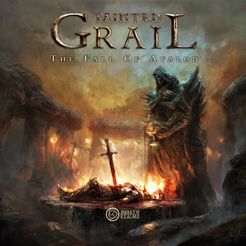
Survive together in a changing Avalon, managing energy and menhirs, exploring branching stories and using combat and diplomacy decks to resolve encounters.
Tainted Grail: The Fall of Avalon supports 1–4 players; community best: 1–2 players; playing time: 60–120 minutes. A WANGO browser trial has not been confirmed.
Background & introduction
Tainted Grail: The Fall of Avalon is a cooperative exploration campaign for one to four players. Imperfect ordinary people travel an island shaped by dark Arthurian legend and Celtic mythology. Chapter quests drive the story, while choices and shared statuses change later encounters.
Location cards gradually reveal the map, and active menhirs sustain nearby regions. Travel, exploration and gathering compete for limited energy while the menhirs fade with time. Characters can travel together or prepare separately, coordinating food, wounds and access to the next safe area.
Combat and diplomacy both build a shared sequence of connected cards. Attributes determine which connections grant bonuses, and additional cards need the appropriate symbol. Combat accumulates progress against an enemy, while diplomacy advances an affinity track through possible stages. Character development gradually reshapes both decks.
Core rules & scoring
Setup: The base campaign supports 1-4 players with one character each. Set resources, attributes and survival tracks from the character components. Version 2.0 offers Story, Standard and Challenge modes; this summary uses Standard. Build separate fifteen-card combat and diplomacy starter decks and twenty-five-card advancement pools, then configure events and encounters for the chapter.
Start of day: Skip this stage on the first day. Thereafter, follow the main rules: resolve start effects, remove expired menhirs and unprotected locations, reduce menhir and time dials and location time tokens, move guardians, then reveal the event, plan and equip. A menhir whose dial was removed at one remains active that day and expires at the next start of day.
Daytime actions: Each character takes one action in an agreed order, then repeat until everyone finishes. Travel normally costs one energy and moves across one directional connection, never diagonally. Exploration normally costs one energy and follows the location back and journal until it ends. Location and character actions use their printed costs. Resolve lightning effects on arrival; passing ends your actions for that day.
Menhirs and map: Reveal locations through matching directional connections within active menhir range. Inspecting a menhir is free; activation follows its local text, with costs scaling to all characters in the game, not just the party. Remove unprotected locations at start of day and apply wyrdness penalties and relocation to characters there. A special rule retains the map when the last menhir expires.
Parties and sharing: Characters together may agree to act as a party, but cannot freely split during an action. Party travel and exploration normally cost one energy per member. A location action instead has one total cost and one output, with payment assistance allowed. A journal reward of one resource is normally shared; only explicit per-member wording multiplies rewards.
Combat and diplomacy: Choose a member not yet activated, connect cards and resolve bonuses and abilities. The first card needs no extra-play connection; later cards must connect the additional-play symbol. Attribute keys require the appropriate level; a joined magic key can be activated for one magic. Combat wins when the pool reaches the enemy value. Diplomacy wins a stage at the top affinity slot during a check, and the whole encounter after the final stage.
Enemy and turns: An unresolved encounter attacks or responds against the active character according to its table, then another member activates. After everyone activates, each discards down to three, draws one and clears character activation markers before the next turn. Panic and other effects modify this. Combat allows costly escape; avoiding diplomacy is available only before drawing its starting hand.
End of day and advancement: Resolve end effects, then optionally spend one food to restore one health and lose one terror. In Standard 2.0, skipping food does not automatically exhaust you. Restore energy next, only four points if exhausted and always limited by health. Spend experience and rebuild decks, each containing at least fifteen cards. Two experience draws three from the relevant advancement pool; keep one and shuffle the others back.
Status, failure and saves: Save-sheet statuses belong to the group; relevant secret cards track personal changes. Zero health first invokes the dying card rather than immediately removing a character. Death ends solo play; cooperative play may introduce an unused character, but fails if all characters are in use or dead. Complete chapter and campaign objectives as instructed. Prefer saving at chapter end, recording characters, map, dials and deck states.
Rules & gameplay questions
Must I eat food every day to recover energy in 2.0?
Not in Standard mode. Food is an optional rest payment for one health and one less terror. Energy then recovers normally, subject to exhaustion and health limits. The old penalty for skipping food belongs to Challenge mode, not Standard 2.0.
Does a menhir vanish as soon as its dial is removed at one?
No. It remains active that day. It expires during the next start-of-day removal step, followed by removal of locations that lose protection.
Do three explorers each receive a reward of one wealth?
Normally the party receives one total and assigns it to one member. Rewards multiply only when explicitly granted to each member. Location actions also normally resolve their cost and output only once.
Must I meet an attribute requirement to play any card?
The first card in an activation normally enters the sequence without an extra-play connection. Insufficient attributes disable the relevant attribute-key bonuses. Later cards require the additional-play connection, and activating a magic key costs magic.
May I read ahead through every journal choice and outcome?
You can read the options, costs and results printed in the current verse. Do not read redirected verses, secrets or chapters before instructed; those redirections preserve unknown information.
Rules & introduction sources
- Edition
- Tainted Grail: The Fall of Avalon original base campaign, using the official 2.0 reprint English rules (2023-09-15 file), Standard mode, 1-4 players. The 2021 FAQ supplements only compatible general clarifications. Excludes old mandatory-food rules, Kings of Ruin, other campaigns, extra characters and story spoilers.
- Rule references
- Introduction source
- BoardGameGeek
WANGO editorial
| Parameter | Recorded value |
|---|---|
| BGG overall rank (snapshot) | #141 |
| Complexity Weight | 3.37 / 5 |
| Best player count (community) | 1–2 |
| Player range | 1–4 |
| Playing time (minutes) | 60–120 |
| Core mechanisms | Area Movement · Campaign / Battle Card Driven · Cooperative Game · Deck, Bag, and Pool Building · Dice Rolling · Hand Management · Map Addition · Modular Board · Narrative Choice / Paragraph · Role Playing · Scenario / Mission / Campaign Game · Solo / Solitaire Game · Storytelling · Variable Player Powers |
| Chinese publication | Unconfirmed |
| WANGO browser play | No confirmed WANGO trial |
| Year published | 2019 |
| Suggested age | 14+ |
BGG statistics are stored snapshots, not live rankings. Source checked:2026-09-27
Player questions
What is the best player count for Tainted Grail: The Fall of Avalon, and can I play online?
Tainted Grail: The Fall of Avalon supports 1–4 players; community best: 1–2 players; playing time: 60–120 minutes. A WANGO browser trial has not been confirmed. Recorded mechanism tags: Solo / Solitaire Game.
How complex is Tainted Grail: The Fall of Avalon, and which mechanisms does it use?
Weight: 3.37 / 5. Mechanisms: Area Movement · Campaign / Battle Card Driven · Cooperative Game · Deck, Bag, and Pool Building · Dice Rolling · Hand Management · Map Addition · Modular Board · Narrative Choice / Paragraph · Role Playing · Scenario / Mission / Campaign Game · Solo / Solitaire Game · Storytelling · Variable Player Powers. Chinese publication: Unconfirmed.
Where can I learn Tainted Grail: The Fall of Avalon?
No rule guide, strategy article or WANGO trial has been confirmed for this record.