Res Arcana
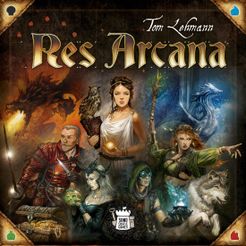
Turn an eight-artifact personal deck into an alchemical engine, balancing resource conversion, contested targets, and the value of discarding.
Res Arcana supports 2–4 players; community best: 2 players; playing time: 30–60 minutes. A WANGO browser trial has not been confirmed.
Background & introduction
Res Arcana gives each mage only eight artifacts for the whole game. That small deck makes identifying useful links between your cards, mage, and the public Places of Power more important than acquiring an ever larger collection.
Each round begins with collecting essences, followed by single actions in clockwise order. An artifact can become part of your engine or be discarded for immediate resources, creating a useful tension between long-term production and getting a key component into play sooner.
Public targets belong to whoever claims them first. Passing first brings the one-point First Player token but ends your actions for that round. Victory is normally assessed after everyone passes, while two particular Places of Power can bring the check forward.
Core rules & scoring
Setup: display five Places of Power and two monuments, with the remaining monuments in a deck. Give each player one of every essence. Players examine eight artifacts and two mages, shuffle their artifacts and draw three, then choose one mage. Choose magic items in reverse player order. The rulebook also provides first-game presets.
Each round has Collect, Actions, and Victory steps. Resolve your Collect abilities and optionally retrieve essences from components. You may choose separately for different components, but taking any essences from one component means taking all of them.
Starting with the First Player, take one action per turn: pay to place an artifact from hand; claim a monument or Place of Power; discard one card for one Gold or two non-Gold essences; use a power; or pass.
Every monument costs four Gold. You may claim a face-up monument or the top card of its deck, replenishing a face-up vacancy if possible. Claimed monuments and Places of Power cannot be taken by rivals. Newly placed components enter straightened.
To use a power, pay its entire cost before applying its effect. Turned components normally cannot use powers. A power without a turning cost may be used again on a later action. Abilities continue to apply, while React powers depend on their trigger and payable cost.
Keep your essence pool separate from essences on components. Costs normally use the pool; essences on components may support later collection or scoring. Discarding removes an artifact from hand; destroying removes one from play to your discards and returns its essences to the supply.
Life loss takes Life from your pool. For each missing Life, lose two other essences if possible. An applicable React power can ignore that loss. Players who have already passed ignore Life loss.
Passing ends your actions for the round. The first player to pass takes the First Player token. Every passing player swaps their magic item for a different available item and draws one card if possible. When you need to draw from an empty personal deck, shuffle your discards to rebuild it.
After everyone passes, check points. If anyone has at least ten, the highest score wins. Break ties by essences in the pool, counting Gold twice; remaining ties share victory. The First Player token is one point, and turned components still score. Otherwise reset components and begin another round.
Coral Castle and Sorcerer’s Bestiary have powers that can trigger a victory check during a round. Reaching ten does not otherwise end play immediately. Golden Statue can provide temporary points through its React power at a victory check, even after its owner passes; those points last only for that check.
Rules & gameplay questions
Must I play all eight artifacts each round?
No. Eight is your personal artifact supply, not a fresh hand each round. Discarding a card for one Gold or two non-Gold essences can help a smaller set of important components work sooner.
Can I retrieve just one essence from a Place of Power?
Not during Collect. If you take essences from a component, take all of them. Removing them from a Place of Power may reduce its score. You may make a different choice for each component.
Can dragons cause Life loss after I pass?
No. Passed players ignore Life loss, but still receive essences granted by rivals’ powers. They cannot resume taking actions that round.
Does the first player to reach ten win immediately?
Normally no. The usual check occurs after all players pass and compares their scores then. Coral Castle and Sorcerer’s Bestiary explicitly provide powers for an earlier check.
Does turning a component switch off all its text?
No. Collect abilities, discounts, and scoring abilities still apply. React powers can normally be used if their cost does not require turning that component. Guard Dog also explicitly permits its self-straightening power while turned.
Rules & introduction sources
- Edition
- Original 2–4-player base game, using the publisher’s currently linked English rules v3.1 (©2019–2020). First-game presets are mentioned; optional drafting and two-player match play are not detailed. Excludes Res Arcana Duo, Lux et Tenebrae, Perlae Imperii, and other expansions.
- Introduction source
- BoardGameGeek
WANGO editorial
| Parameter | Recorded value |
|---|---|
| BGG overall rank (snapshot) | #185 |
| Complexity Weight | 2.66 / 5 |
| Best player count (community) | 2 |
| Player range | 2–4 |
| Playing time (minutes) | 30–60 |
| Core mechanisms | Hand Management · Income · Multi-Use Cards · Open Drafting · Race · Score-and-Reset Game · Take That · Turn Order: Pass Order · Variable Player Powers |
| Chinese publication | Unconfirmed |
| WANGO browser play | No confirmed WANGO trial |
| Year published | 2019 |
| Suggested age | 12+ |
BGG statistics are stored snapshots, not live rankings. Source checked:2026-09-27
Player questions
What is the best player count for Res Arcana, and can I play online?
Res Arcana supports 2–4 players; community best: 2 players; playing time: 30–60 minutes. A WANGO browser trial has not been confirmed.
How complex is Res Arcana, and which mechanisms does it use?
Weight: 2.66 / 5. Mechanisms: Hand Management · Income · Multi-Use Cards · Open Drafting · Race · Score-and-Reset Game · Take That · Turn Order: Pass Order · Variable Player Powers. Chinese publication: Unconfirmed.
Where can I learn Res Arcana?
No rule guide, strategy article or WANGO trial has been confirmed for this record.