Arkham Horror (Third Edition)
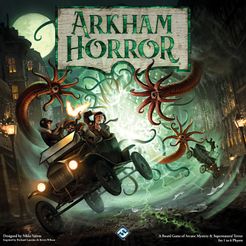
Arkham Horror Third Edition is a cooperative, scenario-driven adventure board game. Investigators explore a modular Arkham map, uncover clues, face monsters and doom, and follow each scenario’s story objectives to determine the outcome.
Arkham Horror (Third Edition) supports 1–6 players; community best: 3 players; playing time: 120–180 minutes. A WANGO browser trial has not been confirmed.
Background & introduction
Arkham Horror Third Edition is a cooperative adventure game driven by scenarios and story. Players choose investigators and explore Arkham, a map assembled from neighborhood and street tiles. They move, gather clues, resolve encounters, and try to stop doom from pushing events toward catastrophe. Each scenario supplies its own narrative material and objectives. As clues are researched and spent on Archive cards, new story and tasks unfold, so scenarios can differ in how they progress and how they end.
Each round has four phases: Action, Monster, Encounter, and Mythos. Investigators move, gain resources, focus skills, attack or evade monsters, research clues, and take other basic actions. Monsters move or resolve effects printed on their cards; investigators not engaged with monsters resolve an encounter for their neighborhood or street; then Mythos tokens are drawn from a cup and may spread doom, spawn monsters or clues, trigger headlines, disasters, or other scenario effects. Skill tests use dice, with a result of five or six usually counting as a success.
The team follows objectives on the scenario’s Archive and Codex cards, collecting and spending clues to advance the story. There is no universal score race for all scenarios; an Archive card may announce investigator victory, while the scenario can also set failure conditions. The team generally loses if negative scenario progress takes hold or all available investigators are defeated, devoured, or resigned. The official player count includes one player: that player controls one investigator under the standard cooperative rules, with no additional automated opponent or dedicated solo procedure. Third Edition is a separate board game from the card game and other editions.
Core rules & scoring
Objective and scenarios: This is a cooperative, scenario-driven Arkham adventure. The team follows objectives on the current scenario’s Archive and Codex cards, advancing the story with clues while trying to prevent doom from worsening the situation. Scenarios have their own victory and failure conditions rather than one universal scoring endgame. Fantasy Flight Games lists core box AHB01 for 1–6 players, ages 14+, and about 2–3 hours.
Choose a scenario and build the map: Select a scenario sheet and assemble neighborhood and street tiles according to the map on its reverse. Prepare the scenario’s encounters, events, monsters, and Mythos token cup, then place the required clues, doom, and Archive cards. The publisher recommends Approach of Azathoth for a first game. Scenario materials determine the story and objectives; expansion scenarios are not required core-box setup.
Choose investigators and components: Each player chooses one investigator and takes that investigator’s board, token, action markers, reference card, and starting items. One person can play by controlling one investigator under the same setup; the rules do not require a solo player to control additional investigators or add an automated opponent. The team uses the scenario sheet and Archive cards together, while each investigator’s skills, items, and location shape tests and action choices.
Four phases each round: Play the Action, Monster, Encounter, and Mythos phases in order. During Actions, investigators advance objectives, gather resources, or address threats. During Monsters, ready monsters move or resolve their printed activation text, engaged monsters attack, and exhausted monsters then ready. During Encounters, investigators resolve story content at their locations. During Mythos, draw and resolve tokens. After Mythos, begin the next round.
Action phase: Each investigator may take up to two actions in any order, but cannot repeat the same action during a round. Basic actions include move, gain resources, focus a skill, remove doom at the investigator’s location, attack, evade, research clues, and trade. Being engaged with a monster restricts which actions are available, so use applicable attack or evade actions as allowed. The team coordinates positions, clues, and skills to decide whether to advance the scenario or contain immediate danger.
Monster and Encounter phases: Ready monsters follow their card text to move or resolve a special effect; engaged monsters then attack, and exhausted monsters ready afterward. During Encounters, each investigator not engaged with a monster draws an available encounter for their location, applying special rules for anomalies and other exceptions and resolves its narrative, choice, test, or consequence. An investigator who remains engaged skips that encounter. Monster movement toward prey or a target follows the movement rulings in the Rules Reference and official FAQ.
Mythos, clues, and tests: Each investigator draws and resolves two tokens one at a time from the opaque Mythos cup. Depending on the token and scenario, effects can spread doom, spawn monsters or clues, trigger headlines, disasters, or retribution. Investigators can gain clues through encounters and other effects, then use a Research action and test observation, placing one clue on the scenario sheet for each success and spend them as Archive or Codex objectives require. Skill tests create a pool of dice; normally, each die showing 5 or 6 counts as one success.
Victory and failure: Advance the current scenario using its Codex and Archive objectives until a card declares victory or a scenario failure condition is met. Doom is placed and resolved as the rules direct, driving the scenario’s negative progression. If all available investigators are defeated, devoured, or resigned, the players lose together. The game does not rank players by personal score; the outcome depends on whether the team meets that scenario’s objective.
Official 2020 FAQ and edition boundaries: The FFG product page still lists the Third Edition FAQ dated 2020-09-18, which contains errata and clarifications. It says a monster moving toward a target must take a possible shortest path; if multiple targets are tied, the players decide together. The FAQ also clarifies retribution timing, attacks against multiple monsters, engagement and movement, trades, and some scenario or card text. This draft follows Third Edition sources and excludes Second Edition, 2026 Arkham Horror Remastered, the card game, and three compatible expansions from the core rules.
Rules & gameplay questions
What kind of game is Arkham Horror Third Edition?
It is a cooperative, scenario-driven adventure board game. Players take the roles of investigators, perform actions on an Arkham map, resolve encounters and monsters, and gather or spend clues to follow the scenario’s objectives. The story cards determine the outcome; players do not compete for a personal score, and this is not Arkham Horror: The Card Game.
How many players can play, and how does solo play work?
Fantasy Flight Games lists the core box for one to six players, ages 14 and up, with a play time of about 120–180 minutes. The official rules let one player use the standard cooperative setup and control one investigator. They do not provide a separate solo AI or dedicated solo procedure, so solo play should not be described as an automated-opponent variant.
What is the order of phases in a round?
Each round proceeds through the Action, Monster, Encounter, and Mythos phases. Investigators take actions first, monsters then move or attack, investigators not engaged with monsters resolve encounters at their locations, and finally each investigator draws and resolves two Mythos tokens one at a time. The next round begins after the Mythos phase is complete.
How many actions can an investigator take each round?
During the Action phase, each investigator may take up to two actions in any order, but cannot perform the same action twice in one round. Basic options include moving, gaining resources, focusing a skill, removing doom, attacking, evading, researching clues, and trading. Being engaged with a monster limits which actions are available.
What do clues do, and how do they advance a scenario?
Clues are resources for advancing the current story objectives. Investigators can gain clues from encounters and other effects, then use a Research action and test observation, placing one clue on the scenario sheet for each success. They spend them as Archive or Codex cards require, which can unlock new story and tasks. The exact clue requirements differ by scenario, so use the cards in play.
When does an investigator resolve a location encounter?
During the Encounter phase, an investigator who is not engaged with a monster draws an available encounter for their location, applying special rules for anomalies and other exceptions and resolves its narrative, choice, skill test, or result. An investigator who is still engaged skips that encounter. The location type and current scenario determine which encounter deck to use.
How do skill tests work?
Build a dice pool for the skill being tested and roll the required dice. Normally, each die showing a five or six counts as one success, and the total is compared with the encounter or action requirement. Investigator skills, focus, items, and card effects can change a test, so apply the current rules and card text.
Are victory and failure conditions the same in every scenario?
No. Each scenario has its own story objectives, and players usually follow clue requirements on Codex or Archive cards until a card declares victory or a failure condition is reached. Doom advances negative scenario effects. The team also loses if all available investigators are defeated, devoured, or resigned.
What official clarification covers monster movement?
The Third Edition FAQ currently listed by FFG says a monster moving toward a target or prey must use a possible shortest path. If multiple targets are equally close, the players decide which way the monster moves. The FAQ also covers retribution timing, engagement, attacks against multiple monsters, trading, and corrections to some cards and scenarios.
Does the core box include expansions or other Arkham editions?
No. This entry covers the 2018 Third Edition core box, SKU AHB01. Dead of Night, Under Dark Waves, and Secrets of the Order are separately sold compatible expansions. Second Edition, the 2026-announced Arkham Horror Remastered, and Arkham Horror: The Card Game are separate products, so their scenarios, investigators, and rules are not core-box contents.
Rules & introduction sources
- Edition
- This draft covers BoardGameGeek ID 257499, Arkham Horror (Third Edition), the 2018 Fantasy Flight Games core box SKU AHB01. The official specifications are 1–6 players, ages 14+, and 120–180 minutes. Sources are Learn to Play, Rules Reference, and the official Arkham Horror Third Edition FAQ dated 2020-09-18. Solo play follows the standard cooperative rules with one player controlling one investigator; there is no dedicated solo AI. Dead of Night, Under Dark Waves, and Secrets of the Order are compatible expansions and are not included in the core-box scope. This is distinct from Second Edition, Arkham Horror Remastered, and Arkham Horror: The Card Game.
- Rule references
- Introduction source
- BoardGameGeek
WANGO editorial
| Parameter | Recorded value |
|---|---|
| BGG overall rank (snapshot) | #356 |
| Complexity Weight | 3.38 / 5 |
| Best player count (community) | 3 |
| Player range | 1–6 |
| Playing time (minutes) | 120–180 |
| Core mechanisms | Cooperative Game · Dice Rolling · Modular Board · Point to Point Movement · Stat Check Resolution · Variable Player Powers |
| Chinese publication | Unconfirmed |
| WANGO browser play | No confirmed WANGO trial |
| Year published | 2018 |
| Suggested age | 14+ |
BGG statistics are stored snapshots, not live rankings. Source checked:2026-09-27
Player questions
What is the best player count for Arkham Horror (Third Edition), and can I play online?
Arkham Horror (Third Edition) supports 1–6 players; community best: 3 players; playing time: 120–180 minutes. A WANGO browser trial has not been confirmed.
How complex is Arkham Horror (Third Edition), and which mechanisms does it use?
Weight: 3.38 / 5. Mechanisms: Cooperative Game · Dice Rolling · Modular Board · Point to Point Movement · Stat Check Resolution · Variable Player Powers. Chinese publication: Unconfirmed.
Where can I learn Arkham Horror (Third Edition)?
No rule guide, strategy article or WANGO trial has been confirmed for this record.