Eclipse: Second Dawn for the Galaxy
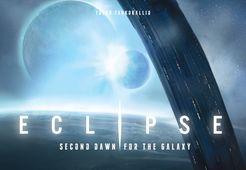
Explore and colonize galactic sectors, fund technology and fleets through your economy, and earn victory points from territory, discoveries, research, and battle reputation over eight rounds.
Eclipse: Second Dawn for the Galaxy supports 2–6 players; community best: 4, 6 players; playing time: 60–200 minutes. A WANGO browser trial has not been confirmed.
Background & introduction
Eclipse: Second Dawn for the Galaxy combines space exploration, economic expansion, and fleet battles. Players discover sectors and establish control, shaping their development through technologies and ship blueprints. The second-edition base game lasts eight rounds and includes encounters with other civilizations, Ancients, Guardians, and the Galactic Center Defense System.
Exploration, expansion, research, upgrades, and construction compete for actions and economic capacity. Influence discs increase upkeep, so territory must be supported by income. Moving population from production tracks onto planets raises the corresponding output: Materials fund construction, Science funds research, and Money pays civilization upkeep.
Weapons, initiative, accuracy, shields, and energy must work together in a ship design. Computers and shields are optional components, and Starbases have different drive restrictions from mobile ships. A blueprint is shared by every ship of its type, so an upgrade immediately changes both the offensive opportunities and the survival prospects of that fleet.
Core rules & scoring
Rounds and actions: each of eight rounds has Action, Combat, Upkeep, and Cleanup phases. Clockwise turns select Explore, Research, Upgrade, Build, Move, or Influence, moving the leftmost Influence disc onto the appropriate action space. Actions can repeat; activation counts depend on species and technologies.
Control and colonization: Explore reveals a sector from the appropriate ring beside a legal origin; place it or discard it, normally observing Wormhole Connections. An undefended sector can be controlled with an additional Influence disc. On your turn, flip Colony Ships to place population in legal empty spaces in controlled sectors. Each Influence activation can claim or abandon a sector; the Influence action also refreshes up to two Colony Ships in total; advanced population spaces require the appropriate technology.
Production and upkeep: the highest exposed number on each population track determines production, while the highest exposed Influence-track number determines civilization upkeep. During Upkeep, use remaining Colony Ships first, settle Money income minus upkeep, then produce Materials and Science. If cash is insufficient, trade at your species’ rate or abandon sectors; returning their discs and population may also reduce income. Money cannot fall below zero.
Research and construction: pay Science to take an unowned technology from the shared tray. Existing technologies in its category provide discounts, subject to its minimum cost. Build activations spend Materials to place ships or structures in controlled sectors. Starbases, Orbitals, and Monoliths require their technologies; each sector holds at most one Orbital and one Monolith.
Blueprints and movement: upgrading a blueprint instantly affects every ship of that type. Parts must satisfy space, technology, and energy-production requirements. Interceptors, Cruisers, and Dreadnoughts require at least one drive; Starbases cannot have drives. Each Move activation moves one ship up to its drive value through legal connections. Pinned ships cannot leave; the Galactic Center Defense System pins every ship in its sector.
Passing and reactions: the first player to pass gains 2 Money and next round’s start-player tile. Once passed, you may pass again or spend an Influence disc on an Upgrade, Build, or Move reaction with exactly one activation; extra activations from technologies do not apply. The Action phase ends immediately when everyone has passed.
Combat: resolve sectors in descending numerical order. Missiles fire once at the start of each battle in initiative order, followed by repeated rounds of ship-type attacks or retreats; the defender wins initiative ties. Add Computers and subtract target Shields from ordinary die results: 6 or more hits, burst faces always hit, and blanks always miss. Damage must exceed Hull to destroy a ship. Draw at most five Reputation tiles and keep at most one as allowed, then attack population, resolve control and discoveries, and repair damage.
Cleanup and victory: replenish technologies, return action discs, return graveyard population to its tracks, and refresh Colony Ships. After round eight, score Reputation, Ambassadors (diplomacy requires 4+ players), controlled sectors, controlled Monoliths (3 each), saved discoveries (2 each), technology tracks, and species bonuses, subtracting 2 for the Traitor tile. Break a score tie by the total stored Materials, Science, and Money.
Rules & gameplay questions
Must every ship have a Computer and a Shield?
No. Both are tactical choices. Computers improve accuracy, and Shields counter opposing Computer bonuses; burst faces still always hit. Mobile ship types must retain a drive and meet energy requirements, while Starbases cannot have drives. Each advanced part needs its own technology: researching a higher-level Computer does not automatically unlock another Computer type.
Does a blueprint upgrade affect only ships built later?
No. Existing ships of that type use the new blueprint immediately, wherever they are, and future ships use it too. Taking and returning ordinary parts costs no Materials. An Upgrade activation may remove any number of parts, then place one new part; removed Ancient parts leave the game.
Can I freely abandon sectors during Upkeep to lower costs?
Only if you lack enough Money to pay civilization upkeep may you withdraw sector discs during Upkeep, until the cost becomes payable. Their population also returns to its tracks and may reduce income. Use an Influence action for voluntary control changes at other times. Materials and Science production follows upkeep payment, so you cannot spend production that has not yet been received.
Can I Research or Explore after passing?
No. Once passed this round, you can only pass again or take a reaction containing one Upgrade, Build, or Move activation, still spending an Influence disc. Technology-granted extra activations do not apply. When the final player passes, the phase ends immediately without an additional reaction window.
Can a retreating player still gain Reputation?
If all remaining ships attempted to retreat, you lose the one Reputation draw for participation, even if they were destroyed before completing the retreat. Draws earned by destroying opposing ships remain. The total draw is capped at five tiles; keep at most one of the tiles drawn, respecting Reputation-track capacity.
Rules & introduction sources
- Edition
- Second-edition 2–6-player base game, using the official 32-page English rules dated 2021-04-27, including the FAQ on page 30. Excludes the 2011 first edition and its expansions, plus separate Galactic Events, Minor Species, Rift Cannon, later species packs, and other standalone expansions. Optional modules and individual species exceptions follow this rulebook.
- Rule references
- Introduction source
- BoardGameGeek
WANGO editorial
| Parameter | Recorded value |
|---|---|
| BGG overall rank (snapshot) | #23 |
| Complexity Weight | 3.67 / 5 |
| Best player count (community) | 4, 6 |
| Player range | 2–6 |
| Playing time (minutes) | 60–200 |
| Core mechanisms | Alliances · Area Majority / Influence · Area-Impulse · Dice Rolling · Grid Movement · Hexagon Grid · Hidden Victory Points · Hot Potato · Income · Map Addition · Modular Board · Tech Trees / Tech Tracks · Turn Order: Pass Order · Variable Player Powers |
| Chinese publication | Unconfirmed |
| WANGO browser play | No confirmed WANGO trial |
| Year published | 2020 |
| Suggested age | 14+ |
BGG statistics are stored snapshots, not live rankings. Source checked:2026-09-27
Player questions
What is the best player count for Eclipse: Second Dawn for the Galaxy, and can I play online?
Eclipse: Second Dawn for the Galaxy supports 2–6 players; community best: 4, 6 players; playing time: 60–200 minutes. A WANGO browser trial has not been confirmed.
How complex is Eclipse: Second Dawn for the Galaxy, and which mechanisms does it use?
Weight: 3.67 / 5. Mechanisms: Alliances · Area Majority / Influence · Area-Impulse · Dice Rolling · Grid Movement · Hexagon Grid · Hidden Victory Points · Hot Potato · Income · Map Addition · Modular Board · Tech Trees / Tech Tracks · Turn Order: Pass Order · Variable Player Powers. Chinese publication: Unconfirmed.
Where can I learn Eclipse: Second Dawn for the Galaxy?
No rule guide, strategy article or WANGO trial has been confirmed for this record.