Cryptid
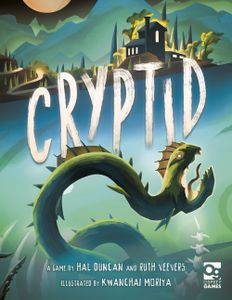
Cryptid is a hidden-clue deduction race. Players use questions and searches to rule out hexes; the first to correctly identify the creature’s habitat wins.
Cryptid supports 3–5 players; community best: 4 players; playing time: 30–50 minutes. A WANGO browser trial has not been confirmed.
Background & introduction
Cryptid casts players as cryptozoologists searching for a mysterious creature. The map is assembled from six hex-based terrain tiles containing desert, forest, water, mountain, and swamp, as well as bear or cougar territories, standing stones, and abandoned shacks. Each player begins with one unique clue, and only the intersection of all clues identifies the habitat. Players must combine public information while concealing the boundary revealed by their own clue.
A clue may require a terrain type or limit the habitat by distance from terrain, animal territory, or structures. On a turn, a player can question someone about a hex or search a hex they believe fits their clue. A disc means a space remains possible according to that player’s clue; a cube means it is ruled out. As pieces accumulate, the search narrows, but each response also exposes part of a player’s private information.
This is a deduction contest with both public and hidden information, not a game where a die roll decides the answer. Players must place pieces honestly, but can choose which legal locations to use for questions and exclusions to reveal as little as possible or misdirect opponents. A search succeeds only if every player’s clue allows that hex. The first person to make a correct search wins the discovery. Osprey’s two-player variant gives each player two clues and two token colors to preserve the multi-clue deduction.
Core rules & scoring
Objective and clues: Each player receives one unique hidden clue from a clue book. The intersection of all clues leaves one habitat hex on the map. Clues refer to terrain, bear or cougar territories, standing stones, abandoned shacks, or distance from those features. Players reason through questions and searches; the first to correctly search the unique habitat wins.
Map and setup: Assemble six numbered map tiles into hex spaces with desert, forest, water, mountain, and swamp; some spaces also contain animal territory or structures. Use the setup card to arrange tile orientation and structures, then assign clue books and secret clues for the player count. Osprey’s main rules have Normal and Advanced setup. Normal is intended for learning; Advanced allows negative clues and uses all four structures of each type rather than three.
Initial sharing: Starting with the first player and moving clockwise, each player places one cube on a space their clue rules out and where no other player has a cube; everyone places two cubes in total. Cubes cannot overlap, though a piece may be placed on a structure. These opening exclusions are public and must be truthful. A space containing any cube can never be questioned, searched, or receive another piece.
Turn choice: On your turn, choose either a question or a search. To question, place the pawn on any cube-free space and ask one opponent whether it could be the habitat. They answer honestly under their clue and indicate possibility with a disc or impossibility with a cube. If they place a cube, you must also put one of your cubes on another legal space excluded by your clue. The turn passes left. A player cannot add another of their own pieces to a space already containing one.
Discs and cubes: A player’s cube means a space cannot be the habitat according to their clue; their disc means it could be. Only one cube may occupy a space, while different players’ discs may stack. Pieces are never removed except to correct a mistake. If your action makes another player place a cube, whether by Question or Search, you must also place one of your own cubes elsewhere on a legal excluded space.
Search action: Choose a space that could be the habitat under your clue and contains no cube, declare a Search, and place one of your discs there. If you already have a disc on that space, you may still search but cannot add a duplicate; instead, place a disc on another legal space your clue allows and that contains neither your own disc nor a cube. Then ask each other player clockwise whether the searched space could fit their clue; a player who already has a disc there skips the duplicate response, while others place a disc or cube.
Success and failure: If every other player says the space is possible, the searcher has found the one intersection and wins immediately. If anyone places a cube, the Search fails at once; later players do not answer. The searcher must place a cube on a different space their clue rules out, then the turn ends. A failed search reveals information and blocks future interaction with that hex, so players must combine previous marks before committing.
Honesty, bluffing, and deduction: Pieces must always match the player’s clue; a player cannot falsely mark a possible location as excluded or vice versa. Since a clue may cover many terrain or distance spaces, players can choose among legal locations when placing an initial cube or responding, limiting how much their clue reveals. For example, excluding one of several similar terrain hexes does not necessarily reveal that the clue is tied only to that terrain. Notes can help track public marks while clues stay hidden.
Official two-player head-to-head variant: Set up as a four-player game. Each player takes two clue books and two token colors, one color per clue. If a space fits both clues, place both colors’ discs; if exactly one clue rules it out, place the matching color’s cube. If both clues rule it out, choose one color of cube, creating a chance to bluff. A searched space must fit both of the player’s clues, and all four clues must allow it for the search to succeed. If the searched hex already has one of the player’s colored discs, place an additional disc of that color on another legal hex, leaving the existing disc in place and place the other color on the search hex; if both colors are already there, place an additional disc of each color on other legal spaces, together or separately, as the variant allows.
Player count and mode boundary: Osprey’s main rules support three to five players. The official two-player variant gives each person two clues to simulate a larger clue intersection, but it remains competitive. The base rules do not include an official solo, cooperative, or automated-opponent mode. Normal and Advanced setup and the two-player variant belong to this Cryptid entry; fan variants should not be described as publisher-supported rules.
Interpreting distance clues: An element is zero spaces from itself, so within one space of forest includes forest spaces as well as adjacent hexes. Structure clues can specify a type or a color, and animal-territory clues use the indicated territory. Advanced negative clues exclude the described range, so read whether the clue says the habitat is within or not within it.
Rules & gameplay questions
What is the goal of Cryptid, and how do you win?
Each player holds one different hidden clue, and their intersection identifies the creature’s unique habitat hex. Players ask questions and search spaces, using the discs and cubes placed on the map to reason about the answer. The first player to search a hex that fits every clue wins immediately; correctly guessing one person’s clue or knowing only that your own clue fits is not enough.
What do the discs and cubes mean?
A player’s cube means the hex is ruled out by that player’s clue; their disc means it remains possible. Only one cube can occupy a space, and discs from different players may stack, but a player cannot add a second of their own piece to that same hex. Pieces stay in place except to correct an error. A space with any player’s cube cannot be questioned, searched, or receive another marker, so stacked discs show several clues still allow it while a cube removes it from future consideration.
How does Question work, and what if the answer is no?
Choose a cube-free space and ask one opponent if it could be the habitat. They answer honestly under their clue, indicating possibility with a disc or impossibility with a cube. If they place a cube, you must add one of your own cubes on another legal space that your clue excludes, revealing additional information. The turn then passes left without questioning everyone. A player cannot add another piece to a space already containing their own piece.
How is Search different from Question?
Question asks one player whether a hex fits their clue and may force the questioner to place an exclusion cube. Search is a formal claim that a hex could be the habitat: place your disc there, then ask every other player clockwise. If anyone places a cube, the search fails and the searcher must place a cube elsewhere; if no one excludes it, the searcher has proved it fits every clue and wins.
What happens when a Search fails?
As soon as a player places a cube on the searched hex, the Search stops and later players do not respond. The searcher must place a cube on another legal space their clue rules out, and the turn ends. A wrong search both gives away information and occupies a hex; because no one may interact with a cubed space, players should use the public marks to narrow the possibilities first.
What is the difference between Normal and Advanced setup?
The main rules provide Normal and Advanced modes. Normal is intended to help new players learn the clue types and uses three structures of each type. Advanced allows negative clues, such as a habitat not being near a feature, and places all four structures of each type. Both modes keep the same core victory: combine everyone’s clue and be the first to Search the correct habitat. An element is zero spaces from itself, so a clue within one space of forest includes the forest space itself.
Can Cryptid be played solo? Is its two-player variant cooperative?
Osprey’s main rules list three to five players and do not include official solo or cooperative play. The publisher does provide a two-player head-to-head variant: each player uses two clue books and two colors of pieces, with a four-player setup. When both clues rule out a hex, a player may choose which color cube to place and bluff. It remains a competitive game, not a solo mode or a team search.
How can I avoid revealing my clue when answering?
Players must mark discs and cubes honestly, but they can choose among legal hexes that match their clue. A clue may cover several terrain or distance spaces, so a player need not always choose the most obvious example. A Question can also target a space the active player knows is impossible to distract others. Bluffing comes from choosing legal marks and questions, not from lying or breaking the clue rule.
How do the two colors work in the two-player variant?
Each player uses two colors for two separate clues. If a hex fits both clues, place both colored discs; if exactly one clue excludes it, place the cube matching that clue. If both clues exclude it, the player may choose one color cube, which allows bluffing. A Search must fit both of the searcher’s clues, and the other player responds with their two clues; all four clues must allow the hex for the search to succeed. If one color’s disc is already on the searched hex, leave the existing disc in place and add another disc of that color on a different legal hex and add the other color on the search hex; if both colors are already there, place an additional disc of each color on other legal spaces, together or separately. Each placement still follows the variant’s rule to use a cube or two discs, never another combination.
Rules & introduction sources
- Edition
- This entry covers Osprey Games’ 2018 English base game Cryptid (BGG 246784). The official product page lists 3–5 players and about 30–50 minutes. The main rules include normal and advanced setup, but no solo or cooperative mode. Osprey also provides an official two-player head-to-head variant: set up as a four-player game, with each player holding two clue books and two colors of tokens. It remains competitive, not solo or cooperative. Procedures follow the 2018 official rulebook and variant sheet.
- Rule references
- Introduction source
- BoardGameGeek
WANGO editorial
| Parameter | Recorded value |
|---|---|
| BGG overall rank (snapshot) | #343 |
| Complexity Weight | 2.26 / 5 |
| Best player count (community) | 4 |
| Player range | 3–5 |
| Playing time (minutes) | 30–50 |
| Core mechanisms | Deduction · Hexagon Grid · Induction · Modular Board · Pattern Recognition · Race |
| Chinese publication | Unconfirmed |
| WANGO browser play | No confirmed WANGO trial |
| Year published | 2018 |
| Suggested age | 10+ |
BGG statistics are stored snapshots, not live rankings. Source checked:2026-09-27
Player questions
What is the best player count for Cryptid, and can I play online?
Cryptid supports 3–5 players; community best: 4 players; playing time: 30–50 minutes. A WANGO browser trial has not been confirmed.
How complex is Cryptid, and which mechanisms does it use?
Weight: 2.26 / 5. Mechanisms: Deduction · Hexagon Grid · Induction · Modular Board · Pattern Recognition · Race. Chinese publication: Unconfirmed.
Where can I learn Cryptid?
No rule guide, strategy article or WANGO trial has been confirmed for this record.