Imperial
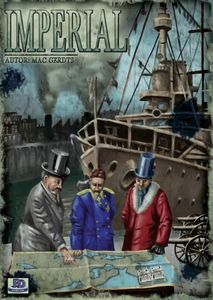
Imperial is an economic and power struggle in pre–World War I Europe. Players are not heads of state but bond-holding investors in six great powers; whoever supplies the most capital can temporarily direct a country’s actions.
Imperial supports 2–6 players; community best: 4 players; playing time: 120–180 minutes. A WANGO browser trial has not been confirmed.
Background & introduction
Imperial presents the rivalries of Europe before the First World War. Austria-Hungary, Italy, France, Great Britain, the German Empire, and Russia compete economically and militarily, but players do not permanently play as those countries. Each person is an international investor who buys bonds, lends capital to national treasuries, and tries to gain control of governments through the size of those investments. Countries build factories, produce armies and fleets, expand their borders, levy taxes, and pay interest, while investors use that development to increase the value of their own holdings.
This separation between investor and country is the heart of the game. The player currently controlling a government chooses its action, but must also decide as an investor whether to develop that country or place money elsewhere. A nation may need factories and flags for income, or troops for expansion; each choice affects future interest and political control. When a different player owns more bonds, the government changes hands. A state built up with one group of investors may soon become a rival that others try to contain.
Each country’s action is selected through a rondel. Its marker advances to Factory, Production, Import, Maneuver, Investor, or Taxation. There are no dice or card draws to create random events; the changing situation comes from rondel distance, national treasuries, bond ownership, and the positions of six military powers. Players manage two distinct pools of money: personal cash for investments and final scoring, and national treasuries for factories, troops, military wages, and bond interest.
The goal is not simply to make one country occupy the most territory. Players want the most valuable portfolio of bonds and personal cash when the game ends. Expansion can add flags and increase tax revenue, while factories improve the economy and national power. Yet armies and fleets require maintenance, and constant warfare can slow economic growth. Once any country reaches the national power threshold, all players calculate their wealth from bond interest, each country’s power factor, and personal cash. An investor must develop countries while keeping room to earn income and shift political influence.
Core rules & scoring
Objective and scope: Players compete as international investors to build personal wealth. Countries take the board actions, while bond ownership determines who controls each government. The base game supports 2–6 players and lasts about 120–180 minutes. This summary follows the standard rules in the 2006 Imperial rulebook and excludes Imperial 2030 and the optional version without an Investor card.
Setup: The board contains six powers: Austria-Hungary, Italy, France, Great Britain, the German Empire, and Russia. Distribute starting bonds, government flag cards, and personal cash according to player count. Bond payments go into the corresponding national treasury; the player with the highest bond total in a country receives its government flag. Under the standard rules, a player who controls no government receives a Swiss Bank marker. Place nation markers at their rondel and scoring-track starts. Austria-Hungary takes the first turn, followed by the countries in a fixed order.
Country turns and the rondel: When a country acts, its government chooses one rondel space. On its first turn, the marker may be placed on any space; later it must move clockwise and cannot remain in place. The first three spaces are free. Each of spaces four through six costs the government player 2 million from personal cash, up to a maximum movement of six spaces. Passing over Investor triggers the Investor step. Each country has its own turn; a country with no bonds and no government skips its turn.
Factory, Production, and Import: On Factory, a country may pay 5 million to build one factory. Brown cities hold armaments factories and light-blue cities hold shipyards; a home province with a hostile army cannot build. On Production, each unoccupied armaments factory creates one army and each shipyard creates one fleet for free. On Import, the national treasury pays 1 million per military unit, up to three units, which are deployed in legal home provinces. Fleets must be placed in port cities.
Maneuver and conflict: Maneuver moves fleets first, armies second, and then places flags in newly occupied regions. Fleets move to adjacent sea regions. Armies move through adjacent land regions or may be transported by the country’s fleets. Entering a region with foreign units can trigger combat under the rules; units are matched one-for-one and removed. An army entering another great power’s home province must be marked as hostile or friendly. Flags mark a nation’s influence, while hostile occupation can prevent factories from producing, building, or contributing to taxation.
Investor action: When a country lands on Investor, its treasury pays bond interest and the government addresses any shortfall. When it only passes Investor, no interest is paid; complete the landed-on action first, then perform the investor and Swiss Bank investment steps. The player holding the Investor card then takes 2 million from the bank and may buy one available bond in any country or replace an existing bond with a larger denomination, paying the difference. Eligible Swiss Bank holders may also invest. After investments, compare every player’s bond total in the affected country; the highest total receives its government and the Investor card passes clockwise.
Taxation and national power: On Taxation, calculate revenue as 2 million for each unoccupied factory plus 1 million for each national flag. Record the amount on the tax chart. If the chart position rises, the government player receives a success bonus from the bank. The tax chart also awards national power points, which are added to the country’s score track. The treasury then pays 1 million in military wages for each army and fleet; only the remaining tax revenue goes into the treasury. Taxation and power determine when the game ends and the factor applied to bond interest.
National and personal money: The six national treasuries must remain separate from players’ personal cash. A government holder administers the treasury but may not treat it as personal money or freely lend it to another country or player. Personal cash may be used for investments and rondel movement costs. Players may not give or lend money to one another or trade or transfer bonds. Personal cash may be kept secret, but the contents of national treasuries are public so that players can assess whether a country can afford its actions and interest payments.
End of game and scoring: The game ends immediately when any country reaches 25 national power points. Each player multiplies the interest shown on every bond they own by that country’s power factor, then adds their personal cash; each million is one victory point. The bond’s principal is not added again as cash: the score comes from weighted bond interest and money on hand. The richest investor wins. In a tie, compare bond totals beginning with the country that has the most power, then proceed through countries in power order until the tie is broken.
Rules & gameplay questions
Am I playing as one of the countries?
No. Each player is an international investor who buys bonds and supplies capital to countries. A country acts on the board in a fixed sequence, and the player with the highest bond total in that country temporarily controls its government and chooses its rondel action. The treasury still belongs to the country. Your final objective is to increase your personal bond income and cash, not simply to make one nation occupy the most land.
Who controls a country’s government?
The investor with the largest total principal in bonds of that country receives its government flag and directs its actions. New investments at the Investor space can change the bond totals, so control can pass to another player during the game. A tie does not automatically create exclusive control; the rulebook resolves ties using seating order and the Investor card. Governments can therefore change hands more than once in a session.
Do players take turns one after another?
Not as individual players taking one full turn each. The six countries act in a fixed order, and the current controller makes the choice whenever a country acts. A country without any bonds and therefore without a government skips its turn. Some rondel spaces also trigger an Investor step, so players participate indirectly while the countries themselves take the main board actions.
Does moving on the rondel cost money?
On its first action, a country may place its marker on any rondel space. After that it must advance clockwise and cannot stay where it is. Moving up to three spaces is free; spaces four through six cost 2 million each beyond the free movement, paid by the player controlling that government from personal cash. Passing over the Investor space triggers its investment procedure.
Are battles decided by dice?
No. PD-Verlag describes Imperial as a strategy game without dice or card luck. During Maneuver, armies and fleets move according to the map, and combat is handled by matching opposing units under the rules rather than rolling for a random result. Players still have to judge where to move, where to place flags, and whether a conflict will disable a country’s factories or reduce its tax income.
What is the difference between a treasury and a player’s money?
A national treasury can fund that country’s actions, such as building factories, importing units, paying interest, and covering military wages. The player who controls the government only administers the treasury; it is not personal money. An investor’s cash can buy bonds, pay rondel movement costs, and counts directly at the end. Rules allow personal funds to support a national treasury, but players cannot lend money to one another or trade bonds.
When does the game end, and how do bonds score?
The game ends immediately when any country reaches 25 power points. Each player multiplies the interest on every bond they own by that country’s power factor, then adds their personal cash. Every million is worth one point. The bond’s principal is not counted a second time as cash; the final value comes from weighted interest and money on hand. A country’s development can increase the factor, but any one country can trigger the end.
Does a player lose the ability to act without controlling a country?
No. A player without a government may still invest when the Investor card reaches the appropriate step. Under the standard rules, a player who controls no government receives a Swiss Bank marker and may invest in eligible situations. Those investments can create a new bond majority and restore government control. Being without a country does not remove a player from the game, although the cost of bonds must be weighed against future interest.
Rules & introduction sources
- Edition
- This entry follows Mac Gerdts’s 2006 base game and PD-Verlag’s 2016 fourth-edition rules. The publisher lists 2–6 players, about 120–180 minutes, and age 12+. It uses the standard Investor card rules and excludes Imperial 2030 and the no-Investor-card variant.
- Rule references
- Introduction source
- BoardGameGeek
WANGO editorial
| Parameter | Recorded value |
|---|---|
| BGG overall rank (snapshot) | #385 |
| Complexity Weight | 3.56 / 5 |
| Best player count (community) | 4 |
| Player range | 2–6 |
| Playing time (minutes) | 120–180 |
| Core mechanisms | Advantage Token · Area Majority / Influence · Area Movement · Investment · Ownership · Rondel · Stock Holding · Victory Points as a Resource |
| Chinese publication | Unconfirmed |
| WANGO browser play | No confirmed WANGO trial |
| Year published | 2006 |
| Suggested age | 13+ |
BGG statistics are stored snapshots, not live rankings. Source checked:2026-09-27
Player questions
What is the best player count for Imperial, and can I play online?
Imperial supports 2–6 players; community best: 4 players; playing time: 120–180 minutes. A WANGO browser trial has not been confirmed.
How complex is Imperial, and which mechanisms does it use?
Weight: 3.56 / 5. Mechanisms: Advantage Token · Area Majority / Influence · Area Movement · Investment · Ownership · Rondel · Stock Holding · Victory Points as a Resource. Chinese publication: Unconfirmed.
Where can I learn Imperial?
No rule guide, strategy article or WANGO trial has been confirmed for this record.