Nusfjord
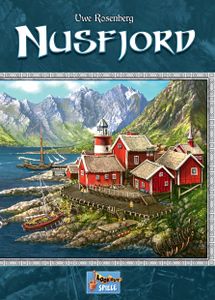
Nusfjord is a Norwegian fishing-village and worker-placement game. Players run fishing companies in the Lofoten Islands, plan fishing, shipbuilding, forest clearing, and harbor construction, and develop their business with the help of village elders and shares.
Nusfjord supports 1–5 players; community best: 1, 3 players; playing time: 20–100 minutes. A WANGO browser trial has not been confirmed.
Background & introduction
Nusfjord is set in a small fishing village in Norway's Lofoten archipelago. The village is quiet and remote today, while the game looks back to a time when cod came to spawn and fishing was thriving: sailing ships moved through the fjord, the surrounding slopes were still forested, and the harbor and community revolved around fishing. Lookout Games turns this real place into an economic development game from the perspective of fishing-company owners.
Each player has a harbor board, three workers, company shares, and a fishing track. The fleet determines how many fish can be caught each round. Fish are both a usable resource and part of the game's share, elder, and banquet systems. Wood comes from the surrounding forests and can be spent on ships and buildings; clearing a forest produces wood but also uncovers building spaces that may cost points if left empty at the end.
The village develops through more than personal labor. Players can issue company shares for gold, sending fish through the hands of different shareholders during the fishing phase. Fish can also be served at the banquet table and later spent to consult elders for special actions. Buildings add ongoing powers or end-game points, ships expand the catch, and the three workers must be assigned among these possibilities during a limited work phase. The flow of resources can determine whether a plan is possible in time.
The game lasts seven rounds, each moving through Fishing, Work, and Returning Home. This rhythm links catch, worker placement, and the supply of buildings: first distribute newly caught fish, then use workers to take actions, and finally prepare for the next round. Players weigh immediate resources against fleet growth, harbor construction, and undeveloped land. The highest total score after seven rounds wins.
Core rules & scoring
Setup and goal: Lookout Games lists the base game for 1–5 players, age 12 and up, at about 20 minutes per player. Choose one of the three base building decks—Herring, Mackerel, or Codfish—and prepare the action board, Banquet Table, elder supply, and personal harbors for the player count. Each player takes a harbor board, Elder Council, personal supply board, three workers, and five shares, beginning with two issued shares and three unissued shares. After seven rounds, the highest score wins.
Round sequence: The game lasts seven rounds, each played in this exact order: Fishing, Work, and Returning Home. All players resolve the Fishing Phase simultaneously. In the Work Phase, starting with the First Player and proceeding clockwise, each player places three workers one at a time and resolves each action. During Returning Home, everyone retrieves their workers and the First Player ship moves to the next round space. Some spaces also instruct the players to add new buildings.
Fishing and fish distribution: Your Fishing track determines the number of fish newly caught; the starting fleet typically catches three. You must distribute only this new catch in the rulebook's order: first to elders in your council, then to your shares held by others or in the newly issued area, then to issued shares of your color in your personal supply. Remaining fish go to your harbor Reserve, normally capped at eight; any excess that cannot be placed returns to the general supply. After distribution, fish on shares are transferred to the relevant players' supplies.
Elders, shares, and the Banquet Table: Each Elder receives one fish each round. When an Elder has exactly three, immediately move one fish to your personal supply and return the other two to the general supply; keep the Elder card. Issued shares affect fish distribution each Fishing Phase. The Issue a Share action flips one unissued share to its issued side, places it in the new-share area, and pays you two gold. Fish on the Banquet Table is separate from your personal supply and is used to activate elder actions.
Work Phase and workers: Each player takes exactly three Work turns per round. On each turn, place one worker on an available Action board space or an Elder in your own council, then immediately carry out its action. The number on a space sets its worker capacity; once full, it is blocked for the rest of the round. Actions include taking gold, transferring Reserve goods, serving fish at the banquet, building a building, issuing a share, clearing or replanting forest, expanding the fleet, and using an Elder. Do not choose an action that has no effect on your display.
Ships and buildings: A Build a Ship action pays the listed wood, fish, or gold cost and places a ship on your Fishing track; adding ships increases future catches. A Build a Building action takes one building from the display or, from round four, from your hand, pays its wood/fish/gold cost, and places it on an empty building space on your harbor. Buildings may grant immediate or ongoing effects, or score at the end when their conditions are met. Clearing a forest gains wood but can leave more empty building spaces; each space still empty at the end costs a point.
Banquet and elder actions: To Serve Fish, begin with the lowest-numbered empty plate and pay the amount printed on each plate in order. One fish stays on each newly filled plate and the remaining paid fish return to the supply; gain one gold per plate served. Fish on these plates are the cost for Elder actions. Before using an Elder, take one fish from the largest occupied plate and place it on the Elder, then perform its special action. Each Elder can receive at most one worker per round. A newly acquired Elder may be used immediately as allowed by the rules.
Returning Home, end, and scoring: After the Work Phase, all players simultaneously remove workers from the Action board and Elders. Move the First Player ship to the next round space and follow any building-supply instructions shown there. After round seven, add the printed and conditional points on ships and buildings, one point for each issued share in your supply, and one point for each gold. Subtract one point per empty building space and one per unissued share. The highest total wins; tied players share victory.
Rules & gameplay questions
How many people can play Nusfjord?
Lookout Games lists the base game for 1–5 players, ages 12 and up, at about 20 minutes per player; the rulebook includes a solo setup. Each game uses one of the Herring, Mackerel, or Codfish base building decks. Additional Big Box decks and the Salmon Deck are outside this base-game scope. Player count changes the action-board and supply setup, but each player still manages three workers per round.
How many rounds are in a game?
A game has seven rounds, each with three phases in order: Fishing, Work, and Returning Home. Fishing determines and distributes the new catch. During Work, players take turns placing their three workers on actions. During Returning Home, they retrieve all workers and advance the First Player ship; some round spaces also add buildings to the display. After round seven, the game proceeds directly to scoring.
Can I distribute my fish however I want?
No. You cannot skip the required order. Determine the new catch from your Fishing track, then distribute that new fish among your Elders, your shares held by other players or in the new-share area, your issued shares in your own supply, and finally your Reserve. The Reserve normally holds up to eight fish, and any excess that cannot be placed returns to the general supply. Fish accumulated on shares then move to their holders' supplies.
Why do Elders and shares affect fish?
Each Elder receives one fish during the Fishing Phase; when an Elder reaches exactly three, one fish moves to your supply and two return to the general supply. Issued shares create fish flow between the company owner and the people holding the shares, so holding another player's share can bring fish to your supply. Elders provide special actions, while shares affect ongoing resources and end-game points.
How many worker actions do I get each round?
Each player takes exactly three Work turns per round, placing one worker at a time on a legal Action board space or an Elder in their own council and resolving that action immediately. Each action space has a capacity shown on it and becomes unavailable once full. Work turns proceed clockwise, so an early placement may claim a scarce action while a later player has to adapt to what remains.
What does building a ship do?
A ship placed on your Fishing track increases the number of fish your company catches in later rounds. A larger catch may leave more fish after required payments to Elders and shares, which can support buildings or the banquet. Ships require the listed wood, fish, or gold cost, and their size occupies a specific amount of track space, so weigh the immediate cost against the future increase in income.
Is clearing a forest only a way to gain wood?
No. Clearing removes a Forest from your harbor and gives you wood, but it also uncovers building spaces that were covered by the trees. If any such space is still empty at the end, each free building space costs one point. Wood helps pay for ships and buildings, but clearing too early can create spaces that are difficult to fill before final scoring.
How do shares, gold, and empty spaces score at the end?
Add the fixed and conditional points from your ships and buildings, then add one point for every issued share in your personal supply and one point for each gold. Subtract one point for each unissued share and each empty building space on your harbor. Issued shares score for their holder regardless of color. The player with the most points wins, and ties are shared.
Rules & introduction sources
- Edition
- Based on the 2017 Lookout Games base game. The official product page lists 1–5 players, age 12+, and about 20 minutes per player. Each game uses one of the three base building decks; excludes Big Box expansion decks and the Salmon Deck. Solo play follows the rulebook's Solo Game.
- Rule references
- Introduction source
- BoardGameGeek
WANGO editorial
| Parameter | Recorded value |
|---|---|
| BGG overall rank (snapshot) | #389 |
| Complexity Weight | 2.88 / 5 |
| Best player count (community) | 1, 3 |
| Player range | 1–5 |
| Playing time (minutes) | 20–100 |
| Core mechanisms | Open Drafting · Turn Order: Claim Action · Worker Placement |
| Chinese publication | Unconfirmed |
| WANGO browser play | No confirmed WANGO trial |
| Year published | 2017 |
| Suggested age | 12+ |
BGG statistics are stored snapshots, not live rankings. Source checked:2026-09-27
Player questions
What is the best player count for Nusfjord, and can I play online?
Nusfjord supports 1–5 players; community best: 1, 3 players; playing time: 20–100 minutes. A WANGO browser trial has not been confirmed.
How complex is Nusfjord, and which mechanisms does it use?
Weight: 2.88 / 5. Mechanisms: Open Drafting · Turn Order: Claim Action · Worker Placement. Chinese publication: Unconfirmed.
Where can I learn Nusfjord?
No rule guide, strategy article or WANGO trial has been confirmed for this record.