Flamme Rouge
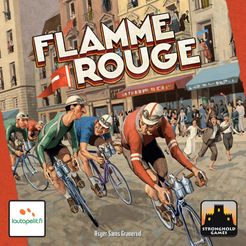
Flamme Rouge is a 2–4 player bicycle-racing game. Each player leads a two-rider team, managing cards, slipstream, and exhaustion on a modular course to get either rider across the finish first.
Flamme Rouge supports 2–4 players; community best: 4 players; playing time: 30–45 minutes. A WANGO browser trial has not been confirmed.
Background & introduction
Flamme Rouge translates road cycling into hand management and positioning. Each player controls two riders: a steady Rouleur and a fast Sprinteur. A course is assembled from double-sided track tiles, while each rider draws from a separate deck of Energy cards. Players choose movement cards for both riders, reveal them together, and move the field in order from the riders nearest the finish to those farther behind.
The Energy decks do not simply refill after each use. A chosen Energy card is removed from the game, while unchosen cards cycle back to the bottom of that rider's deck. When a rider has an empty square directly ahead after slipstreaming, an Exhaustion card is added to its recycling supply. Exhaustion has a low movement value and can occupy a future draw, so keeping a rider sheltered can matter as much as spending a powerful card to break away.
The race ends when either rider from a team crosses the finish. The other teammate does not have to finish, and a same-round tie is settled by distance beyond the line and then the right-hand lane. The base game supports two to four players and offers several stage layouts plus optional mountain rules. This summary excludes expansion procedures, solo Dummy Teams, weather, and multi-stage variants.
Core rules & scoring
Edition and goal: This entry covers the 2016 Lautapelit.fi base game Flamme Rouge, BGG 199478. The publisher-hosted French rules from Gigamic are localization v2.0, dated February 2021. The base game is for 2–4 players, recommended for age 8+, and takes about 30–45 minutes. Each player has a Rouleur and Sprinteur; the first team to win with either rider crossing the line takes the race.
Build the course: Choose a Stage card and lay its tiles in the listed sequence and orientation. The booklet recommends Avenue Corso Paseo for a first game. Each player takes a matching pair of riders, their Energy cards, and a player board. Shuffle the Rouleur and Sprinteur decks separately, and place the matching Exhaustion cards in shared face-up supplies. In turn order, place both riders in available lanes behind the Start line. Each square has two lanes and holds one rider per lane; when placing in an empty square, use the right-hand lane. The player who most recently rode a bike places both riders first; the youngest breaks a tie, then placement continues clockwise.
Energy Phase: Each round, players simultaneously select a card for each rider. For one rider, draw four cards from that rider's own deck, choose one and place it face down as the movement card, then return the unchosen cards face up to the bottom of that deck. Repeat for the other rider. You must choose for the first rider before drawing for the second. If the face-down deck runs short, shuffle that rider's recycle pile into a new deck and keep drawing; if fewer than four cards exist in both piles, draw every card still available.
Card-exhaustion version detail: The official Gigamic French localization v2.0 adds a final fallback: after the normal reshuffle and draw-all process, if no Energy card remains available, take an Exhaustion card for that rider and play it instead. An empty draw pile by itself does not trigger this rule because the recycle pile should first be shuffled. The older ©2016 English manual mirror checked for this entry does not state the final fallback. This summary follows v2.0 and preserves that version boundary.
Reveal and movement: After both riders for every player have selected cards, reveal all chosen cards simultaneously. Move riders from the one closest to the Finish backward; when riders share a square, the rider in the right-hand lane counts as farther forward. Move the exact number shown. Riders may change lanes without cost and pass through other riders, but cannot finish on an occupied lane. If both lanes of a destination square are occupied, stop in the nearest free lane behind it. Place a rider in the right lane when it ends in an empty square.
Energy and slipstream: After movement, remove all played Energy cards from the game; they never return. Unchosen cards remain at the bottom of their rider's deck. Then check slipstream starting with the rearmost pack: if exactly one empty square separates it from the pack ahead, move the whole rear pack forward one square to merge. Check the merged pack against the next pack ahead and continue forward. A rider can therefore benefit from slipstream more than once during the same round.
Exhaustion: After slipstreaming, a rider receives one Exhaustion card of its type in its recycle pile if the square directly ahead is completely empty. A square with one occupied lane and one empty lane is not empty, so it causes no exhaustion. Exhaustion cards have movement value 2 and use the ordinary draw-and-select process. When played, they are removed from the game just like a played Energy card. Keep Rouleur and Sprinteur Exhaustion cards with their matching decks.
Finish: Check the finish after movement, slipstream, and Exhaustion assignment have been resolved for the round. If any rider crosses the line, the game ends at the end of that round; the rider's team wins even if its teammate has not finished. If several riders cross in the final round, the one furthest past the line is ahead; if distances are equal, the right-hand lane wins. Riders cannot move beyond the fifth square past the finish. The base race has no intermediate sprint points.
Base options and mountains: Choose another Stage or build a custom track. Experienced players may handicap both rider decks with one extra Exhaustion card, or two each for highly experienced players. For Ascent, a rider starting on, entering, or crossing a red square may move at most five squares in total. If entering the first red square would be step six or later, stop at the nearest free lane before the climb. At round end a rider on red neither receives nor provides slipstream. Descent raises a card to at least five only when the rider starts on blue; merely entering blue does not increase movement. Slipstream on blue and Exhaustion assignment remain normal. Expansion procedures and Champion Edition are outside this entry.
Rules & gameplay questions
How many riders does each player control, and how is the race won?
Each player controls a two-rider team consisting of a Rouleur and a Sprinteur. Either rider can win the race for that team by crossing the finish; the teammate does not have to finish. If multiple riders cross during the same round, compare how far each got beyond the line. If their distances are exactly equal, the rider in the right-hand lane wins.
How do I choose cards for both riders at the start of a round?
For one rider, draw four cards from that rider's separate deck, choose one face down for movement, and return the unchosen cards face up to the bottom of that deck. Then repeat for the other rider. You must settle the first rider's choice before drawing for the second. Once all players have selected both cards, everyone reveals together and riders move in order from the front of the race backward.
Do used Energy cards go back into the deck?
No. After movement, every Energy card that was selected and played is removed from the game. The three unselected cards were returned to the bottom of that rider's deck and can be drawn later. When the face-down deck runs out, shuffle the rider's recycle pile into a fresh deck. Under Gigamic's French v2.0, if no Energy card remains after that process, play an Exhaustion card instead.
When does slipstream move a pack, and can it happen more than once?
After all card movement, inspect packs starting from the rear. If exactly one completely empty square separates a rear pack from the pack ahead, move the whole rear pack forward by one square to merge. Then check the merged pack against the next pack ahead and continue. This can give a rider more than one slipstream move in a round. An empty lane alone does not count as an empty square. A rider on a red Ascent neither provides nor receives slipstream.
When does a rider gain an Exhaustion card?
After slipstreaming, give a rider one matching Exhaustion card if the square immediately in front of it has no riders in either lane. A free lane beside another rider is not an empty square. The Exhaustion card has a movement value of 2 and enters the rider's recycling supply; if later drawn and played, it is removed from the game like an Energy card.
May riders pass through or finish in an occupied space?
A rider may change lanes freely and can pass through other riders while moving. It may not end on an occupied lane. If both lanes of its intended square are full, stop in the closest free lane behind that square. When it lands in an otherwise empty square, put it in the right-hand lane. The movement order treats the right lane as ahead when riders share a square.
How do climbs and descents change movement and slipstream?
An Ascent caps the whole move, not just the red portion: starting on, entering, or crossing red means at most five squares. If the first red square would be step six or later, stop at the nearest free lane before it. Riders ending on red neither receive nor provide slipstream. A Descent raises a low card to five only if the rider starts on blue; entering blue during movement does not trigger that minimum. Blue slipstream and Exhaustion remain normal.
What is different in the French v2.0 and older English draw rules?
Gigamic's official French v2.0 says that if no Energy card is available after the rider's recycle pile has been shuffled and all remaining cards drawn, the player takes and plays an Exhaustion card. The older ©2016 English manual mirror explains reshuffling and drawing all remaining cards but does not state this last fallback. No publisher change log was located, so this entry identifies v2.0 as its baseline rather than claiming the texts are identical.
Rules & introduction sources
- Edition
- BGG 199478 is the 2016 Lautapelit.fi Flamme Rouge base game, summarized from the official Gigamic-hosted French v2.0 rules and scoped to 2–4 players. Peloton, Meteo, Grand Tour, BMX, and Champion Edition are excluded. French v2.0 includes an exhaustion-card fallback after all Energy cards are unavailable; the older English mirror omits it, so the version distinction is stated.
- Rule references
- Introduction source
- BoardGameGeek
WANGO editorial
| Parameter | Recorded value |
|---|---|
| BGG overall rank (snapshot) | #292 |
| Complexity Weight | 1.71 / 5 |
| Best player count (community) | 4 |
| Player range | 2–4 |
| Playing time (minutes) | 30–45 |
| Core mechanisms | Catch the Leader · Hand Management · Modular Board · Programmed Movement · Race · Simulation · Simultaneous Action Selection · Track Movement |
| Chinese publication | Unconfirmed |
| WANGO browser play | No confirmed WANGO trial |
| Year published | 2016 |
| Suggested age | 8+ |
BGG statistics are stored snapshots, not live rankings. Source checked:2026-09-27
Player questions
What is the best player count for Flamme Rouge, and can I play online?
Flamme Rouge supports 2–4 players; community best: 4 players; playing time: 30–45 minutes. A WANGO browser trial has not been confirmed.
How complex is Flamme Rouge, and which mechanisms does it use?
Weight: 1.71 / 5. Mechanisms: Catch the Leader · Hand Management · Modular Board · Programmed Movement · Race · Simulation · Simultaneous Action Selection · Track Movement. Chinese publication: Unconfirmed.
Where can I learn Flamme Rouge?
No rule guide, strategy article or WANGO trial has been confirmed for this record.