Near and Far
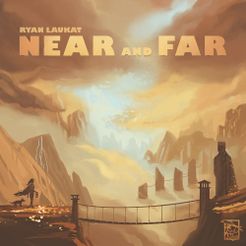
Near and Far combines map exploration, character development, and story choices. Recruit adventurers, prepare in town, then travel through changing maps to resolve quests, defeat threats, build camps, and earn the most Journey Points.
Near and Far supports 2–4 players; community best: 3 players; playing time: 90–120 minutes. A WANGO browser trial has not been confirmed.
Background & introduction
The journey in Near and Far begins with a story about the Last Ruin. Players lead expedition parties across a series of maps, search for ancient places, recruit companions, and meet the people who live along the route. Maps show paths, towns, camps, and quest sites. When a player reaches a story space, the table reads an encounter and chooses how to respond. Each map brings different terrain, problems, and branches, so exploration is more than moving toward a distant edge: players decide when to return for supplies and when to risk pressing onward.
Turns revolve around two paths: town and adventure. A player can visit a town to train, recruit, recover, or obtain equipment, or leave town and explore the map. The expedition has a limit of four active members including its animal companion and is constrained by faction rules. Movement costs Hearts, and threats require a die test using the party's skills or swords. The winner is not determined only by reaching a map's end: camps, trade routes, Artifacts, Chiefs, Reputation, and resources all contribute to Journey Points.
The base rulebook supports several kinds of experience. First Adventure is an introductory journey, Campaign links maps across ten sessions, Character Mode develops personal quests across maps, and Arcade Mode uses cards instead of storybook encounters. Players can choose a format to match their time and interest, but progress, quests, and encounter methods differ by mode. In every base mode, the party must balance preparation with travel, party strengths with limited Hearts, and immediate rewards with the shared end trigger.
Core rules & scoring
Edition and modes: This entry follows the publisher-linked reprint_v02 base-game rulebook for BGG 195421. The base game supports 2–4 players and includes four formats: First Adventure uses Map 1; Campaign Mode travels across Maps 2–11 in ten sessions; Character Mode links character quests across multiple maps; and Arcade Mode uses its own deck instead of storybook encounters. Dusk Town is the default town. Day Town, Amber Mines, and extra stories are optional rules or expansion content.
Setup: Place 7/10/13 quest tokens for 2/3/4 players on book-icon spaces, at most one each. Each player starts with a board, companion, character, 3 coins, 14 camps, zero Hearts and zero Reputation. Sort Threats from 4 to 15 with 4 on top. Deal two Advanced and five Basic Artifacts; draft Basic cards by selecting one and passing left until all five are chosen, then discard at least one Advanced. Basic cards may also be discarded now; unpurchased cards retained later cost 1 Journey Point each at game end.
Choose one main action: Visit Town or Adventure. Every mode requires visiting town in the first round. Move to a building and take its action; the character stays in town afterward, choosing another building or an Adventure on a later turn. Return from any map location with a Visit action, without walking back. Occupied buildings usually require a duel; the Saloon can be visited without one, and a character starting in Jail can visit without dueling. Both duelists roll plus Swords; ties favor the defender and only the challenger may spend Hearts. A losing challenger goes to Jail without using the building.
Party and movement: When leaving town, the player may rearrange active and inactive characters, then resets Hearts from the symbols on the active party and cards, up to 13. Hearts left from the previous expedition do not carry into this reset. Base movement is 2, increased by a pack bird and arrow symbols on active characters. A party contains no more than four active members including its animal companion, and it cannot have two active Adventurers of the same faction. Pay 1 Heart when leaving a space without any camp, except your turn’s starting space even if empty; town is also exempt. Reaching zero Hearts has no automatic return-to-town effect.
Threats and camps: Threat icons lie between spaces. Cross an active icon by fighting the top Threat; it becomes inactive when both endpoint spaces have any camps, with town treated as camped. Roll plus active-party and applicable card Swords, then optionally spend 1 Heart per extra point. Success claims the Threat and places your next camp on its card, not on the path; failure ends the turn and returns you to the space before that crossing. A shield, a permitted card power or sacrificing a pack bird can bypass a Threat without claiming it. At your final uncamped space, after any quest, spend 3 Hearts to build a map camp; do not move again afterward.
Quests: Stop on a space with a quest token to attempt it; merely passing is insufficient. The left-hand player reads the introduction and bold choices with difficulties, withholding reactions and rewards. Choose, pay any prerequisite cost, roll and add Hands for Skill or Swords for Combat, then optionally spend Hearts at +1 each. Meet the threshold for rewards and exceed it by at least two for the bonus. Ordinary failure gives no reward and skips the reaction; remove the token either way. Character quests still read a failed reaction, record the next quest and award experience. Arcade uses its cards instead of the storybook.
Artifacts, Chiefs, and routes: Buying an Artifact is a free action during the active player's Turn, but the player must pay its required resources and meet any additional condition; only then does its ability work and its points count. The first player to collect four matching faction banners claims the corresponding Chief, using Adventurers and faction tokens as specified but not the banners printed on purchased Artifacts. A trade route has two marked spaces and needs a camp on each. If one player controls both ends, that player receives the larger value; if two players control one end each, both receive the smaller value.
End and scoring: One player placing their own fourteenth camp triggers the end, counting map, Mine and Threat-card camps, never fourteen camps combined across players. Finish the round through the first player’s right-hand neighbor for equal turns; use spare camps if needed. Each placed camp and unused faction token scores 1, each Chief 5, and every two coins/gems combined 1; Food and Adventurers do not score by themselves. Add completed routes, purchased Artifacts, Threats and card bonuses; subtract 1 per unpurchased Artifact. Placing all fourteen camps adds 2, and owning three Treasures adds 5.
Across-session rules: Campaign and Character Mode preserve character or chapter progress between sessions. First Adventure is a standalone introductory game, so campaign persistence should not be applied automatically. Day Town, the pack tortoise, a platypus companion, extra stories, and the long-game option are separately identified as optional material in the base rulebook. Choose the mode and optional modules before setup, then use the matching map, deck, and records rather than treating campaign-only quests as rules for every one-session adventure.
Town supplies and Reputation: Saloon recruits one Adventurer, discounted 1 coin per owned matching banner to a minimum zero; refresh its row once per visit for 1 Food. Stables sells one pack bird for 1 Food, maximum three, each giving +1 movement and one Treasure capacity. Farm yields Food per applicable Hand. General Store gives 1 coin or four Artifacts with deck counts chosen before drawing; Mystic needs a bird to draw Treasure. Mine uses Skill to place a camp in a legal dig site. Town Hall permits one trade, one Artifact discard and one Reputation purchase, in any order. Dusk Reputation 4–5/6–7/8–9 gives 2/3/4 points, continuing along the track for higher tiers without summing tiers. Score ties compare Reputation, then coins/gems, unless a card overrides. In two players, Town Hall starts occupied by an unused character and still requires a duel: challenge the opponent if present, otherwise they roll for the unused character without Swords or Hearts.
Map and continuing-mode rules: Apply the selected map’s special conditions. Map5 toxic-water spaces cost 1 Heart when entered or passed even if camped; without payment return to the previous space. On Map10, lacking a camp on any mammoth space costs 8 at game end. Campaign Map11 adds player-count-specific Boss cards that may replace a normal Threat fight. Character quests earn experience even on failure; Campaign awards one experience per three encounters. Talents are normally bought between sessions and remain active. After the final Map11 session, total Journey Points across all sessions to determine the campaign or character-mode champion.
Rules & gameplay questions
Can I visit town and go on an Adventure in the same Turn?
They are separate main actions. Visit Town moves from any map location directly to a town building; after its action the character remains in town rather than automatically returning to the map. On a later turn choose another building or Adventure, arranging the party and resetting Hearts before moving from the map’s town space. The first round requires a town visit in every base mode, not only First Adventure.
How many characters can be active, and can they share a faction?
The active party can contain up to four members, and the animal companion occupies one of those spaces. It also cannot contain two active Adventurers from the same faction. When leaving town, you can rearrange active and inactive party members, but you still need to check the limit and any abilities shown on cards. Party size and faction mix affect movement, tests, and the routes you can take.
Do leftover Hearts carry over from my last expedition?
Reset only when actually leaving the town board, using the active party and applicable purchased Artifact, Treasure and World-card Heart icons, up to 13, without adding old Hearts. If already on the map, continuing Adventure preserves the current total. Merely passing through the map’s town symbol does not reset it. This distinction prevents treating every Adventure turn as a fresh supply of Hearts.
Can I keep moving after I fail a Threat test?
Failure ends the turn and returns you to the space before that crossing. Success claims the top Threat and puts your next camp on the Threat card, not on the destination map space. You may then continue remaining movement and, at your final uncamped space, separately pay 3 Hearts to build a map camp. Threat-card camps count toward your personal fourteen-camp end threshold; a path Threat icon is inactive once both endpoints are camped.
May I spend Hearts to improve a quest roll?
Yes. Choose the listed Skill or Combat option and pay prerequisite resources before rolling. Add applicable Hands or Swords, then decide how many Hearts to spend at +1 each. Meet the difficulty for base rewards and beat it by at least two for the bonus. Ordinary map quests discard the token even on failure, skip the reaction and give no reward; Character Mode failure instead still reads the reaction and advances its character quest.
Who scores a trade route when two players control its ends?
A trade route is complete only when both marked spaces contain camps. If one player controls both endpoints, that player gets the larger printed value. If different players each control one endpoint, both receive the smaller printed value. A camp on only one end leaves the route incomplete and scores nothing, even though camps can still matter for other effects.
Does an Artifact work or score while it is still in my hand?
No. An Artifact in hand has no ability and is not a purchased Artifact for end scoring. Buy it by paying the listed coins or resources and meeting any additional requirement; after purchase, its ability and scoring value apply. Each Artifact left unpurchased in your hand at the end costs one Journey Point, so holding cards is not the same as owning their benefits.
When does placing a fourteenth camp trigger the game end?
Count each player separately: one player placing their own fourteenth camp triggers the end, including camps on the map, in the Mine and on Threat cards. Do not total all players’ camps. Finish the current round through the first player’s right-hand neighbor so everyone has equal turns, using spare camps if needed. Each placed camp scores 1 and placing all fourteen adds 2; unfinished trade routes still score nothing.
Is Campaign Mode the only way to play Near and Far?
No. The base rulebook includes First Adventure, Campaign, Character, and Arcade modes. First Adventure is an introductory standalone map; Campaign connects maps across ten sessions; Character Mode selects at least three Maps 2–10 and moves to Map 11 after all players finish their first eight character quests; Arcade Mode replaces storybook encounters with an Arcade deck. Amber Mines, Day Town, and other advanced material are expansion or optional modules and should be identified separately.
Rules & introduction sources
- Edition
- Red Raven Games' Near and Far base game (BGG 195421), summarized from the publisher-linked reprint_v02 rulebook. Includes the four base-rulebook modes—First Adventure, Campaign, Character, and Arcade—and uses Dusk Town and the pack bird as defaults. Day Town, the Amber Mines expansion, extra stories, the long-game module, and other optional rules are excluded from the default summary.
- Rule references
- Introduction source
- BoardGameGeek
WANGO editorial
| Parameter | Recorded value |
|---|---|
| BGG overall rank (snapshot) | #283 |
| Complexity Weight | 2.90 / 5 |
| Best player count (community) | 3 |
| Player range | 2–4 |
| Playing time (minutes) | 90–120 |
| Core mechanisms | Closed Drafting · Contracts · Dice Rolling · End Game Bonuses · Hand Management · Movement Points · Multiple Maps · Narrative Choice / Paragraph · Network and Route Building · Open Drafting · Point to Point Movement · Push Your Luck · Resource to Move · Scenario / Mission / Campaign Game · Set Collection · Storytelling · Tags · Variable Player Powers · Worker Placement |
| Chinese publication | Unconfirmed |
| WANGO browser play | No confirmed WANGO trial |
| Year published | 2017 |
| Suggested age | 13+ |
BGG statistics are stored snapshots, not live rankings. Source checked:2026-09-27
Player questions
What is the best player count for Near and Far, and can I play online?
Near and Far supports 2–4 players; community best: 3 players; playing time: 90–120 minutes. A WANGO browser trial has not been confirmed.
How complex is Near and Far, and which mechanisms does it use?
Weight: 2.90 / 5. Mechanisms: Closed Drafting · Contracts · Dice Rolling · End Game Bonuses · Hand Management · Movement Points · Multiple Maps · Narrative Choice / Paragraph · Network and Route Building · Open Drafting · Point to Point Movement · Push Your Luck · Resource to Move · Scenario / Mission / Campaign Game · Set Collection · Storytelling · Tags · Variable Player Powers · Worker Placement. Chinese publication: Unconfirmed.
Where can I learn Near and Far?
No rule guide, strategy article or WANGO trial has been confirmed for this record.