This War of Mine: The Board Game
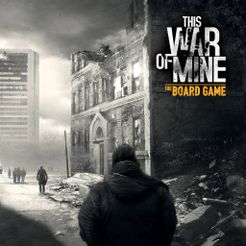
Care for civilians sharing a shelter in a city at war. Divide scarce time, supplies and strength between daytime improvements and the nightly demands of sleep, guard duty and scavenging.
This War of Mine: The Board Game supports 1–6 players; community best: 1 players; playing time: 45–120 minutes. A WANGO browser trial has not been confirmed.
Background & introduction
This cooperative game focuses on civilian survival. Food and water sustain the group, materials improve the shelter, and fatigue or injuries reduce what can be achieved tomorrow. A shortage solved today can create a different problem later.
Players do not each own a character. Everyone manages the whole group, while the current Journal holder hears the discussion and makes the final decision. Leadership passes at the marked points; a solo player takes responsibility for the same shared group.
The Journal guides a repeating day-and-night cycle, with cards and explicitly referenced scripts introducing changes. This overview explains the relationship between work, supplies and survival while leaving specific encounters, locations and endings to discovery during play.
Core rules & scoring
The original base game supports 1–6 jointly controlling all characters, rather than one character per player. Choose a leader randomly. Standard setup draws one red-bordered and two black-bordered characters; no more than four characters may be in play.
Follow the Journal to set up the basic shelter, decks, three available locations and starting storage. Build the Event deck with its prescribed Chapter and Ending Event cards. Start characters at Hunger 2. Read numbered scripts only when directed; a coloured-circle number alone is not an instruction.
Proceed through seven phases: Morning, Day Actions, Dusk, Evening, Scavenging, Night Raid and Dawn. Morning resolves the top Event-deck card. Chapters and objectives follow their own instructions.
Day Actions has three stages, with at most one available action per character in each. Black state dots block specified stages; duplicate blocks do not stack. Assign everyone and pay costs before resolving the stage simultaneously, so newly produced supplies cannot fund another action in that same stage.
Clear, craft or use fittings on accessible shelter spaces; obstacles restrict routes. Craft from available Fitting cards and pay the requirements. Cards in Ideas are not freely available for direct construction, and new fittings require legal placement.
At Dusk allocate water and food. Normally each character drinks one water; missing water causes Hunger or Misery according to the black die. Canned Food lowers Hunger by two, Raw Food by one, Vegetables maintain it, and no food raises it by one. Resolve shortages through these consequences.
At Evening assign each character to a bed, the floor, guard duty or scavenging. Each bed holds one and resets Fatigue; the floor lowers it by two. Guards and scavengers gain one Fatigue. At most three scavenge; use the special instruction if nobody guards. Fatigue reaching four from assignment takes effect after completing that task.
The scavengers select one available location and equipment, then resolve its specified Unknown deck of Exploration cards. Noise checks may trigger Residents. An empty Unknown deck ends exploration automatically; some cards permit an earlier end. Put finds in the Findings Pile, then choose what returns within combined Inventory capacity, including equipment already carried.
Resolve the Night Raid before scavengers return, using guards and weapons to reduce losses and wounds. At Dawn return the party and supplies, assign treatment and resolve Fate. Treatment follows Fate effects; resolve Wait effects and then discard Wait tokens. Continue with Narrative Actions and other instructed follow-up.
Survive as a group and judge the result through Chapter and Final Objectives, rather than individual scores. Requirements may be fulfilled as instructed before their Chapter resolves, but rewards/penalties wait for that resolution. After Dawn, use the SAVE sheet and saving procedure to preserve and later restore characters, supplies and board state.
Rules & gameplay questions
Does each multiplayer participant own a character?
No. Discuss the whole group together. The current Journal holder makes the final decision after hearing others, then passes the Journal left at NEXT PLAYER marks. Solo also controls the whole group.
Do two states blocking the third action leave only one action?
No. Dots identify particular blocked stages rather than cumulative action deductions. Two states blocking stage three still block only stage three.
Can one action produce materials for another in the same stage?
No. Pay costs when assigning characters and resolve the stage simultaneously. Supplies produced now become available for later stages.
Can the shelter immediately use something scavengers find?
No. Finds first go into the Findings Pile and must fit the group’s return capacity. The party returns and adds carried supplies to Storage at Dawn, after the Night Raid.
Do Meds or Bandages heal immediately when assigned?
Not automatically. Resolve the relevant Fate effect. Assigned treatment stays with that character until instructed to discard it; piling on extra identical treatment does not automatically improve its effect.
Rules & introduction sources
- Edition
- Original 2017 This War of Mine: The Board Game base day/night procedures, using the official English Journal PDF produced 2017-05-19 and applicable base sections of official FAQ/errata v1.2 effective 2019-05-23, actually read via a publisher-authored document mirror. Includes official solo and shared multiplayer control. Special scenarios, advanced board details, expansions and second-edition additions are not covered. No story passages, location solutions or ending content.
- Rule references
- Introduction source
- BoardGameGeek
WANGO editorial
| Parameter | Recorded value |
|---|---|
| BGG overall rank (snapshot) | #224 |
| Complexity Weight | 3.34 / 5 |
| Best player count (community) | 1 |
| Player range | 1–6 |
| Playing time (minutes) | 45–120 |
| Core mechanisms | Action Points · Cooperative Game · Dice Rolling · Events · Grid Movement · Narrative Choice / Paragraph · Push Your Luck · Role Playing · Scenario / Mission / Campaign Game · Simulation · Solo / Solitaire Game · Storytelling · Variable Player Powers · Worker Placement |
| Chinese publication | Unconfirmed |
| WANGO browser play | No confirmed WANGO trial |
| Year published | 2017 |
| Suggested age | 18+ |
BGG statistics are stored snapshots, not live rankings. Source checked:2026-09-27
Player questions
What is the best player count for This War of Mine: The Board Game, and can I play online?
This War of Mine: The Board Game supports 1–6 players; community best: 1 players; playing time: 45–120 minutes. A WANGO browser trial has not been confirmed. Recorded mechanism tags: Solo / Solitaire Game.
How complex is This War of Mine: The Board Game, and which mechanisms does it use?
Weight: 3.34 / 5. Mechanisms: Action Points · Cooperative Game · Dice Rolling · Events · Grid Movement · Narrative Choice / Paragraph · Push Your Luck · Role Playing · Scenario / Mission / Campaign Game · Simulation · Solo / Solitaire Game · Storytelling · Variable Player Powers · Worker Placement. Chinese publication: Unconfirmed.
Where can I learn This War of Mine: The Board Game?
No rule guide, strategy article or WANGO trial has been confirmed for this record.