The Manhattan Project: Energy Empire
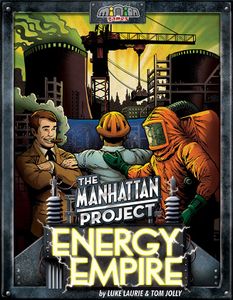
The Manhattan Project: Energy Empire is a nation-building strategy game set in the Atomic Age. Develop industry, commerce, and government by choosing to work or generate energy while managing pollution, global events, and victory points.
The Manhattan Project: Energy Empire supports 1–5 players; community best: 4 players; playing time: 60–120 minutes. A WANGO browser trial has not been confirmed.
Background & introduction
The Manhattan Project: Energy Empire takes place in the decades after World War II, when nations compete through economic expansion, science, and new sources of energy. Coal, oil, and nuclear power drive industry, while solar and other clean sources begin to gain a foothold. Players do not build weapons; they lead nations and develop the structures of government, commerce, and industry.
Energy growth carries an environmental cost. Production can create structures, resources, and income, but it can also spread pollution across a nation’s environment and change the public situation on the Global Impact track. Science can help mitigate pollution or improve the efficiency of a nation’s actions. United Nations influence, Achievements, and Structure cards offer additional paths to points.
The game combines worker placement, a card-driven engine, and energy dice. On a turn, players choose between Work and Generate. A Work turn sends a worker to a region on the main board, then uses workers and energy to activate matching structures. A Generate turn rolls energy dice to replenish supply and resolves steps related to the environment and Achievements. The developing tableau converts resources into further opportunities and points.
The end is not tied to a fixed round count; it is linked to the depletion of pollution on the shared Global Impact track. Structures, energy dice, position at the United Nations, Achievements, and clean areas of a player’s environment all contribute to scoring. One nation may expand heavy industry, another may focus on science and environmental care, and another may build a powerful card engine across several scoring categories.
Core rules & scoring
Objective and scope: Players develop a nation and seek the highest final victory-point total. Points come from Structure cards, Energy dice, the United Nations track, Achievements, and unpolluted spaces in the player’s environment. This is a standalone game in the Minion Games Manhattan Project line. The 2016 rulebook lists 1–5 players, roughly 1–2 hours, ages 13+, and includes solo rules. Cold War expansion content is outside this summary.
Setup: Each player selects a nation board and receives starting workers, Energy and pollution, plus the resources, money or other items indicated by its chosen Nation card. Arrange public Structure cards in the Government, Industry, and Commerce markets. Set out the Global Impact track, pollution tokens, United Nations track, Achievement board, energy dice, and resource supply. The player’s Environment tracks pollution caused by their nation; the shared track controls global impacts, oil prices, and the game’s remaining time.
Turn choices: On a turn, choose either Work or Generate. For a Work turn, place one worker from the player mat at a main-board location, then activate eligible Structure cards matching the board’s region; the Nation card may be activated regardless of region. If a location already has another player’s worker, the rules allow a taller stack formed with energy. A player cannot use energy alone to occupy a location or skip the board and activate tableau cards directly.
Work turns: After placing a worker in Government, Industry, or Commerce, activate owned structures in the corresponding region using workers and Energy. Pay each card’s costs and resolve its resources or special effects immediately. Newly gained resources may be used to activate further cards in the same Work turn. If another worker stack occupies the location, use the required energy to make a taller stack with the single worker before carrying out the action.
Generate turns: If eligible, claim an Achievement, return workers and discard existing Energy, optionally refine oil for temporary Petroleum dice, then roll chosen Energy dice to gain Energy shown by their symbols. Different dice represent different energy sources and change both supply and pollution outcomes. The Generate turn also removes pollution from the Global Impact track as the rules prescribe. The dice and Environment board form an energy engine, so players must consider production, pollution, and the public events that may follow.
Pollution and global effects: Some actions add pollution to a player’s Environment, covering spaces that might otherwise score at the end. Pollution can also trigger Global Impact cards or affect oil prices. Science, cleanup actions, and Structure abilities can mitigate those costs. Tokens on the Global Impact track are gradually removed by game effects; that shared track also determines oil prices and the timing of global events. Pollution is both a scoring concern and a timing mechanism.
End trigger: When the last pollution token is removed from the Global Impact track, the end of the game is triggered. The active player completes their current turn, then each player receives one final turn, including the player who triggered the end. Special rules govern pollution and oil prices during the final turns. Only after those turns are finished do players calculate their scores.
Final scoring and solo scope: Add points from Structures, Energy dice, the United Nations position and leadership bonus, Achievements, unpolluted Environment spaces, and complete-column bonuses. Achievement scoring is capped; ties are broken by remaining resources under the rulebook. The original rulebook includes solo play. Cold War is a separate expansion with replacement solo-deck rules, which should not be treated as part of the base game.
Rules & gameplay questions
Is The Manhattan Project: Energy Empire an expansion to the original game?
No. It belongs to the same series, but it is a standalone game with its own nation-building engine, energy dice, pollution system, and card tableau. Players develop structures, manage workers and energy, and compete for United Nations influence and Achievements. Cold War is a separate expansion, so its additional nation cards and replacement solo rules should not be folded into a base-game description.
What can a player choose on a turn?
Each turn, choose Work or Generate. Work places one worker at a main-board location and then lets the player activate matching Structures and, regardless of location type, the Nation card using workers and energy. Generate rolls energy dice to replenish supplies and resolves Achievement and Global Impact steps. The two turn types develop a nation differently, so players alternate them according to available resources and the shared situation.
How does a Work turn activate cards?
First place one worker at a Government, Industry, or Commerce location on the main board. Then activate owned Structure cards that belong to that region. Cards require workers, energy, or other resources; after paying, resolve each effect immediately, and resources gained can be used for more activations in the same turn. If the board location is occupied, the new single-worker stack must be made taller with energy as the rules require.
Why is a Generate turn important?
A Generate turn rolls the player’s available Energy dice and gains Energy from their symbols, then determines pollution from the highest die result and its type. It also affects pollution, the Global Impact track, and Achievement opportunities. Choosing when to generate can keep a nation’s economic engine operating while also moving the game closer to its ending condition.
What effect does pollution have?
Pollution can cover spaces on a player’s Environment board that might otherwise score at the end of the game. It can also change the shared situation through Global Impact cards and oil prices. Science, card effects, and cleanup actions help mitigate those costs. At the same time, tokens are removed from the Global Impact track over the course of play, and removing the last one triggers the endgame.
When does the game end?
When the last pollution token is removed from the Global Impact track, the active player first completes the current turn. Each player then takes one final turn, including the player who triggered the end. After those turns, the group scores Structures, energy dice, the United Nations track, Achievements, and environment conditions. The timing of the trigger determines how much time nations have to prepare their final actions.
What are the main scoring categories?
Players score from Structure cards, Energy dice, their position on the United Nations track and its leadership bonus, Achievements, unpolluted spaces, and complete Environment columns. Achievements have a rulebook scoring cap. The highest total wins; for a tie, compare remaining money, plastic, steel, science, and oil as described in the rules.
Does the base rulebook include solo play?
Yes. The original 2016 base-game rulebook includes solo rules. Cold War later introduced a replacement solo-deck system, and the designer says that expansion variant replaces the solo rules on page 19 of the base booklet. Without the expansion, use the base solo rules; the extra cards are not required for a standard solo game.
Rules & introduction sources
- Edition
- This entry covers Minion Games’ 2016 base game and the solo rules printed in its original rulebook. Energy Empire is a standalone game in The Manhattan Project line, not an expansion to the original. Cold War and its replacement solo-deck rules are excluded. The official designer FAQ clarifies a first-printing oil-price misstatement.
- Rule references
- Introduction source
- BoardGameGeek
WANGO editorial
| Parameter | Recorded value |
|---|---|
| BGG overall rank (snapshot) | #378 |
| Complexity Weight | 3.05 / 5 |
| Best player count (community) | 4 |
| Player range | 1–5 |
| Playing time (minutes) | 60–120 |
| Core mechanisms | Contracts · Dice Rolling · Die Icon Resolution · End Game Bonuses · Events · Income · Market · Multi-Use Cards · Open Drafting · Solo / Solitaire Game · Tags · Track Movement · Variable Player Powers · Variable Set-up · Worker Placement · Worker Placement, Different Worker Types |
| Chinese publication | Unconfirmed |
| WANGO browser play | No confirmed WANGO trial |
| Year published | 2016 |
| Suggested age | 13+ |
BGG statistics are stored snapshots, not live rankings. Source checked:2026-09-27
Player questions
What is the best player count for The Manhattan Project: Energy Empire, and can I play online?
The Manhattan Project: Energy Empire supports 1–5 players; community best: 4 players; playing time: 60–120 minutes. A WANGO browser trial has not been confirmed. Recorded mechanism tags: Solo / Solitaire Game.
How complex is The Manhattan Project: Energy Empire, and which mechanisms does it use?
Weight: 3.05 / 5. Mechanisms: Contracts · Dice Rolling · Die Icon Resolution · End Game Bonuses · Events · Income · Market · Multi-Use Cards · Open Drafting · Solo / Solitaire Game · Tags · Track Movement · Variable Player Powers · Variable Set-up · Worker Placement · Worker Placement, Different Worker Types. Chinese publication: Unconfirmed.
Where can I learn The Manhattan Project: Energy Empire?
No rule guide, strategy article or WANGO trial has been confirmed for this record.