Zombicide: Black Plague
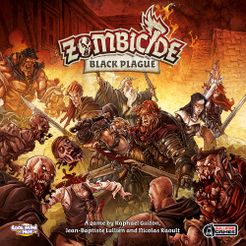
Zombicide: Black Plague is a cooperative medieval-fantasy survival game. Players guide Survivors through mission objectives while noise, equipment limits, and escalating zombie spawns turn each round into a group problem.
Zombicide: Black Plague supports 1–6 players; community best: 3 players; playing time: 60–180 minutes. A WANGO browser trial has not been confirmed.
Background & introduction
Zombicide: Black Plague moves the zombie-survival premise into a fictional medieval-fantasy world. Players become Survivors searching rooms and streets for equipment, then using melee weapons, bows, magic, and mission objects against the dead. It is not a historical simulation of an actual plague: the setting combines an undead horde, Necromancers, and fantasy gear to put a familiar survival conflict inside buildings and stone-walled streets.
Every session begins by choosing a Quest. Its map defines the tiles, doors, objectives, spawn zones, and special restrictions, while the players plan together how to search and fight. Opening a building may find useful equipment but can also bring zombies into its rooms. Noise, routes, and action allocation are connected. Survivors earn experience by killing zombies; higher Danger Levels unlock skills while also increasing the numbers used when later zombie cards spawn enemies.
A round moves through the Players’ Phase, Zombies’ Phase, and End Phase. Players activate Survivors one at a time, normally giving each blue-level Survivor three actions to move, search, trade, open doors, fight, or work toward objectives. Zombies then move, attack, and spawn. Different zombie types have different speed and durability, and ranged hits follow a target-priority order; a miss can even injure a teammate in the target Zone. The team wins by completing the Quest objectives, so the game does not normally require killing every zombie on the board.
Core rules & scoring
Edition, players, and objective: This entry covers the 1–6 player cooperative rules for the Zombicide: Black Plague base box, using the official base rulebook. Wulfsburg, Green Horde, expansion Survivors, extra missions, and cross-box combinations are excluded. Choose a Quest first and set up its tiles, doors, objectives, and spawn zones exactly as shown. Each mission determines the map and special conditions, so one mission’s evacuation point, number of objectives, or loss condition is not universal.
Round and Players’ Phase: A game round has a Players’ Phase, Zombies’ Phase, and End Phase. The player with the first-player token starts, activating their Survivors one at a time; players may choose the order in which their Survivors act. At Blue Danger Level, each Survivor normally has three actions. Skills may provide free or extra actions as the game progresses. After all players finish, zombies act; at the end of the round, remove Noise tokens and pass the first-player token to the player on the left.
Movement, searching, and doors: Survivors move between Zones that share an edge and cannot move diagonally. Rooms connect through openings, and moving between a building and the street requires a door or opening. To leave a Zone containing zombies, a Survivor spends one additional Move Action per zombie; entering a Zone with zombies ends that movement. Searching is normally allowed only in a building Zone with no zombies, and each Survivor may search only once per turn. Opening a door costs an action and may spawn zombies in the rooms of a previously closed building according to the Quest and spawn rules; an already open building does not repeat the first-open spawn.
Equipment, Noise, and action choices: Survivors have limited slots for hands, body equipment, and a backpack. Cards specify weapon type, range, dice, accuracy, and damage. Players can reorganize or trade equipment, attack, cast magic, activate Quest objects, or spend an action to make Noise. Noise affects zombie movement choices, while opening a new building can add pressure. With a limited action budget, the group must coordinate high-damage weapons, searching, and objective routes instead of judging safety only by the zombies currently in sight.
Zombies’ Phase and enemy types: Zombies activate and attack Survivors in their Zone. If they cannot attack, they move according to line of sight, Noise, and the rules for choosing a destination. Walkers, Fatties, Runners, Abominations, and Necromancers differ in actions and durability; Runners receive two actions each activation. Spawn cards add zombies at each active Spawn Zone, using the line for the highest Danger Level Survivor still in play. Extra Activation and Double Spawn cards can change the threat sharply.
Experience and Danger Levels: A Survivor gains experience for each zombie killed; a Quest objective or special enemy may also award experience. At 7 experience the Survivor reaches Yellow, at 19 Orange, and at 43 Red. Level-ups provide new skills, and Yellow adds an action. Spawn cards also use the highest Danger Level among Survivors still in play, so experience has a cost: as the team approaches stronger skills, cards generally call for more zombies. Resolve the actual skill text instead of guessing from its name.
Combat, hits, and friendly fire: Equipment determines how many dice to roll, the result needed for a hit, and damage per hit. Assign each successful ranged hit by priority: Walkers first; then the shooter chooses between Fatties and Abominations; then Runners; finally Necromancers. The player chooses among remaining targets in a shared priority tier as the rules allow. If a ranged or Magic Action targets a Zone with Survivors, misses can become friendly-fire hits; armor can cancel damage. Melee does not cause friendly fire. A Fatty normally requires two damage to kill and an Abomination three or a specified special effect.
Necromancers, wins, and losses: A Necromancer adds its own Spawn token and immediately spawns zombies; that Spawn Zone stays active. A Necromancer Zombie card may also give every other Necromancer on the board an extra activation. If it cannot attack a Survivor, a Necromancer moves toward the nearest other Spawn Zone to escape. The rulebook makes escape a loss once the board has six Spawn tokens. The team wins immediately when all objectives in the current Quest are complete. The team can lose if every Survivor is eliminated, a Necromancer escapes under the loss condition, or a mission-specific condition is triggered. Clearing every zombie is not the general victory requirement.
Rules & gameplay questions
Do players have to kill every zombie to win a Quest?
No. The general win condition is completing every objective listed by the current Quest. A mission may ask players to take objects, reach a location, kill a particular enemy, or meet another scenario condition; it does not automatically require clearing the whole board. Missions can also add their own loss conditions. Read both sides of the mission setup before the first turn and spend actions on the actual objective rather than assuming total elimination is required.
How many actions does each Survivor get, and can actions be repeated?
A Survivor at Blue Danger Level normally has three actions; skills and later levels may add actions or provide free ones. A player can spend available actions on movement, searching, combat, opening doors, reorganizing or trading equipment, and other actions permitted by the Quest. The same Survivor can repeat an action when its conditions are still met and enough actions remain. Activating Survivors one at a time does not limit each Survivor to one kind of action.
Can a Survivor search a building Zone that contains zombies?
Normally no. Search requires a Survivor to be in a building Zone with no zombies, and each Survivor usually searches only once per turn. Draw from the Equipment deck and equip or discard the card as the rules allow. A skill or Quest effect may change the conditions, so follow that specific text. Being able to see a building from a street does not let a Survivor search it without first entering a qualifying room.
Does leaving a Zone with zombies cost extra actions?
Yes. Each zombie in the same Zone makes leaving cost one additional Move Action, so a crowded room can make escape expensive. Entering a Zone that contains zombies ends that movement, even if a skill would otherwise allow more movement. Before moving, count the zombies in the starting Zone; the group may need to attack first, use a skill, or coordinate with another Survivor to open a safe route.
Can players assign ranged hits to any zombie they choose?
No. Hits follow the rulebook’s target-priority order: Walkers first, then Fatties or Abominations, then Runners, and finally Necromancers. The shooter chooses between Fatties and Abominations within their shared priority tier; other ties follow the rules for choosing among targets. Low-priority zombies can absorb hits before a powerful enemy is reached, so check every figure in the target Zone before rolling.
Can ranged attacks injure another Survivor?
They can. If a ranged or Magic Action targets a Zone occupied by Survivors, missed hits are assigned to Survivors in that Zone under the friendly-fire rule; armor may cancel damage. Melee attacks do not cause friendly fire, and a Survivor cannot hit themself with their own attack. Before shooting into a teammate’s Zone, check the weapon’s accuracy, the target-priority order, and the teammate’s armor instead of assuming every attack will hit a zombie.
Can a Fatty or an Abomination be killed with an ordinary one-damage hit?
Usually not. A Fatty needs at least two damage to be eliminated, while an Abomination generally needs three damage or a specific method such as Dragon Fire. A hit below the required threshold does not automatically accumulate into a later kill unless a card or Quest says otherwise. Compare the weapon’s damage value with the enemy’s requirement before choosing who should handle a durable target; extra dice do not by themselves increase damage per hit.
Why are Necromancers such a serious threat?
A Necromancer adds a Spawn token that keeps generating zombies, and its Zombie card can give other Necromancers an extra activation. If no Survivor is available for it to attack, it moves toward the nearest other Spawn Zone to escape. Once the board has six Spawn tokens, an escape causes the team to lose. Players must balance the Quest objective, Spawn control, and dealing with the Necromancer instead of leaving it for the end of the mission.
Do all missions use the same map and victory conditions?
No. Each base-game Quest specifies its own tiles, doors, objectives, Spawn Zones, enemy setup, and special win or loss conditions. The general turn, movement, and combat rules apply, but the setup and objective must come from the selected mission. Other Zombicide boxes, expansions, and community scenarios may add more rules; those are outside this entry and should not be folded into the Black Plague base-game description.
Rules & introduction sources
- Edition
- BGG 176189 corresponds to the Zombicide: Black Plague base box. This entry uses the official Zombicide product and rules pages plus the 56-page English base rulebook currently served by Asmodee. It covers the 1–6 player cooperative game and the missions in that rulebook; Wulfsburg, Green Horde, other expansions, and community material are excluded. Maps, objectives, wins, and losses vary by mission. The Classic Zombicide FAQ listed on the official rules index is not treated as a Black Plague FAQ. No official Chinese terminology was checked.
- Rule references
- Introduction source
- BoardGameGeek
WANGO editorial
| Parameter | Recorded value |
|---|---|
| BGG overall rank (snapshot) | #293 |
| Complexity Weight | 2.47 / 5 |
| Best player count (community) | 3 |
| Player range | 1–6 |
| Playing time (minutes) | 60–180 |
| Core mechanisms | Cooperative Game · Dice Rolling · Modular Board · Scenario / Mission / Campaign Game · Turn Order: Progressive · Variable Player Powers |
| Chinese publication | Unconfirmed |
| WANGO browser play | No confirmed WANGO trial |
| Year published | 2015 |
| Suggested age | 14+ |
BGG statistics are stored snapshots, not live rankings. Source checked:2026-09-27
Player questions
What is the best player count for Zombicide: Black Plague, and can I play online?
Zombicide: Black Plague supports 1–6 players; community best: 3 players; playing time: 60–180 minutes. A WANGO browser trial has not been confirmed.
How complex is Zombicide: Black Plague, and which mechanisms does it use?
Weight: 2.47 / 5. Mechanisms: Cooperative Game · Dice Rolling · Modular Board · Scenario / Mission / Campaign Game · Turn Order: Progressive · Variable Player Powers. Chinese publication: Unconfirmed.
Where can I learn Zombicide: Black Plague?
No rule guide, strategy article or WANGO trial has been confirmed for this record.