Gloomhaven
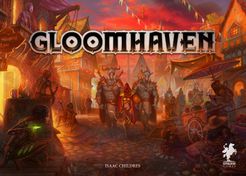
Lead an adventuring party through an evolving campaign world with card-driven tactical combat.
Gloomhaven supports 1–4 players; community best: 3 players; playing time: 60–120 minutes. A WANGO browser trial has not been confirmed.
Background & introduction
A band of adventurers enters dangerous territory, and their decisions change the campaign world. Characters have different abilities and motivations, but must cooperate against monsters controlled by the game. Experience, equipment and the consequences of completed scenarios shape the party's next choices.
Each combat round begins by choosing two cards from a character's hand. Use the top action of one and the bottom action of the other, with a selected initiative value setting turn order. The same pair of cards can often be used in different ways, so consider your allies' positions while balancing movement, attacks and timing.
Cards are also a finite resource throughout a scenario. Spending them too quickly, or progressing too slowly, can leave a character exhausted before the objective is complete. Between scenarios, the party follows new leads and makes decisions that open further locations and story branches.
Core rules & scoring
Complete the current scenario's objective and play out the round as directed by the scenario-ending rules. In original scenario 1, Black Barrow, the goal is to kill all enemies; every character need not survive, and exhausted characters can still receive successful-scenario rewards. The party fails if all characters become exhausted or a scenario-specific failure condition is triggered.
Secretly choose two cards or declare a long rest; reveal character cards and an ability card for each monster type present; take character, monster and initiative-99 long-rest turns in one initiative order. At the end of each character's turn, immediately loot that character's current hex. At round end, wane elements, resolve shuffle symbols and clear round effects; eligible characters may short rest. Then begin another round or end the scenario as its objective directs.
Compare character leading cards and the ability cards of all monster types present in one initiative order, lowest first. Within a monster type, elites act before normals, each in ascending standee-number order. Characters win initiative ties against monsters. Tied characters compare their other cards, then decide if still tied; players decide ties between monster types. Initiative-99 long rests belong to this same order.
The leading card determines initiative only. Use the top action of either chosen card and the bottom action of the other, in either order. Resolve the abilities within each action in printed order without interleaving the other action. Any top action may instead be a basic Attack 2 and any bottom action a Move 2; discard a card used this way without applying its printed lost-card symbol.
Resting returns discarded cards to your hand, but ordinary rests do not recover lost cards. Both rests require at least two discards and lose one of them. Short rest at round end loses a random card; once per rest, suffer one damage to randomly lose a different card instead. Declare a long rest at round start with initiative 99; choose the lost card, Heal 2 and refresh spent items, but not consumed items.
Normal movement can pass through allies, but not enemies, obstacles or walls, and cannot end in another figure's hex. Attacks require range and line of sight. Melee attacks normally have range one, and ranged attacks against adjacent enemies have Disadvantage. For each attack target separately, apply the attacker's bonuses and penalties, draw an attack modifier card, then apply the defender's shield and other defensive reductions.
Monsters perform only the actions on their current ability card, in the printed order; they do not add movement or attacks absent from that card. Use the appropriate normal or elite statistics for each monster, determine its focus and resolve the listed actions, taking its turn within the shared initiative order.
At the start of a round, a character with fewer than two cards in hand can still long rest with at least two discards. Card shortage exhausts the character only if both piles have fewer than two cards. When taking an instance of damage, you may lose one card from your hand or two from your discard pile to negate that damage; additional effects still apply. Your two selected but unplayed cards are not in either pile and cannot be lost this way. Actually reaching zero hit points causes immediate exhaustion and removal of the figure. Recover lost and discarded ability cards after the scenario. Exhausted characters keep previously earned experience and money and can still complete battle goals and receive rewards if the scenario succeeds.
Rules & gameplay questions
Why can monsters act between two characters?
Compare character leading cards and the ability cards of all monster types present in one initiative order, lowest first. Within a monster type, elites act before normals, each in ascending standee-number order. Characters win initiative ties against monsters. Tied characters compare their other cards, then decide if still tied; players decide ties between monster types. Initiative-99 long rests belong to this same order.
Are lost cards permanently removed, and how do short and long rests differ?
Resting can return discarded cards to your hand, but ordinary rests cannot recover lost cards. All return after the scenario, so losing a card normally does not remove it permanently from the campaign. Both rests require at least two discards and lose one: a short rest at round end chooses randomly, with one chance to suffer one damage and randomly choose a different card; a long rest is declared at round start, uses initiative 99, lets you choose the lost card, provides Heal 2 and refreshes spent items, but not consumed items.
Must I use the leading card's top action, and can I move before attacking?
The leading card determines initiative only. Use the top action of one chosen card and the bottom action of the other, in either order. Resolve each action's abilities in printed order without interleaving the other action. Any top action may instead be a basic Attack 2 and any bottom action a Move 2; discard a card used this way without applying its printed lost-card symbol.
Am I exhausted as soon as I have one card left, and does an exhausted ally cause defeat?
Check card shortage at the start of a new round. With fewer than two cards in hand but at least two discards, you can still long rest; exhaustion from card shortage occurs only when both piles have fewer than two cards. When taking an instance of damage, you may lose one card from your hand or two from your discard pile to negate that damage; additional effects still apply. Your two selected but unplayed cards are not in either pile and cannot be lost this way. Actually reaching zero hit points immediately exhausts a character, removes the figure and ends their participation in the scenario. Exhaustion automatically defeats the party only when everyone is exhausted. A successful scenario does not require every character to survive: exhausted characters retain their experience and money, may complete battle goals and receive success rewards.
Rules & introduction sources
- Edition
- Original 2017 Gloomhaven, rulebook back cover marked Second Printing (not the 2025 Second Edition); 2–4 players, first game using scenario 1.
- Rule references
- Introduction source
- BoardGameGeek
WANGO editorial
| Parameter | Recorded value |
|---|---|
| BGG overall rank (snapshot) | #4 |
| Complexity Weight | 3.92 / 5 |
| Best player count (community) | 3 |
| Player range | 1–4 |
| Playing time (minutes) | 60–120 |
| Core mechanisms | Action Queue · Action Retrieval · Campaign / Battle Card Driven · Card Play Conflict Resolution · Communication Limits · Cooperative Game · Critical Hits and Failures · Deck Construction · Grid Movement · Hand Management · Hexagon Grid · Legacy Game · Line of Sight · Modular Board · Movement Points · Multi-Use Cards · Multiple Maps · Narrative Choice / Paragraph · Once-Per-Game Abilities · Player Elimination · Role Playing · Scenario / Mission / Campaign Game · Simultaneous Action Selection · Solo / Solitaire Game · Storytelling · Tags · Variable Player Powers |
| Chinese publication | Unconfirmed |
| WANGO browser play | No confirmed WANGO trial |
| Year published | 2017 |
| Suggested age | 14+ |
BGG statistics are stored snapshots, not live rankings. Source checked:2026-09-26
Player questions
What is the best player count for Gloomhaven, and can I play online?
Gloomhaven supports 1–4 players; community best: 3 players; playing time: 60–120 minutes. A WANGO browser trial has not been confirmed. Recorded mechanism tags: Solo / Solitaire Game.
How complex is Gloomhaven, and which mechanisms does it use?
Weight: 3.92 / 5. Mechanisms: Action Queue · Action Retrieval · Campaign / Battle Card Driven · Card Play Conflict Resolution · Communication Limits · Cooperative Game · Critical Hits and Failures · Deck Construction · Grid Movement · Hand Management · Hexagon Grid · Legacy Game · Line of Sight · Modular Board · Movement Points · Multi-Use Cards · Multiple Maps · Narrative Choice / Paragraph · Once-Per-Game Abilities · Player Elimination · Role Playing · Scenario / Mission / Campaign Game · Simultaneous Action Selection · Solo / Solitaire Game · Storytelling · Tags · Variable Player Powers. Chinese publication: Unconfirmed.
Where can I learn Gloomhaven?
Available resources: Strategy https://wangogame.com/wiki/analysis/gloomhaven