Chess
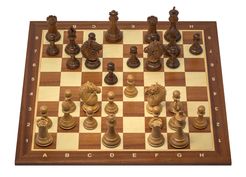
Chess, also called 西洋棋 or 国际象棋 in Chinese, is a classic two-player strategy game. Each side starts with sixteen pieces and aims to checkmate the opposing king. Different piece movements, king safety and pawn promotion shape each decision.
Chess supports 2 players; community best: 2 players; playing time is not available. A WANGO browser trial is available.
Background & introduction
Chess, also called 西洋棋 or 国际象棋 in Chinese, is a classic two-player strategy game. Each side starts with sixteen pieces and aims to checkmate the opposing king. Different piece movements, king safety and pawn promotion shape each decision.
Win by checkmating the opposing king: it is attacked and no legal move removes the attack. Kings are never captured. Having no legal move without being in check is stalemate, a draw.
Chess is also called 西洋棋 or 国际象棋 in Chinese and is distinct from Xiangqi. This guide covers classic moves and the controls and adjudication limits of the WANGO casual edition. It supports AI practice, local two-player games and friend rooms.
Core rules & scoring
The king moves one adjacent square; the queen along ranks, files or diagonals; the rook along ranks or files; the bishop diagonally; the knight makes an L-shaped leap. Pawns move forward, capture diagonally and may initially advance two squares.
Moving the king or the relevant rook loses that castling right. The path must be clear; the king may not be in check or cross or land on an attacked square.
En passant is available only immediately after the adjacent opposing pawn advances two squares. Promotion offers queen, rook, bishop or knight, regardless of earlier captures. WANGO commits the complete move after this choice.
Checkmate means the king is attacked with no legal escape, so that side loses. Stalemate means the side to move has no legal move but is not in check, so the game is drawn.
Rules & gameplay questions
Are 西洋棋 and 国际象棋 the same game?
Yes. Both names refer to Chess. WANGO uses 国际象棋 as its Chinese title and retains the other names as search aliases. Xiangqi has a separate entry.
How do the six pieces move?
The king moves one adjacent square; the queen along ranks, files or diagonals; the rook along ranks or files; the bishop diagonally; the knight makes an L-shaped leap. Pawns move forward, capture diagonally and may initially advance two squares.
When is castling unavailable?
Moving the king or the relevant rook loses that castling right. The path must be clear; the king may not be in check or cross or land on an attacked square.
How do en passant and promotion work?
En passant is available only immediately after the adjacent opposing pawn advances two squares. Promotion offers queen, rook, bishop or knight, regardless of earlier captures. WANGO commits the complete move after this choice.
How do checkmate and stalemate differ?
Checkmate means the king is attacked with no legal escape, so that side loses. Stalemate means the side to move has no legal move but is not in check, so the game is drawn.
How are repetition and fifty moves handled?
Threefold repetition or fifty moves by each side without a pawn move or capture can be claimed. Fivefold repetition or seventy-five such moves is automatic; a final checkmate takes priority. Repetition also considers the side to move and relevant move rights.
Does WANGO recognize every dead position?
Automatic recognition covers bare kings, a single bishop or knight against a bare king, and bishop-only positions with all bishops on one square color. Other rare dead positions require an agreed draw; this is not a complete tournament arbiter.
How do practice, local and friend games differ?
AI practice offers beginner and standard partners, hints and undo. Local undo needs both players’ agreement. Friend play validates moves on the server and has no computer hints or undo. Disconnecting is not an automatic loss.
Rules & introduction sources
- Edition
- Classic 64-square Chess; WANGO wango-chess-classic-v1
- Rule references
- Introduction source
- BoardGameGeek
WANGO editorial
| Parameter | Recorded value |
|---|---|
| BGG overall rank (snapshot) | #463 |
| Complexity Weight | 3.64 / 5 |
| Best player count (community) | 2 |
| Player range | 2 |
| Playing time (minutes) | Not available |
| Core mechanisms | Grid Movement · Once-Per-Game Abilities · Pattern Movement · Square Grid · Static Capture · Sudden Death Ending |
| Chinese publication | Unconfirmed |
| WANGO browser play | Available · browser trial |
| Year published | 1475 |
| Suggested age | 6+ |
BGG statistics are stored snapshots, not live rankings. Source checked:2026-09-27
Player questions
What is the best player count for Chess, and can I play online?
Chess supports 2 players; community best: 2 players; playing time is not available. A WANGO browser trial is available.
How complex is Chess, and which mechanisms does it use?
Weight: 3.64 / 5. Mechanisms: Grid Movement · Once-Per-Game Abilities · Pattern Movement · Square Grid · Static Capture · Sudden Death Ending. Chinese publication: Unconfirmed.
Where can I learn Chess?
Available resources: Rule guide https://wangogame.com/wiki/games/chess?tab=howto;Strategy https://wangogame.com/wiki/analysis/chess;Play online https://play.wangogame.com/chess/