Monikers
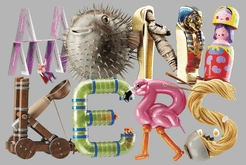
Monikers (BGG 156546, 2015 classic edition) is a team-based name-guessing party game in which clue restrictions tighten over three rounds and card points determine the winning team.
Monikers supports 4–16 players; community best: 6, 8, 10 players; playing time: 30–60 minutes. A WANGO browser trial has not been confirmed.
Background & introduction
The classic edition of Monikers is a party name-guessing game for two teams. Teams take turns assigning one clue giver while the rest of that team guesses names from cards. The printed rules have players select cards for a shared deck, then alternate timed turns. The group may agree on a timer length and a standard for judging near answers before play begins.
A game has three rounds that reuse the same cards while restricting clues more each time. In round one, clues are broad; in round two, the clue giver may use only one word; in round three, clues are acted out. Since the cards have already appeared, players remember names, clues, and their team’s associations. Each round therefore shifts from free explanation to compressed hints and then to shared memory and performance.
A clue giver tries to help their team guess as many cards as possible before the timer ends. A correctly guessed card is kept by that team for scoring; a difficult card can be skipped and revisited later. Skipping does not end the game, so teams balance time against the remaining cards. At the end of each round, the printed values of guessed cards are added to the team’s total; the lower-scoring team starts the next round, and the higher total wins after round three.
This entry follows the 2015 classic rules associated with BGG 156546, not CMYK’s current MON00REV. CMYK describes the current edition as a refreshed standalone deck with no points, and its third round is silent charades; the classic printed sheet still scores card values and permits reasonable sound effects in round three. The two editions should not be combined: use the classic scoring only with the classic cards and rules, and use the new in-box rules for MON00REV.
Core rules & scoring
Teams and card selection: The classic sheet recommends two teams. Deal ten cards to each player; each person secretly chooses five cards for the game and returns the rest to the box. Shuffle all selected cards into one shared deck of roughly 40–50 cards, adjusting the deal and selection for group size. The team with the best story about meeting someone famous may start, or the group may choose randomly.
Rounds and clue givers: The standard game has three rounds. Teams alternate turns, choosing one clue giver who has about 60 seconds to help teammates guess names from the shared deck. The other team then takes a turn. Players should rotate clue givers so everyone has a chance. For groups of ten or more, the sheet allows an optional adjustment to roughly 30–45 seconds; that is a house adjustment, not the standard timer.
Round one clues: In the first round, a clue giver may use words, sounds, or gestures, but may not say the name on the card. Saying any part of the answer means the card must be skipped. Reading the extra clue text printed on the card is allowed. The team may guess several names during a turn; guessed cards are kept for the team’s score, and a difficult card can be skipped so the clue giver can try another one before time runs out.
Round two clues: Shuffle the cards used in the previous round and play the same names again. In round two, a clue giver may use one word only; the word may be repeated, but sounds and gestures are not allowed. Since the same names appeared in round one, teammates use their memory and the associations made earlier. The clue giver must keep the hint to one word while guessers connect it to a familiar answer.
Round three clues: The classic edition’s third round is acted charades: the clue giver may not speak words, but the printed rules allow sound effects “within reason.” This differs from current MON00REV, whose public product summary specifies silent charades. The classic round continues to use the same shared names, so teammates recall people and associations from earlier turns.
Skipping, timing, and the deck: Skipping is encouraged when a name is difficult; a clue giver may move past it and return if time allows. Stop the turn when the timer ends. A team keeps cards it guessed, while unguessed and skipped cards remain available. After each turn, shuffle skipped cards back into the remaining unguessed deck for the next team. A round ends after every card in that round’s deck has been guessed.
Round scoring and next-round start: At the end of each round, add the printed point values of cards each team guessed and record the totals. Shuffle the entire selected deck for the next round. The team with the lower cumulative score starts next, giving the trailing team first opportunity to clue. Printed card values are part of the 2015 classic rules; CMYK’s revised product has officially removed points.
Ending and winner: After all three rounds, compare the teams’ cumulative printed-card scores. The team with the higher total wins. The 2016 classic instruction sheet does not state a tie-breaker. If totals are tied, the rules do not name a winner; the table may agree beforehand to call it a draw or settle it informally, but that would be a house agreement rather than an official publisher rule.
Answer judgment and casual play: The clue giver decides during their timed turn whether a guess is close enough; the team may discuss borderline answers after time stops. The sheet recommends not accepting abbreviations, spelling, or initials, while leaving the strictness of near answers to the group’s agreed standard. It also permits relaxed play without scorekeeping. More than two teams, cooperative play, and extra clue restrictions are variants, not the standard two-team scoring sequence.
Edition choice: BGG 156546 is the 2015 classic game. This entry’s card selection, printed points, lower-score team starting first, and three-round winner follow its classic rules. CMYK’s current MON00REV is a standalone 440-card refresh with new art and content; its official product synopsis says points have been removed and round three uses silent charades. Public official material reviewed here does not verify the new edition’s full ending or winner calculation, so do not infer that the team guessing the most cards wins.
Rules & gameplay questions
How does each player choose cards at the start?
The classic sheet suggests dealing ten cards to each player and having each person secretly choose five for the game. Return the unchosen cards to the box, then shuffle all selected cards into one shared deck of about 40–50 cards. Adjust the number selected for group size to keep play at a suitable length. The table can choose the starting team randomly, and clue-giver rotation should give everyone a turn.
What kinds of clues are allowed in round one?
Round one allows words, sounds, and gestures, but the clue giver cannot say the name on the card; saying any part of the name means skipping it. Reading the extra clue text printed on the card is allowed. The goal is to get teammates to guess as many names as possible before the timer ends. A guessed card stays with that team for scoring, while a skipped card can be tried later.
Why can the clue giver use only one word in round two?
That is the rule for the second clue round: the clue giver may say one word, and may repeat that word, but cannot add sounds or gestures. The same cards are used again, so players rely on names and associations they remember from round one. A clue giver should choose a word that cues the team’s shared memory, while guessers identify a familiar name from a very short hint.
Can players make sounds during round three of the classic game?
Reasonable sound effects are allowed, but the clue giver may not speak words; round three is primarily charades. This rule comes from the printed 2016 Buffalo Games sheet for the classic BGG 156546 game. CMYK’s current MON00REV summary describes silent charades instead, so buyers of that revised 440-card edition should follow its in-box rules rather than carry the classic sound allowance over.
May a team skip a card, and does it lose the card?
A team may skip a difficult name, and the classic sheet encourages skipping instead of spending the whole turn stuck on one card. The card is not permanently discarded: after the timed turn, skipped cards are shuffled back with the remaining unguessed cards for the other team. Cards guessed correctly are kept by that team for the round’s scoring. A round ends when all names in the deck have been guessed.
When does a round end, and how does the next round begin?
A round ends once every name in that round’s deck has been guessed. Each team adds the printed point values of the cards it guessed and records its score, then the full selected deck is shuffled for the next round. The team with the lower cumulative score starts. The cards stay the same across all three rounds; what changes is the clue restriction and the players’ growing familiarity with the names.
How is the classic game scored, and who starts the next round?
Each correctly guessed card contributes its printed point value to that team’s round score, and the scores accumulate across rounds. The lower-scoring team starts the next round. After three rounds, the team with the higher total wins. This scoring belongs to the 2015 classic rules; CMYK’s current revised edition explicitly removes points, so do not use old card values to score MON00REV.
What happens if the teams are tied after three rounds?
The classic 2016 instruction sheet does not give a tie-break rule, so the publisher’s rules do not determine a winning team in that case. The group may agree before play to treat a tie as a draw or settle it informally, but should describe that as a house agreement. Do not substitute remaining time, card count, or the last guessed card; none is specified as an official tie-break.
Can we play without scoring or with more than two teams?
Yes, the classic sheet allows a casual version without scorekeeping and lists variants for more than two teams, cooperative play, and extra clue restrictions. Those are alternatives to the standard game, not part of its normal scoring procedure. Standard play uses two teams, alternating clue turns, three rounds of tighter clue limits, printed card points, and a final comparison of cumulative scores. Agree on a winner rule before using a variant.
Does this Monikers entry describe the current 440-card edition?
No. BGG 156546 identifies Monikers (2015), and this entry follows the classic Buffalo Games 2016 rules for card selection, printed scoring, and the winner. CMYK’s current MON00REV is a standalone refresh that officially removes points and changes round three to silent charades. Its public synopsis does not establish the full ending or winner procedure, so current-edition owners should use the new rules included in their box.
Rules & introduction sources
- Edition
- This entry covers the 2015 classic base game listed as BGG 156546, using Buffalo Games’ 2016 retail instruction sheet. Buffalo’s publisher-hosted PDF returned 404 when reviewed, so the same publisher-issued sheet was checked in a readable third-party copy. CMYK’s current MON00REV is a redesigned standalone 440-card edition that officially removes points and uses silent charades; its rules are not mixed into this classic entry. Buyers of MON00REV should use its current in-box rules, since the public official synopsis reviewed here does not confirm the revised edition’s complete scoring, end, or winner procedure.
- Rule references
- Buffalo Games — Monikers 2016 classic instructions (publisher URL, unavailable when reviewed)
- Board Game Capital — readable copy of the Buffalo Games classic instruction sheet
- CMYK — current Monikers revised 440-card product page
- CMYK — official Monikers overview
- CMYK — About page listing Monikers (2015)
- Introduction source
- BoardGameGeek
WANGO editorial
| Parameter | Recorded value |
|---|---|
| BGG overall rank (snapshot) | #305 |
| Complexity Weight | 1.09 / 5 |
| Best player count (community) | 6, 8, 10 |
| Player range | 4–16 |
| Playing time (minutes) | 30–60 |
| Core mechanisms | Acting · Communication Limits · Open Drafting · Role Playing · Singing · Team-Based Game |
| Chinese publication | Unconfirmed |
| WANGO browser play | No confirmed WANGO trial |
| Year published | 2015 |
| Suggested age | 17+ |
BGG statistics are stored snapshots, not live rankings. Source checked:2026-09-27
Player questions
What is the best player count for Monikers, and can I play online?
Monikers supports 4–16 players; community best: 6, 8, 10 players; playing time: 30–60 minutes. A WANGO browser trial has not been confirmed. Recorded mechanism tags: Team-Based Game.
How complex is Monikers, and which mechanisms does it use?
Weight: 1.09 / 5. Mechanisms: Acting · Communication Limits · Open Drafting · Role Playing · Singing · Team-Based Game. Chinese publication: Unconfirmed.
Where can I learn Monikers?
No rule guide, strategy article or WANGO trial has been confirmed for this record.