Dead of Winter: A Crossroads Game
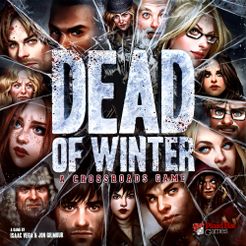
Dead of Winter combines colony survival with private objectives. Completing the shared objective does not automatically make every player a winner.
Dead of Winter: A Crossroads Game supports 2–5 players; community best: 4 players; playing time: 60–120 minutes. A WANGO browser trial has not been confirmed.
Background & introduction
Dead of Winter is a survival game in which each player controls a group within a shared colony. Survivors search outside locations for food, medicine and fuel while zombies threaten the entrances. Everyone faces common emergencies, but each player also has a private objective. Winning means satisfying that objective when the game ends, rather than simply belonging to a successful colony.
A useful item can meet several competing needs: feeding the colony, preventing a crisis, or fulfilling a personal condition. Standard setup allows a betrayal objective to be dealt without guaranteeing that anyone receives it. Keeping an item is therefore not proof of betrayal. Suspicion is part of the discussion, while the consequences still follow the cards, legal actions and voting rules.
Crossroads events connect the current turn to specific people and circumstances. Movement and zombie kills bring exposure risks; food, waste and defenses create ongoing maintenance pressure. This guide covers the original multiplayer base game, keeping The Long Night modules and cooperative variants outside its scope.
Core rules & scoring
Setup: choose a main objective and follow its morale, round and board instructions. Mix two non-betrayal secret objectives per player with one betrayal objective, deal one each, and put the rest away unseen. Betrayal is possible, not guaranteed. Deal five starting items and four survivors per player; keep two survivors, select a leader and place them at the colony. Highest leader influence takes first player. Never reveal your secret objective.
Round: reveal a crisis, roll action dice, take complete player turns clockwise, then resolve the colony phase. Each player rolls one die plus one per controlled survivor. Dice belong to the whole group, so one survivor can spend several dice. A newly gained survivor does not generate an extra die until the next roll-action-dice step.
Dice actions: attack and search require a die meeting the acting survivor’s respective value. Barricade, clean waste and attract use any result. A zombie attack kills one at the same location, then requires exposure. Attacking another player’s survivor uses the attack die and then a roll no higher than the target’s attack value to inflict a wound and steal a random hand card; it does not require exposure. You cannot attack your own survivors or helpless survivors. Cleaning waste requires one of your survivors at the colony and removes its top three waste cards.
Search: choose a survivor outside the colony and spend a die meeting the search value. Look at the top item card. You may keep it or make noise in an empty noise slot to look at another. Continue while slots remain, then keep exactly one card and return the rest to the bottom of that deck. A location has four noise spaces for the round. Another search costs another eligible die.
Without dice: legal options include playing items, contributing to the crisis, moving, requesting items, handing off equipment and initiating an exile vote. Each survivor normally moves once on your turn, needs an empty destination space and rolls exposure afterwards. Each colony food token spent raises one unused action die by one. Requested cards must be revealed and immediately played; they cannot be kept or contributed to the crisis.
Crisis: each matching contributed card adds one point; each nonmatching card subtracts one. A card producing multiple food still counts as one contribution, and does not also produce its normal effect. Shuffle contributions before revealing them, meet the printed requirement and remove the contributed cards from the game. The standard requirement uses non-exiled players; exceeding the player requirement by at least two earns one morale, subject to the crisis text.
Exposure: movement and zombie kills normally require a roll. Blank does nothing; wound adds one wound; frostbite counts as a wound and causes one additional normal wound at the start of its controller’s later turns for each affected survivor, regardless of how many frostbite tokens it has. Three wounds kill. A bite kills immediately and spreads to the lowest-influence survivor at that location. That survivor may die to stop it or roll again: only blank survives and stops the spread; any other result kills and spreads it again.
Colony: pay food, check waste, resolve the crisis, add zombies, check the main objective, reduce rounds, then pass first player to the right. Feed colony occupants, including helpless survivors, at one food per two rounded up; survivors outside need no colony food. If food is insufficient, remove none, add a starvation token and lose morale equal to all starvation tokens now present. Each complete ten waste cards costs one morale, without automatically clearing them.
Zombies: add one per two colony occupants rounded up, and one per survivor at outside locations. Roll for each removed noise token; a result of three or less adds a zombie there. At the colony distribute incoming zombies across entrances 1–6 in order. At a full entrance a barricade cancels the incoming zombie and is removed. With no empty space or barricade, kill the lowest-influence survivor there; use a helpless survivor if only helpless survivors remain. Death normally costs one morale; exiled survivors are an exception.
Crossroads and exile: the player to your right secretly reads a crossroads card at your turn’s start. Reveal it only when its trigger occurs, resolve the choice immediately and remove it; untriggered cards go to the deck bottom. Once on your turn you may initiate a vote to exile someone else. Vote simultaneously, with first player breaking ties. The exiled player draws an objective modifier, moves colony survivors outside and continues under exile restrictions, including no crisis contributions or voting. If two exiled players both lacked betrayal objectives, morale immediately becomes zero.
End and victory: completing the main objective at its check ends play immediately. Morale zero or rounds zero also ends immediately, without an additional objective check. Evaluate each private objective and any exile modifier separately: some players may win while others lose, or everyone may lose. A player losing their last survivor removes all hand cards and gains a new leader instead of being eliminated. Card text overrides general rules; medicine cannot interrupt an already lethal third wound or bite.
Rules & gameplay questions
Does completing the main objective make everyone win?
No. Evaluate every private objective separately when play ends. Many loyal objectives require both colony success and a further personal condition. Multiple winners, mixed wins and losses, or no winners are possible. Morale or rounds reaching zero ends immediately without an extra main-objective check. Apply exile modifiers where relevant.
Is a betrayer guaranteed in the standard game?
No. Setup mixes two non-betrayal objectives per player with one betrayal objective, deals only one per player and hides the unused cards. The betrayal card may remain undealt. Keeping supplies can also reflect a non-betrayal personal condition, so a refusal to contribute does not mechanically confirm identity. Secret objectives cannot be shown.
Does a three-food item contribute three crisis points?
No. A matching card contributes one point and a nonmatching card subtracts one, regardless of its normal output. Three matching cards and one wrong card make a net two points. Contributions do not also supply food and are removed after resolution, so a single card cannot serve both purposes.
Can I act after using all my dice?
Yes, if the action does not need a die and its conditions remain satisfied. Each survivor still normally moves only once on your turn, needs space and rolls exposure. A requested item must be played immediately and cannot enter the crisis. Dice are shared within your group rather than assigned individually.
Can I keep every card found by making noise?
No. Keep exactly one from that search and put the rest under the location deck. Noise increases your choices rather than your final hand gain. The four noise slots are shared for the round, and each token later risks an extra zombie on a roll of three or less. A separate search requires another eligible die.
Does a shortage spend all food and cost just one morale?
No. Leave the insufficient food supply untouched, add a starvation token, then lose morale equal to the total starvation tokens. A second shortage with one existing token therefore costs two morale. Count only colony occupants, including helpless survivors, at one food per two rounded up; survivors outside forage for themselves.
Can medicine stop a bite, and does exile eliminate me?
Medicine cannot interrupt bite death or rescue someone already receiving a lethal third wound. A spreading bite follows its sacrifice-or-roll procedure. Exile is different: draw an objective modifier and continue playing with survivors outside the colony and restrictions such as no crisis contributions or votes. It does not remove the player from the game.
Rules & introduction sources
- Edition
- Dead of Winter: A Crossroads Game original base game, standard multiplayer rules. Excludes The Long Night, expansions and cooperative variants; follow the selected objective and card text for exceptions.
- Rule references
- Introduction source
- BoardGameGeek
WANGO editorial
| Parameter | Recorded value |
|---|---|
| BGG overall rank (snapshot) | #256 |
| Complexity Weight | 3.01 / 5 |
| Best player count (community) | 4 |
| Player range | 2–5 |
| Playing time (minutes) | 60–120 |
| Core mechanisms | Action Points · Area Movement · Dice Rolling · Hand Management · Narrative Choice / Paragraph · Push Your Luck · Scenario / Mission / Campaign Game · Semi-Cooperative Game · Storytelling · Trading · Traitor Game · Turn Order: Progressive · Variable Player Powers · Voting |
| Chinese publication | Unconfirmed |
| WANGO browser play | No confirmed WANGO trial |
| Year published | 2014 |
| Suggested age | 13+ |
BGG statistics are stored snapshots, not live rankings. Source checked:2026-09-27
Player questions
What is the best player count for Dead of Winter: A Crossroads Game, and can I play online?
Dead of Winter: A Crossroads Game supports 2–5 players; community best: 4 players; playing time: 60–120 minutes. A WANGO browser trial has not been confirmed.
How complex is Dead of Winter: A Crossroads Game, and which mechanisms does it use?
Weight: 3.01 / 5. Mechanisms: Action Points · Area Movement · Dice Rolling · Hand Management · Narrative Choice / Paragraph · Push Your Luck · Scenario / Mission / Campaign Game · Semi-Cooperative Game · Storytelling · Trading · Traitor Game · Turn Order: Progressive · Variable Player Powers · Voting. Chinese publication: Unconfirmed.
Where can I learn Dead of Winter: A Crossroads Game?
No rule guide, strategy article or WANGO trial has been confirmed for this record.