Cthulhu Wars
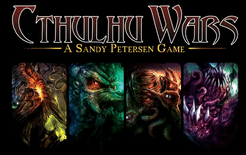
Cthulhu Wars is an asymmetric area-control strategy game. Factions fight over Gates on an Earth map, spend Power on actions, unlock their own Spellbooks, and race to qualify for and lead the final Doom scoring.
Cthulhu Wars supports 2–4 players; community best: 4 players; playing time: 90–120 minutes. A WANGO browser trial has not been confirmed.
Background & introduction
Cthulhu Wars pits rival Great Old One factions against one another on a map of Earth as they compete for Gates, territory, and end-game resources. Each player commands an asymmetric faction, sending cultists, monsters, and a Great Old One onto the map to expand and battle other factions. Their powers and Spellbook requirements differ, so players need to understand their faction’s route to victory before deciding whether to expand, defend Gates, or commit to combat.
Power is the main action resource, normally supplied by cultists, controlled Gates, Abandoned Gates and faction powers. Starting with Action, players alternate paid opportunities to summon, move, build Gates, capture or initiate battle. Enemies can coexist: sharing an area does not automatically start combat. After actions, gather new Power and determine the next leader and direction, then score Gates and consider Rituals during Doom. Spellbooks and hidden Elder Signs further shape when a faction can pursue victory.
The game reaches its end when the Doom Track reaches its final space or the Ritual of Annihilation reaches Instant Death. Having the most Doom alone does not ensure victory: a player must first complete all six Spellbooks for their faction to qualify, then compare Doom with the other eligible players. The O4 base box includes four asymmetric factions: Great Cthulhu, Crawling Chaos, Black Goat, and Yellow Sign. It is a competitive game for two to four players, with no official solo or cooperative mode. Cthulhu Wars Duel is a separate product.
Core rules & scoring
Goal and factions: Players control the base factions Great Cthulhu, Crawling Chaos, Black Goat and Yellow Sign, contesting Gates, Power and Doom. Six Spellbooks are required for victory eligibility, after which eligible players compare Doom. Units, awakening requirements and book conditions differ by faction. The current base box supports two to four; three and four use the general sequence, while two-player play has a dedicated chapter.
Setup and four phases: Select the Earth map side and Ritual track for the player count. Follow faction setup for Cultists, the starting Gate, Power and Doom; Spellbooks wait to be earned. Begin with Action, followed by Gather Power, Determine First Player and Doom, then return to Action. Setup already provides the first Action phase’s Power, so do not insert an extra normal income phase before play.
Action: Beginning with the First Player and following the chosen direction, take one legal action at a time, paying Power first. With Power remaining you cannot simply pass for free; in the normal three/four-player rules you may voluntarily drop Power to zero. With zero Power even zero-cost actions are unavailable, but an ability granting new Power restores your ability to act. Continue until everyone has no Power.
Common actions and Gates: Recruit Cultist, Summon Monster, Awaken Great Old One, Move, Create Gate, Battle and Capture Cultist are the seven common actions, supplemented by faction and requirement actions. Movement normally costs one Power per unit to an adjacent area. Creating a Gate normally costs three Power and requires the appropriate Cultist and Gate conditions. Control normally comes from a Cultist atop the Gate, not merely a large unit; a Gate without a controller is Abandoned.
Power and order: Gain one Power per Cultist in play, two per controlled Gate, one for every Abandoned Gate on the map for every player, and Power for captured Cultists, which return to their owners. Add faction effects. Anyone below half the highest Power total increases to half, rounded up. Highest Power receives First Player; the previous First Player chooses among tied leaders. The new First Player chooses clockwise or counterclockwise order.
Doom and Ritual: First, everyone advances Doom by controlled Gates; Abandoned Gates give no Doom. In player order, each may perform at most one Ritual, paying its current track cost and advancing the marker, then scoring controlled Gates again and gaining Elder Signs for their faction Great Old Ones in play. Costs rise from five to ten as the track advances, so order affects expenditure. Resolve other Doom-phase faction effects at their stated timing.
Battle and capture: Enemy units sharing an area do not automatically fight. Choose and pay for Battle; units and abilities determine dice. Normally six gives a Kill, four or five a Pain, and lower results no effect. Assign results under the rules: Kills return units to the pool and Pains require legal retreats. Capture Cultist is a separate action governed by Monster/Great Old One protection; Cultists alone cannot capture enemies. Spellbooks can modify these normal outcomes.
Spellbooks: Meeting a faction requirement earns an available Spellbook to cover that requirement; later losing the condition normally does not remove the book. If earned during a Battle, wait until the whole Battle is resolved. Six books determine eligibility and unlock certain options as well as improving abilities. Observe each power’s timing, cost and mandatory or optional wording; a battle ability does not automatically work in other phases.
End timing: Thirty or more Doom, or the Ritual track reaching Instant Death, triggers the ending. If triggered in Doom, finish the entire Doom phase, including Ritual opportunities for players who have not had one; further Rituals cost ten. If revealing Elder Signs during Action reaches thirty, end at the completion of the current active player’s turn, rather than granting everyone a further round of actions.
Winner and two-player scope: Everyone may reveal Elder Signs before the final comparison. Highest Doom among players with six Spellbooks wins; tied eligible leaders share victory. If nobody has six, all players lose. Two-player rules use the three-player map side, four-player Ritual track and Decay marker; eliminated units can award the opponent Doom and voluntary reduction to zero Power is forbidden. Use that dedicated chapter rather than importing the normal three/four-player exit rule.
Rules & gameplay questions
What is the objective in Cthulhu Wars?
Players control different Great Old One factions and compete for Gates, Power, and Doom on the map. Actions and faction abilities help each player complete six Spellbooks and build an end-game score. When the game ends, only players who completed all six Spellbooks qualify; the eligible player with the most Doom wins.
How many players does the O4 base box support? Is it solo or cooperative?
Petersen Games lists the O4 base box for two to four players, ages 14 and up, with an estimated play time of about 90 minutes. It is a competitive area-control game, and the rules do not list official solo or cooperative play. Cthulhu Wars Duel is a separate two-player product, not a solo mode in this base box.
How does a round begin, and what is Power used for?
Setup supplies the first Action phase’s Power. Thereafter cycle through Action, Gather Power, First Player and Doom. Power pays for actions. In ordinary three/four-player play you cannot pass for free with Power left, but may reduce it to zero; the two-player rules prohibit that exit. Gathering normally counts Cultists, controlled and Abandoned Gates and captives, with a minimum of half the highest player’s total, rounded up.
What common actions can players take?
Common actions include summoning units from a faction pool, moving them to adjacent areas, building a Gate where allowed, capturing a Gate occupied by a unit, awakening a Great Old One when conditions are met, and unlocking Spellbooks. Action costs and additional options vary by faction, so use the chosen faction’s player aid and rule text rather than another faction’s costs.
What happens when opposing units enter the same area?
Sharing an area does not automatically cause battle. A player normally chooses and pays for Battle, calculates dice from units and abilities, then resolves sixes as Kills and fours/fives as Pains. Apply casualties and retreats under the rules. Capturing a Cultist is a separate action, requiring the target to lack the appropriate Monster or Great Old One protection. Coexistence, declaring battle and capture are different situations, and specific Spellbooks may modify normal results.
Why do Spellbooks matter to winning?
Each faction has six Spellbooks that players unlock by meeting their printed requirements. Spells can change actions, unit abilities, or scoring routes. The publisher’s detailed win guide makes all six completed Spellbooks a condition of victory eligibility: a player with the highest Doom still cannot win if their faction’s Spellbook is incomplete.
Where does Doom come from, and what ends the game?
Doom normally comes from controlled Gates during Doom, with Rituals adding Gate points again and producing Elder Signs. Thirty Doom or Instant Death triggers the end, but finish the full Doom phase and remaining Ritual opportunities. If Elder Signs revealed during Action reach thirty, end after the current active player’s turn. Reveal remaining Elder Signs before comparing total Doom among players who have all six books.
Why are Gates important?
Controlling a Gate usually provides its owner with additional Power in later rounds and contributes to Doom at round end. Power funds summons and movement, while Doom advances end-game scoring. Gates therefore affect the battlefield, economy, and victory plan; players should also consider whether they can defend a Gate before spreading too far.
Do the factions play the same way?
No. The O4 base box contains Great Cthulhu, Crawling Chaos, Black Goat, and Yellow Sign, each with distinctive units, abilities, and Spellbook requirements. The common rules provide a shared action framework, but faction powers can add, change, or replace parts of it. Players should consult their faction aid during a first game.
Which edition and FAQ does this overview use?
Detailed rules use the complete Omega compendium linked by the official support page; the O4 shop page supplies current box specifications. The compendium also includes expansions, so its later factions and maps are not all base-box content. The official FAQ supplements particular powers and timing cases but does not replace the manual. Check edition-specific printing and errata, and keep the standalone Duel rules separate.
Rules & introduction sources
- Edition
- This entry covers the Cthulhu Wars base game (BGG 139976), using the complete Omega compendium linked by Petersen Games’ official support page, especially printed pages 7–24 and 37–40 and the core factions. The O4 product page establishes current box specifications; expansion chapters are not automatically included. The general sequence below is for three or four players. Two-player play has separate Decay and scoring adjustments and is distinct from the standalone Duel product.
- Rule references
- Petersen Games — Cthulhu Wars O4 Edition official product page
- Petersen Games — How Do You Play Cthulhu Wars? Rules Overview
- Petersen Games — Scoring and Winning Strategy Guide
- Petersen Games — Cthulhu Wars Rules FAQ
- Petersen Games — Official product list (edition and expansion SKUs)
- BoardGameGeek — Cthulhu Wars, ID 139976
- Petersen Games — official full rulebook download page; Omega core printed pp. 7–24, 37–40
- Introduction source
- BoardGameGeek
WANGO editorial
| Parameter | Recorded value |
|---|---|
| BGG overall rank (snapshot) | #359 |
| Complexity Weight | 3.14 / 5 |
| Best player count (community) | 4 |
| Player range | 2–4 |
| Playing time (minutes) | 90–120 |
| Core mechanisms | Action Points · Area Majority / Influence · Area Movement · Dice Rolling · Variable Player Powers |
| Chinese publication | Unconfirmed |
| WANGO browser play | No confirmed WANGO trial |
| Year published | 2015 |
| Suggested age | 14+ |
BGG statistics are stored snapshots, not live rankings. Source checked:2026-09-27
Player questions
What is the best player count for Cthulhu Wars, and can I play online?
Cthulhu Wars supports 2–4 players; community best: 4 players; playing time: 90–120 minutes. A WANGO browser trial has not been confirmed.
How complex is Cthulhu Wars, and which mechanisms does it use?
Weight: 3.14 / 5. Mechanisms: Action Points · Area Majority / Influence · Area Movement · Dice Rolling · Variable Player Powers. Chinese publication: Unconfirmed.
Where can I learn Cthulhu Wars?
No rule guide, strategy article or WANGO trial has been confirmed for this record.