Legendary: A Marvel Deck Building Game
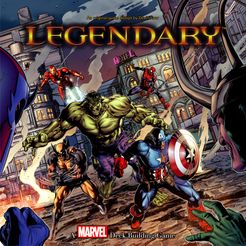
Legendary: A Marvel Deck Building Game combines team battles against a Mastermind with personal deck-building and scoring. Recruit Heroes, fight Villains, and stop the Scheme; the team result and each player's Victory Points are decided separately.
Legendary: A Marvel Deck Building Game supports 1–5 players; community best: 3 players; playing time: 30–60 minutes. A WANGO browser trial has not been confirmed.
Background & introduction
Legendary: A Marvel Deck Building Game combines a Marvel team battle with deck building. Players work together against a Mastermind and its Scheme, but each player maintains a personal deck, recruitment area, and Victory Pile. At setup, the group combines a Mastermind, a Scheme, Hero groups, Villain groups, and other cards, so the city's danger, special effects, and victory conditions can vary from one game to another.
Players begin with a small supply of S.H.I.E.L.D. Agents and Troopers, draw six cards each turn, and gradually recruit stronger Heroes into their decks. At the start of a Turn, a card from the Villain Deck may send a Villain into the city, advance a Scheme, bring in a Bystander, or trigger the Mastermind's strike. Players then play Heroes to build Recruit Points and Attack. Recruit Points buy new Heroes, while Attack defeats Villains or claims a Mastermind Tactic.
The game asks the group to prevent the Scheme while also tracking individual points. Defeating the Mastermind four times and taking all of its Tactics wins the team battle; completing the Scheme's Evil Wins condition defeats everyone. In the special deck-exhaustion ending, players also compare their Victory Piles for an individual winner. Players therefore cooperate to manage the advancing city while timing purchases, card order, and battles to build a stronger deck and personal score.
Core rules & scoring
Edition and decks: Use the 2012 First Edition core box with one Mastermind and four Tactics, plus a Scheme. Include its Always Leads Villain or Henchman group before filling the remaining required groups. Each chosen Hero contributes all fourteen cards: five Heroes make seventy cards for 2–4 players, while five players use six Heroes and eighty-four cards. Reveal five HQ cards. The box has separate solo setup, but this entry covers 2–5 players and does not import the 2026 Second Edition sequence.
Starting decks and counts: Each player shuffles eight Agents and four Troopers and draws six. For Villain groups / Henchman groups / individual Bystander cards, use 2/1/2 with two players, 3/1/8 with three, 3/2/8 with four, and 4/2/12 with five. The final number means single Bystanders, never groups. Add the Scheme’s stated Twists and five Master Strikes, apply its setup exceptions, then choose first player and proceed clockwise.
Villain step: At the start of the active player's Turn, reveal and resolve the top card of the Villain Deck. A Villain enters the city space closest to the deck, the Sewers. If that space is occupied, the new Villain pushes its occupant forward; this can create a chain reaction, and the Villain pushed past the fifth city space escapes. The city has five spaces, normally holding one Villain each. An escaping Villain resolves its Escape text; Scheme Twists and Master Strikes resolve their own Scheme or Mastermind text, usually going to the KO pile. A Bystander is captured by the closest Villain or by the Mastermind if the city is empty.
Playing Heroes: After the Villain card resolves, play Heroes from your hand in any order and resolve their abilities as they are played. Some Superpower abilities require that you previously played a qualifying Hero of the indicated class or team this Turn. Heroes generally provide Recruit Points, Attack, or both; follow the wording on the card for other effects. Players can spend resources during the card-play sequence instead of waiting until all cards are played.
Recruiting and HQ: Spend Recruit Points to gain a face-up Hero from the five-card HQ or a S.H.I.E.L.D. Officer when allowed. A recruited card goes to your personal discard pile, not directly into your hand. Refill an HQ card as soon as it is recruited; the replacement may create another option in the same Turn. Recruit Points are not Attack, so unused Recruit Points cannot be spent to fight a Villain or Mastermind.
Fight and Victory Pile: Have at least the target’s Attack before spending it to defeat the enemy; remaining Attack can fight other city Villains regardless of location. Put the Villain and held Bystanders in your Victory Pile, then resolve Fight. This follows the publisher’s 2014 common Fight sequence to interpret the conflicting 2012 sentence; it does not allow an unaffordable fight to generate its own missing Attack. Pay the Mastermind’s Attack to take a random remaining Tactic into Victory Pile, resolve its Fight and rescue all held Bystanders. Multiple fights are allowed; all four Tactics must fall for team victory.
Escape and Bystanders: A Villain pushed beyond the fifth space escapes. The active player must KO a Hero costing six or less from HQ and refill immediately. If any Bystanders escaped with it, every player discards exactly one card total, not one per Bystander; put them in the escaped pile. Resolve additional Escape text before the new Villain’s Ambush. A generic rescue-a-Bystander ability takes from the supply, not from a particular city Villain. A drawn Bystander, Twist or Strike does not itself push the city.
End of Turn and reshuffling: After recruiting, attacking, and resolving card effects, put your played cards and any unplayed cards in hand into your discard pile, then draw 6. Shuffle your discard pile into a new deck only when you need to draw and your deck is empty. Defeated Villains and rescued Bystanders go to your Victory Pile rather than back into your deck or the shared KO pile; their printed Victory Point values count toward your personal score.
Team result and individual winner: The team wins after defeating the Mastermind four times and removing all four Tactics. If the Scheme's Evil Wins condition is fulfilled, all players lose regardless of personal points. If the Villain Deck or Hero Deck runs out before the Scheme is completed, finish the current Turn and follow the First Edition exhaustion ending: good and evil are tied, but the player with the most Victory Points takes the individual victory. After a normal team victory, players also compare Victory Pile totals. Final Showdown and other challenge modes are optional.
KO and Wounds: KO puts cards in the shared out-of-game pile, distinct from personal discard and Victory Pile. Your Heroes normally means hand or cards played this turn, not deck or discard; KOing a played Hero does not undo resources it already produced. Wounds are not Heroes and provide no resources; ordinary gains go to discard. Healing can KO all Wounds in hand on a turn without recruiting or fighting Villains. An instruction to KO a Hero cannot KO a Wound. Exhausting Bystander, Wound or Officer supply alone does not end play or retrieve replacements from KO.
Rules & gameplay questions
Are the same Heroes and Villains used in every game?
No. Setup combines one Mastermind, one Scheme, several Villain and Henchmen groups, Bystanders, and multiple Hero groups; a five-player game uses an additional Hero group. The Mastermind and Scheme add their own setup instructions, city effects, and Evil Wins condition, so opponents and objectives vary by combination. The 2026 Second Edition uses different cards and rules and should not be mixed with this 2012 First Edition entry.
What happens first on a player's Turn?
The active player first reveals and resolves the top card of the Villain Deck. It may send a Villain into the Sewers and push other Villains through the city, resolve a Scheme Twist or Master Strike, or cause a Bystander to be captured. Only after the revealed card is fully handled does the player begin playing Heroes, recruiting, and attacking.
Can I use Recruit Points as Attack or vice versa?
No. Recruit Points buy Heroes from the HQ or S.H.I.E.L.D. Officers when allowed; recruited cards enter your discard pile. Attack is spent against the defense value of a city Villain or Mastermind. If you have enough Recruit Points but not enough Attack, you cannot defeat that enemy, and unspent Recruit Points do not automatically become Attack at the end of your Turn.
In what order may I play Heroes?
You may play Heroes from your hand in any order and resolve each ability as it is played. Some Superpower text requires that you first played a qualifying class or team Hero earlier in the same Turn, so order can determine whether that ability activates. Recruit Points and Attack accumulate separately, and they must be spent on their corresponding actions rather than treated as interchangeable resources.
How does a Villain escape, and what happens then?
A new city Villain can push an existing one beyond the fifth space. First KO an HQ Hero costing six or less and refill. If the escapee held any Bystanders, each player discards one card total regardless of how many it held. Then resolve its Escape text before the arriving Villain’s Ambush. No printed Escape text does not waive the general penalties, and a non-Villain card does not itself push the city.
Does defeating the Mastermind once win the team game?
No. Players spend enough Attack to fight the Mastermind and claim one face-down Tactic at a time. The Mastermind has four Tactics, and the team wins only after all four have been removed. Each Tactic may have a Fight effect that must be resolved under that card and the First Edition rules. The Mastermind is not a regular Villain, so effects that target Villains do not automatically affect it.
Do Scheme Twists or Master Strikes cause an immediate loss?
They resolve the instruction on the Scheme or Mastermind and usually go to the KO pile; they do not themselves move city Villains. Whether the game ends in an Evil Wins result depends on the condition printed on the Scheme, not simply on how many Twists or Strikes have appeared. If that condition is not yet met, the team can keep recruiting, rescuing, and fighting.
When do I shuffle my personal deck?
At the end of your Turn, put played cards and unplayed cards from your hand into your discard pile, then draw six. Do not automatically shuffle after every Turn. Shuffle your discard pile into a new deck only when you need to draw cards and your draw deck is empty. A recruited Hero goes to the discard pile and may be drawn after a later reshuffle.
What does it mean if the Villain Deck or Hero Deck runs out?
If either deck runs out before the Scheme is completed, finish the current Turn and use the 2012 First Edition exhaustion ending. The battle between good and evil is a draw, but players still compare their Victory Piles and the highest Victory Point total earns the individual win. If the Scheme's Evil Wins condition is completed, every player loses; deck exhaustion is not the same as defeating the Mastermind or winning for the team.
Can the First Edition Fight sentence let an unaffordable fight pay for itself?
No. The 2012 page13 sentence says Fight occurs before comparing Attack, conflicting with its surrounding payment and Victory Pile steps. This entry interprets it using the publisher’s 2014 Villains manual: it declares the same fundamental rules and explicitly orders payment, Victory Pile, then Fight. Have and spend enough Attack first. This states the interpretive basis rather than presenting a community FAQ as an independently published 2012 erratum.
Rules & introduction sources
- Edition
- Upper Deck’s 2012 First Edition Legendary: A Marvel Deck Building Game core set, BGG129437, covering the default 2–5 player flow. Excludes solo, Final Showdown, challenge modes, expansion components and the 2026 Second Edition. General Fight timing is interpreted by cross-checking the 2012 text with the publisher’s 2014 Villains manual, which states it uses the same fundamental rules; see the FAQ on the printing conflict. No community compilation is presented as a standalone publisher erratum.
- Rule references
- Introduction source
- BoardGameGeek
WANGO editorial
| Parameter | Recorded value |
|---|---|
| BGG overall rank (snapshot) | #286 |
| Complexity Weight | 2.43 / 5 |
| Best player count (community) | 3 |
| Player range | 1–5 |
| Playing time (minutes) | 30–60 |
| Core mechanisms | Deck, Bag, and Pool Building · Events · Open Drafting · Semi-Cooperative Game · Solo / Solitaire Game · Variable Set-up |
| Chinese publication | Unconfirmed |
| WANGO browser play | No confirmed WANGO trial |
| Year published | 2012 |
| Suggested age | 14+ |
BGG statistics are stored snapshots, not live rankings. Source checked:2026-09-27
Player questions
What is the best player count for Legendary: A Marvel Deck Building Game, and can I play online?
Legendary: A Marvel Deck Building Game supports 1–5 players; community best: 3 players; playing time: 30–60 minutes. A WANGO browser trial has not been confirmed. Recorded mechanism tags: Solo / Solitaire Game.
How complex is Legendary: A Marvel Deck Building Game, and which mechanisms does it use?
Weight: 2.43 / 5. Mechanisms: Deck, Bag, and Pool Building · Events · Open Drafting · Semi-Cooperative Game · Solo / Solitaire Game · Variable Set-up. Chinese publication: Unconfirmed.
Where can I learn Legendary: A Marvel Deck Building Game?
No rule guide, strategy article or WANGO trial has been confirmed for this record.