Twilight Imperium: Third Edition
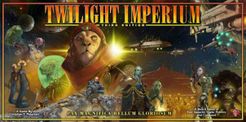
Use the Third Edition’s original strategy cards to coordinate fleets, trade and the Galactic Council, completing objectives through expansion and diplomacy to claim the imperial throne.
Twilight Imperium: Third Edition supports 3–6 players; community best: 6 players; playing time: 180–240 minutes. A WANGO browser trial has not been confirmed.
Background & introduction
Twilight Imperium: Third Edition is a competitive galactic civilization game for 3–6 players. Asymmetric races begin with their own abilities, fleets and technologies. Players assemble a galaxy around Mecatol Rex and develop power through planetary conquest, production, research and negotiation.
Each round has Strategy, Action and Status phases. Strategy cards set initiative and let their owners resolve primary abilities while others may follow secondary abilities. Original cards such as Initiative, Logistics and Imperial create a rhythm specific to this edition.
Military strength creates opportunities to meet objectives, but destroying fleets does not generally award victory points. Players normally claim public and secret objectives during Status; original Imperial also grants points directly and reveals objectives. Scoring depends on home-system control, timing and the possibility of an abrupt game-ending card.
Core rules & scoring
Setup: Draw races and home systems, take their starting units, technologies and home planet cards, and build the galaxy around Mecatol Rex using the player-count layout. Deal one secret objective each. The public deck has 6 random Stage I cards above 3 random Stage II cards shuffled with the game-ending card. Start with 2 Strategy Allocation, 3 Command Pool and 3 Fleet Supply counters. With four players, remove Strategic Flexibility and Strategic Shift action cards.
Strategy: Starting with the Speaker, choose clockwise from the original eight cards: Initiative, Diplomacy, Political, Logistics, Trade, Warfare, Technology and Imperial. Five or six players take one each; three or four take a second in the same selection order. Your lowest card number sets initiative. Add bonus counters to unchosen cards; each can later be exchanged for one trade good or command counter when selected. Four players leave no cards unchosen.
Actions and strategies: In initiative order take one strategic, tactical, transfer or applicable action-card action, or pass after resolving all your strategic abilities. Initiative has no strategic action, grants the Speaker token and waives command-counter costs to follow secondary abilities; normally it cannot be chosen in consecutive rounds. Other strategies resolve their primary, then other players clockwise may spend a Strategy Allocation counter for the secondary. Logistics secondary costs no counter. Passed players may still follow. Diplomacy can name an opponent to mutually prohibit activating systems with the other’s units. Logistics primary grants 4 counters; secondary buys one per 3 influence. Warfare primary removes one of your board counters; secondary moves up to two Cruisers or Destroyers into adjacent empty systems. Imperial secondary produces at existing docks in one system without activation.
Tactical movement: Spend a Command Pool counter to activate a system without your counter already in it, then resolve movement in, PDS fire, space battle, landings, invasion and production in order. Moving ships must reach and finish in that system within their movement allowance; they cannot leave previously activated systems and normally cannot pass enemy non-Fighter ships. Fighters, Ground Forces and PDS need legal transport. Matching wormholes are adjacent; special terrain imposes further restrictions.
Command and transfer: Fleet Supply limits non-Fighter ships in each system; excess cannot wait for combat losses to correct it. Fighters separately require support capacity. A transfer activates two adjacent systems, each containing your units and no enemy units of any kind, using one Command Pool and one reinforcement counter. Move between them within movement allowances, resolve PDS, land only on friendly planets and produce in just one of the systems.
Combat and control: Resolve PDS and precombat abilities first. Each space-battle round declares withdrawal or retreat, rolls both sides’ dice, assigns losses and executes withdrawal or retreat. Results meeting unit combat values hit; owners choose their casualties, and Dreadnoughts and War Suns can first sustain one damage. Retreat destinations must be adjacent, previously activated by you and free of enemy ships. Invasion resolves bombardment and defensive PDS, then repeated simultaneous Ground Force rolls without retreat. At least one attacking Ground Force must survive to capture; newly received planet cards are always exhausted.
Economy and production: Exhaust planets for resources or influence, never both, losing excess; trade goods substitute one for one. An established Space Dock can produce up to its planet’s resource value plus 2 units, with unit costs paid separately. Every Fighter and Ground Force counts individually toward production. A new dock requires a dock-free planet controlled all round and no enemy ships in the system, and cannot produce this round. A blockaded existing dock cannot build ships but may build Ground Forces and PDS.
Technology, trade and politics: Technology primary grants one free advance and secondary normally costs 8 resources; prerequisites still apply, with matching specialties on ready planets discounting purchases. Trade primary may give 3 trade goods, old agreement income and approval of new agreements, or instead break all agreements. Keep at most one agreement with each of two different partners; new agreements yield no income during that action. Political convenes the Council during the Action Phase. Vote your ready planets’ combined influence, minimum one vote, without exhausting them; votes cannot be split. The Speaker votes last and breaks ties; trade goods do not buy votes. Space battle or invasion between partners breaks their agreement; it can also be ended unilaterally during Status, subject to Hacan’s racial exception.
Status: In initiative order, each may claim one revealed public objective and their secret objective, each card once, only while controlling every home-system planet. Then repair damage, return board command counters to reinforcements, ready planets, gain one action card and two command counters, redistribute the three command areas and return strategy cards. Action cards follow printed timing and normally have a hand limit of 7; a play-as-an-action card uses an action.
Victory: Normally the first to reach 10 points wins immediately. Original Imperial primary reveals a public objective before awarding its owner 2 points. Revealing Imperium Rex ends the game immediately without those 2 points: highest current score wins, with ties broken by completed objectives, planets, unused command counters and total counters on race sheets, in that order; a remaining tie is shared. Supremacy and Domination also apply their printed victory conditions. A player with no planets and no units on the board is eliminated.
Rules & gameplay questions
Does Third Edition have a separate agenda phase each round?
No. This original Third Edition framework has only Strategy, Action and Status phases. Political’s primary ability convenes the Galactic Council during the Action Phase; the Fourth Edition agenda sequence does not apply.
Does occupying Mecatol Rex automatically score recurring points?
No. Score according to actual objectives and abilities. Original Imperial reveals a public objective and grants 2 points; it is not the Mecatol scoring mechanism on Fourth Edition or Third Edition expansion replacement cards.
Can I follow another strategy’s secondary after passing?
Yes. Passing ends your own actions, but you may still resolve later secondary abilities when eligible. A Strategy Allocation counter is normally required, with exceptions such as Logistics and Initiative handled by their rules.
Does winning the space battle capture the planets?
No. Ground Forces must be transported and landed, with invasion combat where necessary. If both sides’ Ground Forces are eliminated, the defender retains the planet, and its PDS and Space Dock are not automatically destroyed merely because the garrison is gone.
Do two Fighters bought for one resource use only one production slot?
No. Cost and production limit are separate: each Fighter or Ground Force uses one unit of production. Fleet Supply, Fighter support capacity and other restrictions also apply.
Rules & introduction sources
- Edition
- Fantasy Flight Games Twilight Imperium THIRD Edition original 3–6-player base game with applicable base material from official FAQ and Errata v2.5 (March 27, 2012). Uses the original eight strategy cards and standard 10-point game. Excludes Fourth Edition, Shattered Empire and Shards of the Throne replacement strategies and components, and optional modules including Distant Suns, Leaders, Age of Empire, Long War and Sabotage Runs.
- Rule references
- Introduction source
- BoardGameGeek
WANGO editorial
| Parameter | Recorded value |
|---|---|
| BGG overall rank (snapshot) | #154 |
| Complexity Weight | 4.26 / 5 |
| Best player count (community) | 6 |
| Player range | 3–6 |
| Playing time (minutes) | 180–240 |
| Core mechanisms | Action Points · Area-Impulse · Dice Rolling · Follow · Grid Movement · Hexagon Grid · Increase Value of Unchosen Resources · Modular Board · Player Elimination · Tech Trees / Tech Tracks · Tile Placement · Trading · Variable Phase Order · Variable Player Powers · Voting |
| Chinese publication | Unconfirmed |
| WANGO browser play | No confirmed WANGO trial |
| Year published | 2005 |
| Suggested age | 14+ |
BGG statistics are stored snapshots, not live rankings. Source checked:2026-09-27
Player questions
What is the best player count for Twilight Imperium: Third Edition, and can I play online?
Twilight Imperium: Third Edition supports 3–6 players; community best: 6 players; playing time: 180–240 minutes. A WANGO browser trial has not been confirmed.
How complex is Twilight Imperium: Third Edition, and which mechanisms does it use?
Weight: 4.26 / 5. Mechanisms: Action Points · Area-Impulse · Dice Rolling · Follow · Grid Movement · Hexagon Grid · Increase Value of Unchosen Resources · Modular Board · Player Elimination · Tech Trees / Tech Tracks · Tile Placement · Trading · Variable Phase Order · Variable Player Powers · Voting. Chinese publication: Unconfirmed.
Where can I learn Twilight Imperium: Third Edition?
No rule guide, strategy article or WANGO trial has been confirmed for this record.