Creator Story | The author of "Halli Galli" initially thought making games should be easy
隐城
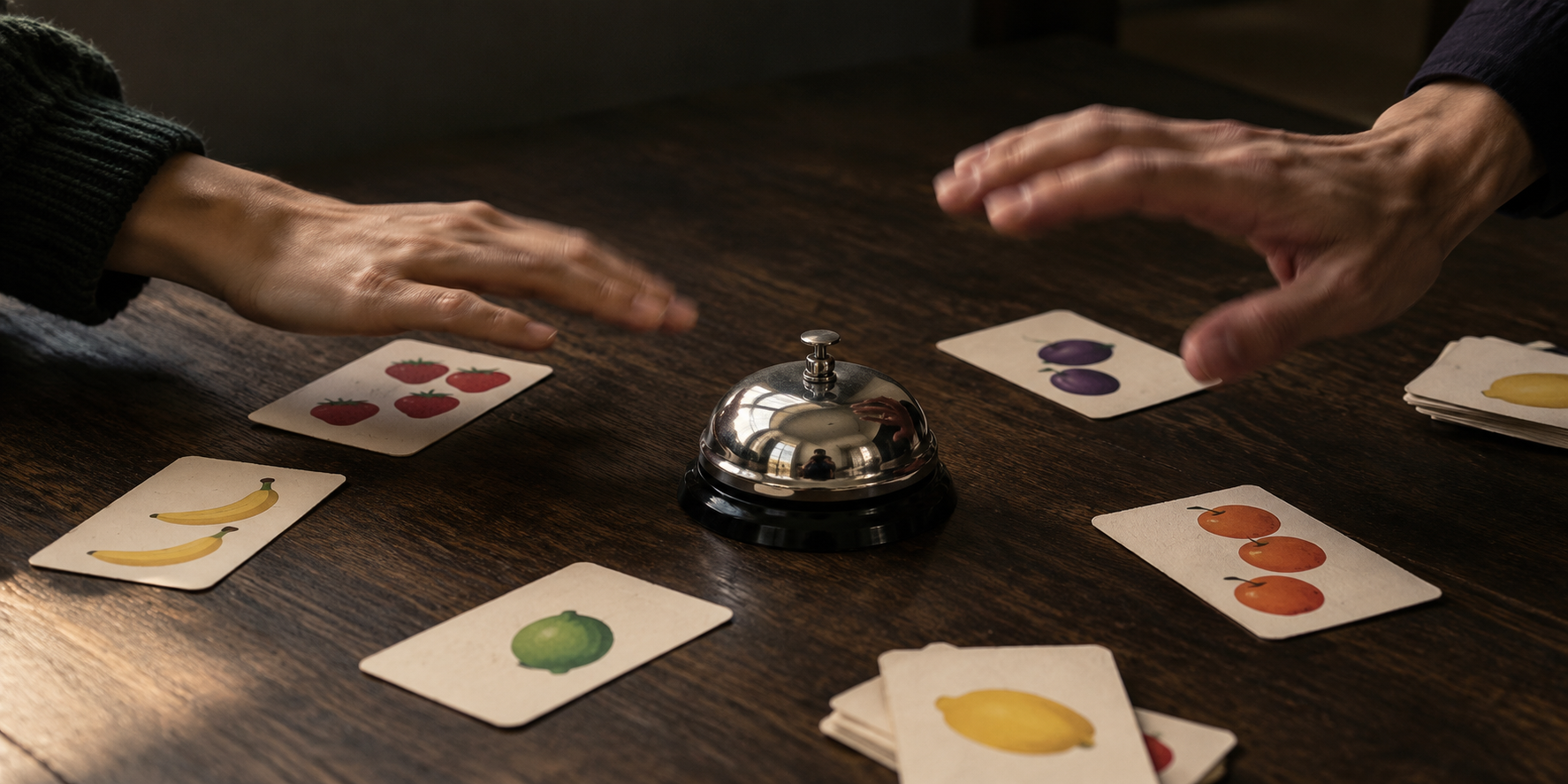
Recently I was reading some board game designers' stories. When I saw "Halli Galli," I discovered that it actually didn't have a bell at first.
I was quite surprised. After all, when mentioning this game, the easiest thing to think of is that bell in the middle of the table.
Its rules aren't hard to explain. Everyone takes turns flipping cards. When the number of the same fruit on the table reaches exactly five, hurry and ring the bell. Whoever rings first takes the flipped cards on the table.
Just reading these few sentences, you'd think it shouldn't be hard. But several people all staring at the cards, needing to count clearly while also beating others to it—just thinking about it, you know it's not that relaxed.
How was such a game made in the first place? So I looked it up.
01 The person who liked taking toys apart
The designer is named Haim Shafir, and he is Israeli. As a child he liked taking toys apart, wanting to see how they worked inside. Later he studied mechanical engineering, and after graduating worked for two years in packaging machinery design.
However, he gradually discovered that he preferred dealing with people, and also wanted to do something of his own.
In an interview, he said that at the time he didn't have much money but really wanted to try something new, and games and toys seemed quite suitable. Since they didn't sell for much, making them shouldn't be too difficult or too costly.
Later, he spent two years and lost quite a bit of money before realizing he had oversimplified things.
But he didn't stop there. Those two years gave him some experience and also confirmed that he really did want to continue in this line of work.
He made wooden toys and also did game publishing. At first he mainly adjusted and improved existing games, and only later gradually developed his own designs.
Someone asked him when he decided to become a game designer. He said there wasn't a sudden moment of deciding what he should do; it was the choices along the way that slowly brought him here.
I quite like this answer. It doesn't sound that legendary, but it's a bit easier to understand.
He regarded "TAKI" as one of his early successes. Speaking of success, he cares more about whether a game can make people willing to keep playing it.
Later, "Halli Galli" made players in more places know him. However, this game didn't start out looking the way it does now.
Originally, he wanted to make a card game for children to recognize quantities and practice addition and subtraction.
The early version was aimed at preschoolers and had a slower pace. In the process of adjusting it with the publisher, it gradually became a game where everyone observes together and competes to see who reacts fastest.
At that time it was called Tutti Frutti. When players saw five fruits of the same kind, they would shout this name.
02 When everyone says they shouted first, what do you do?
During playtesting, Shafir discovered a problem: when several people shouted at the same time, there was no way to determine who was first.
This situation is easy to imagine. You think you shouted first, the person across from you also thinks they shouted first, and the people nearby may not have heard clearly. If you had to argue for a while every time, playing would become a bit troublesome.
He first placed a token in the middle of the table and changed it so that whoever covered it with their hand first won.
At least now there was something to grab. But he felt that just slapping a token was a bit boring.
Later, he borrowed a small toy that made sounds, hoping to make the action of slapping more interesting. After trying it, he found that if you slapped too hard, the sound would actually be suppressed.
Then later, he found a bell at a hardware store.
So that's how the bell placed in the middle of the fruit cards was worked out little by little through experimentation.
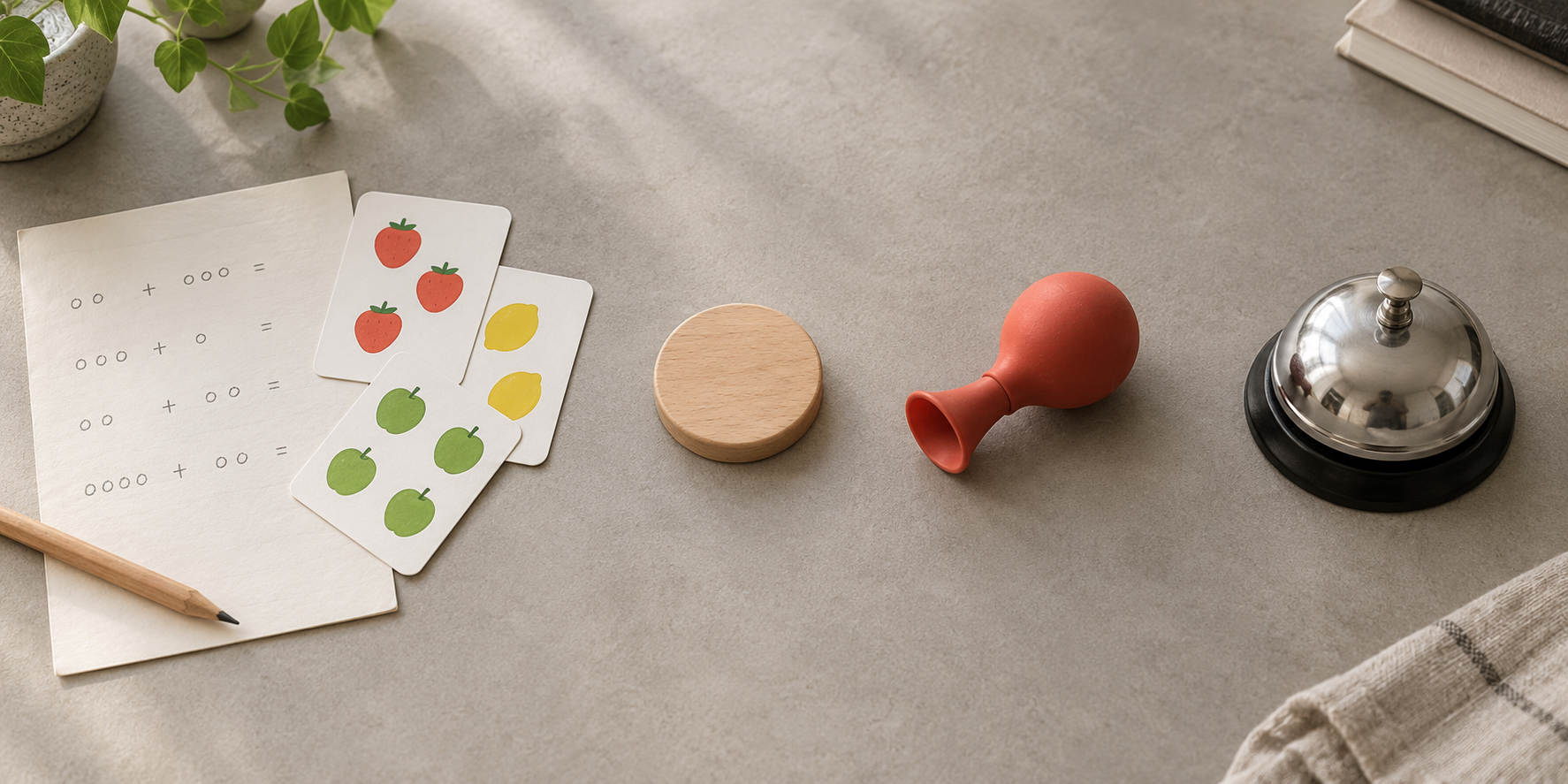
And after finding the bell, things still weren't completely settled.
The early version used an industrial bell with a relatively small button, and slapping it would hurt the palm. So he enlarged the button, and later designed a dedicated bell for the game.
Writing one line in the rules—"whoever slaps first wins"—looks very simple. Only when you actually get a table of people playing do you realize there are still these things to consider.
Looking only at the final product, you'd think fruit cards paired with a bell are very natural. Only by looking back do you discover that he first tried several other methods. Some solved one problem but created another during play, so he could only keep revising.
Later, for licensing reasons, the game was renamed from Tutti Frutti to Halli Galli, which is the "Halli Galli" we know.
03 After counting to five, what happens next is the fun part
Looking again at "Halli Galli," you'll discover that the bell makes everyone pay attention to changes on the table.
Cards are flipped in turns, but chances to ring the bell can appear at any time. When others flip cards, you have to watch too. When a new card covers an old one, the number of the same fruit changes; what just now wasn't enough for five may now be exactly right.
At this point you have to count clearly and also be fast enough. Hesitate a little, and the chance may be taken by someone else.
I think this is also what makes it interesting. Everyone faces the same deck of cards, yet reacts differently. Some notice first, some are half a beat slow, and some reach out after misreading. Just these situations are enough to give a table of people something to talk about for a while.
When Shafir later talked about his creations, he mentioned a quite specific wish: he hoped that parents who don't usually play games much would also be willing to sit down and play together with their children. He himself later often played family games with his granddaughters.
This makes me think that my own initial interest in board games also came from seeing several people gathered around a table, doing something together. At the time, I actually didn't even know what specifically they were playing.
I'm making WANGO, and I'm still learning about board games while pondering the website. Sometimes I feel there are so many things I want to do, but when I actually start, I discover quite a few places I haven't thought through.
So when I read about Shafir's experience of initially thinking making games should be easy and only later slowly learning, I find it quite understandable. Liking something and knowing how to do it well still leave quite a lot to learn in between.
Later someone asked him what his greatest wish as a game designer was. He said he could already live by doing what he loved most, and that wish had already come true.
I also hope to be like that in the future. It's still early now, so I'll keep working on the website and continue getting to know some games and the people who make them.
In the future, when I arrange to meet people, I want to find a chance to play a round of "Halli Galli." The rules should be quick to explain; as for whether I can grab the bell, we'll talk about that once we're sitting at the table.
Sources
The cover and illustrations in the text are AI-generated conceptual illustrations.